


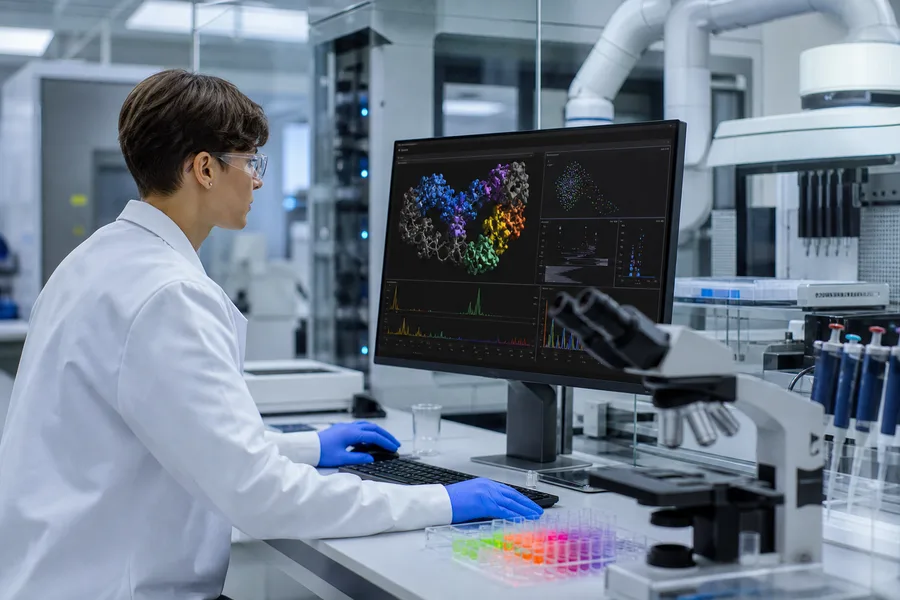
For decades, protein labeling was treated as a preparatory step — something you did before the real science started. Attach a fluorescent dye, run your panel, move on. But as multiplex workflows have scaled into dozens of simultaneous markers per sample, that framing has quietly broken down. The data coming out of modern multiplex immunofluorescence and spatial proteomics experiments has grown too complex, too high-dimensional, and too expensive to interpret manually. Something had to change.
Protein Labeling Used to Be About Chemistry. Now It's About Data.
BCC Research Staff Analysts