


As stem cell therapies move from experimental trials into routine clinical practice, researchers are raising a critical alarm: current manufacturing standards may be missing a key factor that determines whether these treatments actually work. The protein quality control systems of donor cells--their capacity to maintain healthy proteins under stress--deteriorate as cells age during laboratory expansion, and this decline can turn therapeutic cells into sources of toxicity rather than repair. A new review argues that without assessing this "proteostatic fitness," even rigorously manufactured cell products could fail in patients.
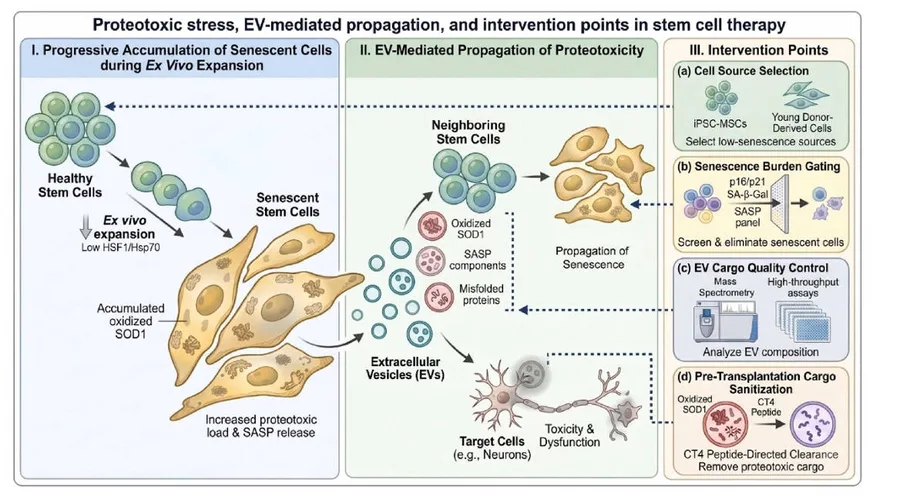
Cleaning Up Stem Cell Therapy: Removing Oxidized SOD1 Restores Youth and Safety
Chinese Academy of Sciences