


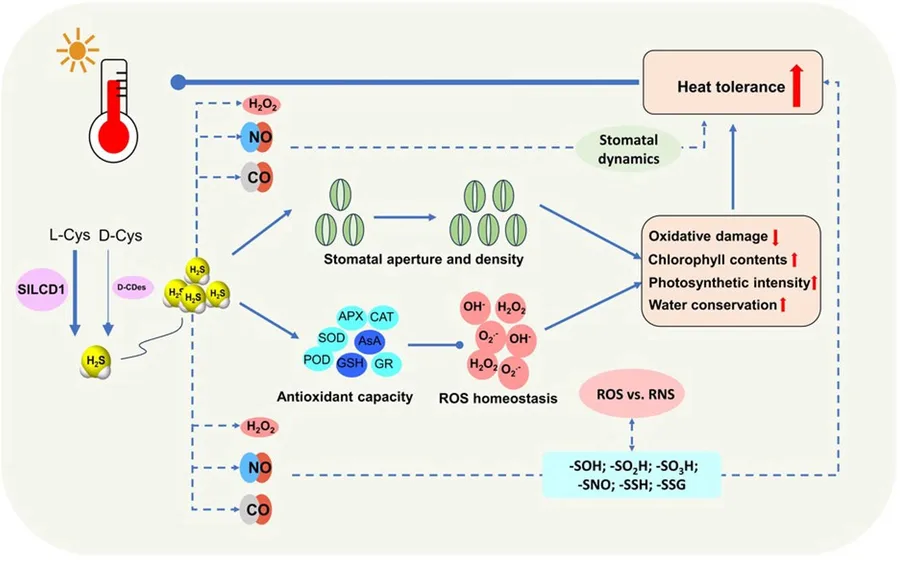
As heat waves intensify, helping crops survive sudden temperature spikes has become a practical goal for vegetable production. A new tomato study identifies a small sulfur-containing gas signal, hydrogen sulfide (H₂S), as a key part of the plant's heat-defense system. The work shows that the SlLCD1 gene helps generate endogenous H₂S during heat stress, allowing tomato plants to limit cellular injury, retain water, and keep photosynthesis functioning. When SlLCD1 activity was enhanced, plants stayed greener and less wilted under severe heat; when the gene was disrupted, plants became more vulnerable. The findings reveal a coordinated defense strategy that links antioxidant protection with stomatal control.
A Sulfur Signal Helps Tomato Plants Survive Heat
Chinese Academy of Sciences