


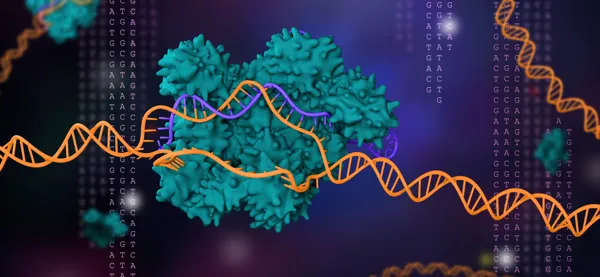
From cancer cells to climate-resilient trees: how CRISPR is transforming research at VIB From decoding gene function to tackling cancer and building a sustainable future, VIB researchers are using CRISPR to push the boundaries of life science. A cancer cell escaping therapy. A yeast cell revealing the secrets of gene regulation. A poplar tree engineered without introducing foreign DNA. At first glance, these discoveries seem to have little in common. Yet they are all connected by the same revolutionary technology: CRISPR, or – big breath – Clustered Regularly Interspaced Short Palindromic Repeats. Part of the antiviral defense system of many bacteria and archaea, CRISPR sequences are short stretches of DNA that store genetic fragments from viruses the microbes have encountered before. CRISPR allows bacteria and archaea to learn from past infections, like our own immune system does. When a familiar virus attacks, the CRISPR machinery recognizes its genetic signature and directs Cas (‘CRISPR-associated’) proteins to cut the invader's DNA, stopping the infection in its tiny tracks. Just over a decade ago, scientists adapted this natural defense mechanism into one of the most powerful tools in modern biology. What began as a way to precisely edit DNA has since evolved into something much bigger. Today, CRISPR is helping researchers uncover how genes work, understand the mechanisms behind disease, engineer more sustainable crops, and accelerate the search for new treatments. At VIB, scientists are applying CRISPR in remarkably diverse ways. Some are developing the next generation of genome-editing tools, making it easier to introduce precise changes in plant genomes. Others develop large-scale CRISPR screening and precision-editing approaches to uncover how genes and genetic variants shape biological function, revealing the molecular processes that underpin life. In cancer biology, researchers are harnessing CRISPR screening to uncover the genetic regulators that allow...
From cancer cells to climate-resilient trees: how CRISPR is transforming research at VIB
Gunnar De Winter
7 min read