


Over 75,000 pathogenic genetic variants have been identified in humans and cataloged in the ClinVar database . Previously developed genome editing methods using nucleases and base editors have the potential to correct only a minority of those variants in most cell types. But prime editing, a CRISPR technique developed in David Liu’s lab in 2019, has added considerably more precision and flexibility to the CRISPR editing world. The approach, originally published in Nature , is a “search-and-replace” genome editing technique that mediates targeted insertions, deletions, and all possible base-to-base conversions (Anzalone et al., 2019). Plus, it can combine different types of edits with one another. All of this is possible without double-strand breaks (DSBs) or donor DNA templates.
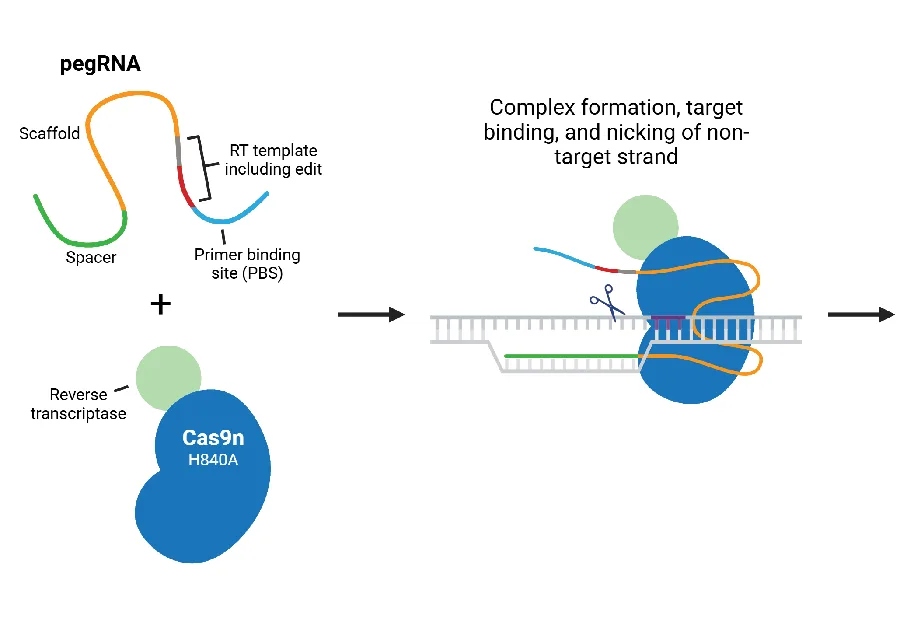
Prime Editing: Adding Precision and Flexibility to CRISPR Editing
Multiple Authors