


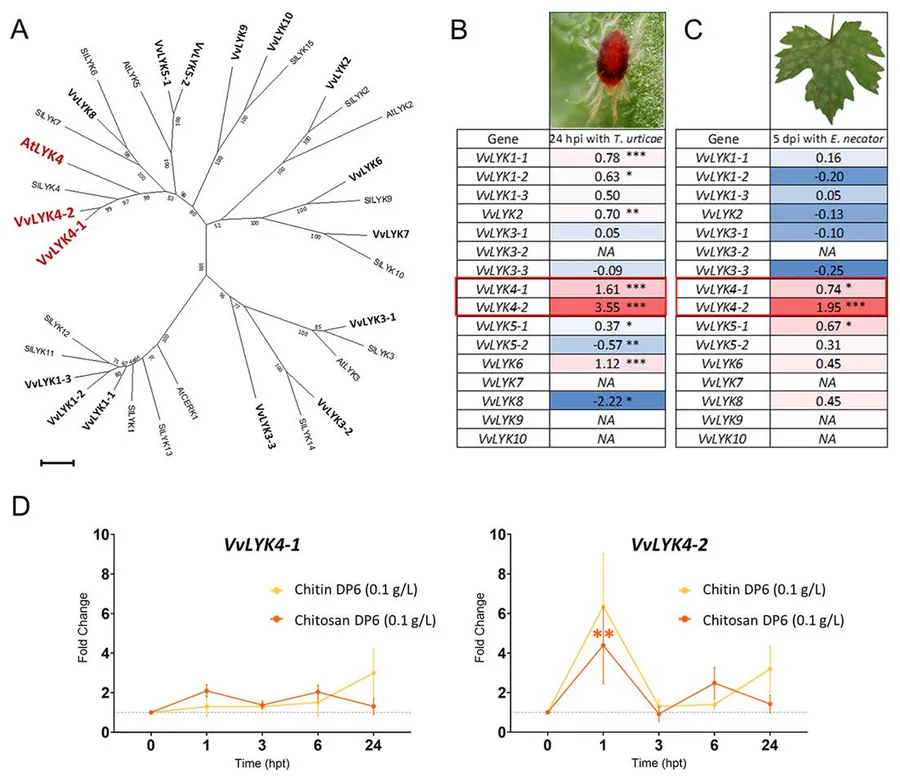
Chitosan, a natural derivative of chitin, can alert plants to danger and is already used in crop-protection products, yet scientists have not fully understood how grapevines detect it. A new study identifies the lysin motif receptor-like kinase VvLYK4-2 as a key molecular component connecting chitosan perception with early immune signaling in grapevine. By combining cross-species complementation, targeted genome editing, defense-gene analysis, and ligand-binding experiments, the researchers found stronger binding evidence for chitosan than for chitin. The discovery helps explain why chitosan-based treatments can perform inconsistently under vineyard conditions and provides a molecular starting point for breeding grapevines that respond more reliably to bio-based disease protection.
A Grapevine Receptor Reveals How Chitosan Activates Immunity
Chinese Academy of Sciences