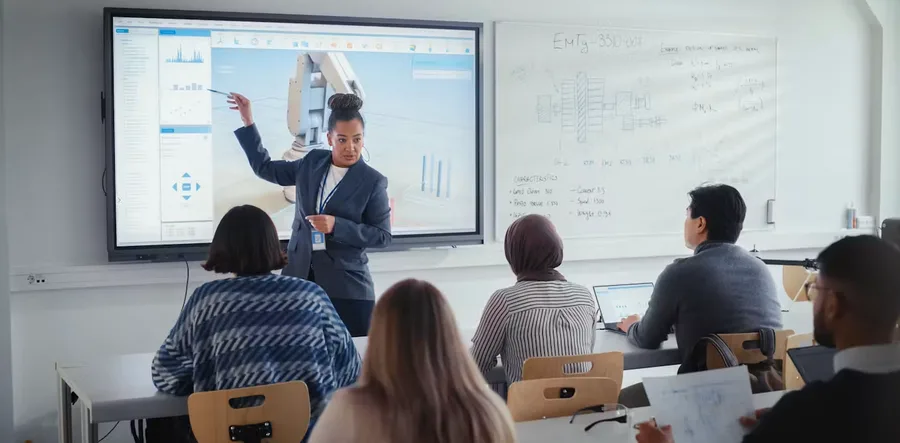
In this empirical paper, we explore the challenges experienced by 4th year Mechanical Technology student teachers during teaching practice. Teacher training and development in South Africa is geared towards replenishing the aging and retiring teachers, replacing those lost through natural causes and keeping the teaching profession sustainable. Prospective teachers are inducted into the teaching p…
Humanities and Social Sciences Communications, Published online: 20 August 2026; doi:10.1057/s41599-026-08740-5 Machine translation and post-editing in translator training: a systematic review of integration models, challenges, and pedagogical implications
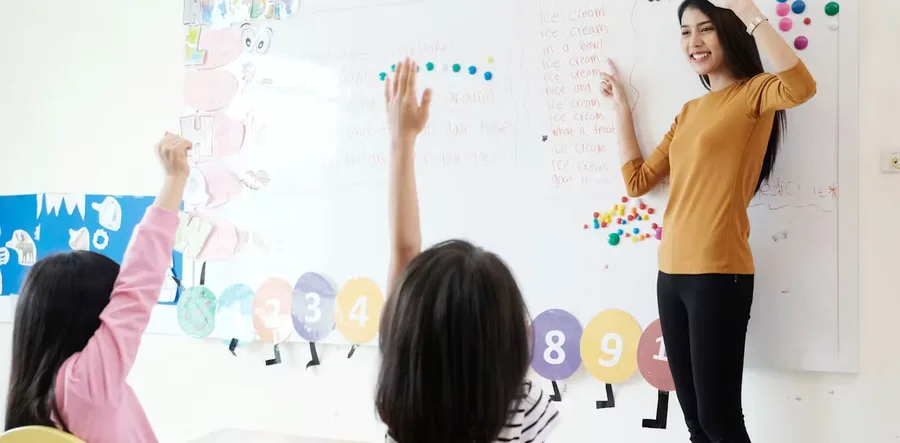
Thinkers from Plato to Maria Montessori have championed play as one of the most powerful ways that young children learn and grow. American preschool teachers overwhelmingly agree -- but a new study finds that teachers in urban settings feel less family support for play-based learning than their suburban counterparts.
Outdoor adventure education (OAE), transformative experience, and the Neuroception-Play-Integration (NPI) Cycle are integrated to propose a framework for designing play-based learning that supports adolescents' engagement, motivation, and learning. We argue that OAE functions as a developmentally appropriate form of play because it combines voluntary engagement, meaningful challenge, pleasure, me…
What if the most powerful tool in school improvement is a single, unhurried conversation? In this post, Jennifer Poon and Doannie Tran make the case for empathy interviews as the essential first step in genuine community co-creation, and explain why it matters deeply who conducts them. Drawing on their work with Burlington School District, they show how shifting the interviewer from consultant to…
Troy D Sadler·...·University of North Carolina at Chapel Hill
3d ago
Critical thinking is an essential skill students should be encouraged to develop as part of their science learning. NZ’s draft science curriculum fails the test.
The proposed maths curriculum would result in a deeper understanding of key concepts. It expects students to explain their maths reasoning rather than present their answer without justification.
Researchers asked engineering students to tell stories about challenges they had faced. Telling the stories, students said, made them more likely to stay in their major.
Luciana·...·Universitas Katolik Indonesia Atma Jaya
3d ago
Amid the COVID-19 pandemic, Indonesian teachers have struggled to adapt to online learning. To overcome this, teachers should be taught to be bolder in introducing ‘uncertainty in learning’.





 research.io