Author: Prof. Olfa Masmoudi-Kouki Affiliation: Head of the Laboratory of Neurophysiology, Cellular Physiopathology and Biomolecules Valorisation (LR18ES03), Faculty of Sciences of Tunis, University of Tunis El Manar Key themes: Development of internationally recognized expertise • Contribution of Tunisian laboratories • International collaborations for training and capacity building • 9th Mediter…
IntroductionRecent advances in the understanding of sensory processing in disorders of consciousness (DoC) have highlighted the potential of exteroceptive stimuli, particularly tactile stimulation. Unlike auditory or visual inputs, tactile stimuli engage primary somatosensory pathways that may be preserved even in severely brain injured patients. The aim of our study is to identify cortical neuro…
Motor performance has been examined from various scientific perspectives and with different methodological approaches. In basic research, the main goal is to identify underlying mechanisms that determine performance. This is typically achieved through the analysis of metabolic parameters and, with regard to the central nervous system, neurophysiological measures. When the concept of “motor perfor…
Author: Diego A. Golombek; Gabriela A. Salvador Affiliations: Interdisciplinary Time Laboratory (LITERA), Universidad de San Andrés/CONICET, Buenos Aires, Argentina; Bahía Blanca Institute of Biochemical Research (INIBIBB) – CONICET and Department of Biology, Biochemistry and Pharmacy, Universidad Nacional del Sur, Bahía Blanca, Argentina Key themes: Argentine Society for Neuroscience • Neurophys…
With funding from Dance Jazzo, the Institute for Advanced Consciousness Studies (IACS) will conduct research aimed at understanding the neurophysiological effects of SlowMotionFlow practice.
If you volunteer to participate in this study, you will be asked to:
- Complete questionnaires about your movement experience and current state
- Be fitted with EEG equipment and biometric sensors
- Perform 2…
Answer: Von Frey fibers are a neurophysiological examination tool used for determining mechanical pain threshold in humans and nonhumans. Also called von Frey filaments or von Frey hairs, von Frey fibers are a diagnostic tool designed for examining pain threshold at different parts of the skin. They were developed by Maximilian von Frey in 1896. The von Frey filament itself is a long, thin elasti…
Learning Objectives Know where taste information first reaches the brain. Know where the nucleus of the solitary tract is and what role it plays in relaying taste information to the brain. Taste buds are formed by groupings of taste receptor cells. Receptor cells protrude into the central pore of the taste bud. Chemical changes within Read more »
Learning Objectives Know what saccades are. Know why we need saccades. Being able to view objects such as pictures is a knowledgeable part of the task of seeing. Viewing things is achieved by the orientation of the eyes. This means that you are directing the visual axes to point to a new location. Large movements Read more »
At the meeting room This last week, the Brainlab conveyed in Escaló (Catalan Pyrenees) to have its IV Brainlab Workshop, this time in collaboration with the Auditory Neurophysiology Lab (ANL) of the University of Salamanca (Spain) led by Prof. Manuel S. Malmierca. During the course of three days, several symposiums were organized [...] The post Beat the heat, heat the brain: IV Brainlab Worksho…
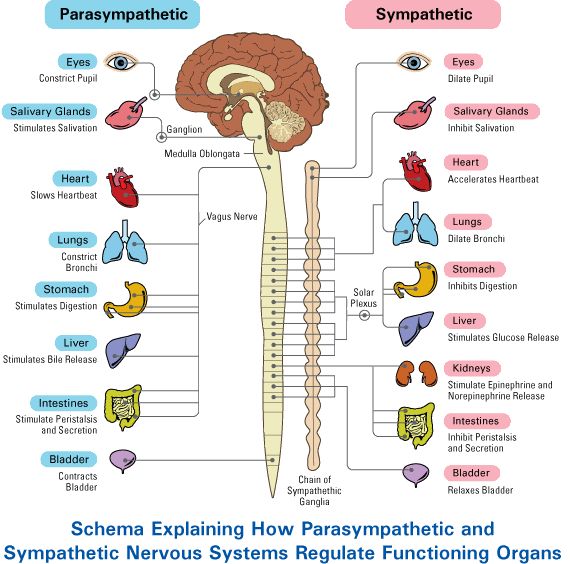
The strong and simultaneous activation of both branches the autonomic nervous system, sympathetic and parasympathetic, is known as ‘autonomic conflict.’ In the cartoonish intro-biology view of the body, the sympathetic system fight or flight is an accelerator, the parasympathetic is pumping the breaks. (I always used to think parasympathetic = paramedics = ’rest and recover’.) […]