Apply for funding to deliver collaborative research projects to develop and test integration of quantum computing into high-performance computational workflows, enabling user access and widespread adoption.
You must be based at a UK research organisation eligible for EPSRC funding. EPSRC STFC
Global demand for AI and high-performance computing (HPC) has lifted investment returns for Taiwan-listed companies in China, with Foxconn continuing to lead the pack. According to CRIF, Foxconn's total China investment returns in the first half of 2026 reached NT$117.6 billion (US$3.7 billion).
Japan is once again building a landmark high-performance computing system — not simply by chasing speed, but by rethinking how technology can best serve the nation’s most urgent scientific needs. At the FugakuNEXT International Initiative Launch Ceremony held in Tokyo on Aug. 22, leaders from RIKEN, Japan’s top research institute, announced the start of an […]
Though the 74th Lindau Nobel Laureate Meeting is all about chemistry, there is still room in the programme for topics of general interest from other areas of science. Der Beitrag Beyond Chemistry: Physics and High-Performance Computing Make an Appearance erschien zuerst auf Lindau Nobel Laureate Meetings .
We are pleased to announce that Michail Damoulakis will be joining our department as CIERA’s new Computational Specialist, starting June 16. Michail brings a strong background in scientific computing, with a PhD in Physics from Purdue University and extensive experience in high-performance computing, simulation techniques, and data analysis. In this role, Michail will support the
Ready for a front-row seat to the next scientific revolution? That’s the idea behind Doudna — a groundbreaking supercomputer announced today at Lawrence Berkeley National Laboratory in Berkeley, California. The system represents a major national investment in advancing U.S. high-performance computing (HPC) leadership, ensuring U.S. researchers have access to cutting-edge tools to address global c…
CHPC is the University of Utah’s premier computing institute and resource hub. It was founded on the principle of providing high-performance, large-scale, and cost-effective computing power for researchers across Utah. Over the years, it has grown into a vital infrastructure supporting interdisciplinary research across physics, engineering, chemistry, the humanities and other academic fields. Ser…
Generative AI is taking root at national and corporate labs, accelerating high-performance computing for business and science. Researchers at Sandia National Laboratories aim to automatically generate code in Kokkos, a parallel programming language designed for use across many of the world’s largest supercomputers. It’s an ambitious effort. The specialized language, developed by researchers from …
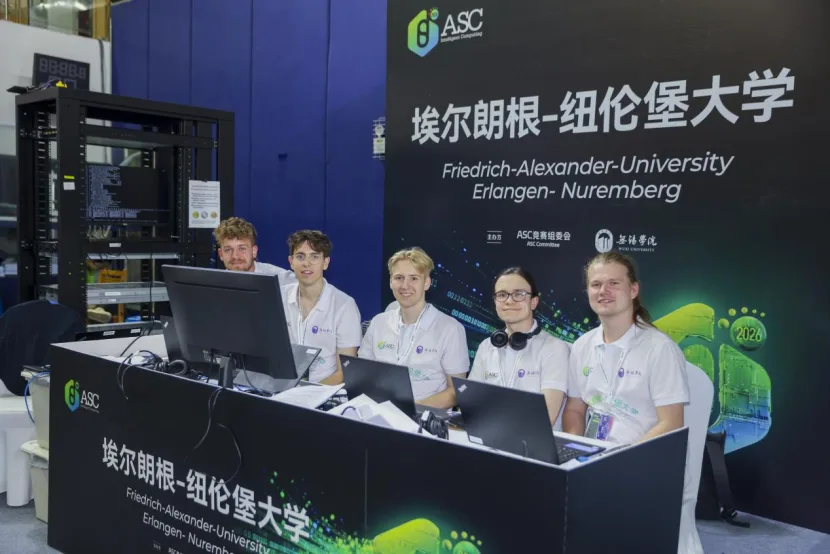
The Erlangen Regional Computing Centre (RRZE) has two new members: Alex and Fritz, the latest high-performance computers to join the team. That is not all, however. The RRZE is now one of eight National Centres for High Performance Computing (NHR) in Germany. ‘It all moved very quickly.’ Gerhard Wellein, Professor for High Performance Computing at […]