A Georgia Tech team used Ai2’s fully open Olmo stack to trace social reasoning back to the training data that shaped it, finding that dialogue-rich, interpersonal writing had an outsized influence on the capability.
Researchers used Olmo 3 and its open training data to show that models can infer a drug’s class from its name instead of knowing the specific medication, and traced that shortcut to how often drugs appeared in training.
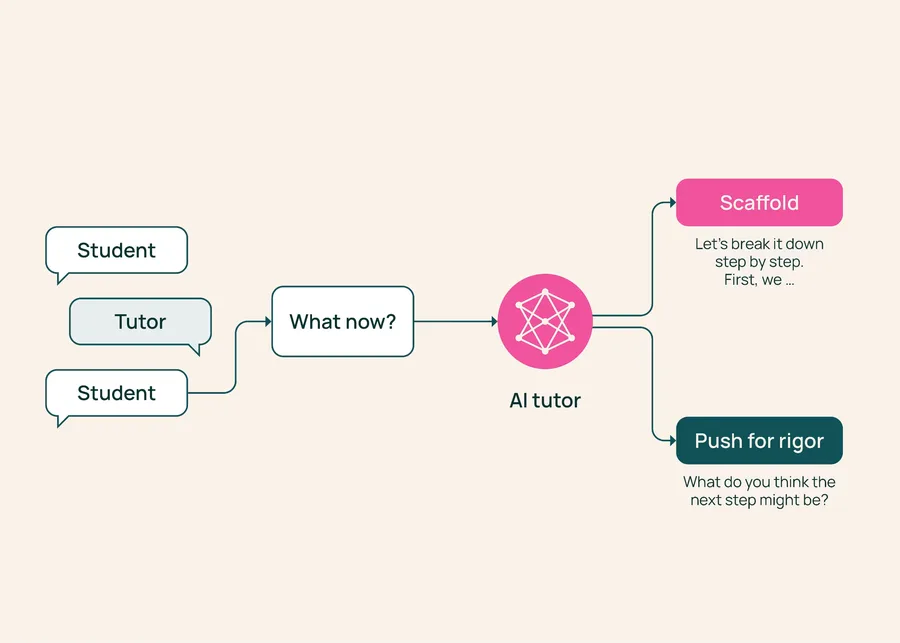
TutorMoments is an open, replay-based evaluation framework that tests whether AI tutors can recognize when to support a student and when to hold back and encourage deeper reasoning.
Ai2 is expanding its partnership with Hugging Face to give its growing portfolio of fully open models, datasets, benchmarks, and applications the storage, bandwidth, and integrations needed to reach more researchers and developers.
Stony Brook researchers used our infini-gram engine to trace distinctive phrases in AI-generated writing back to existing sources, finding that top-selling self-published books on Amazon with substantial detected AI text overlap more heavily with rare language from previously published works.
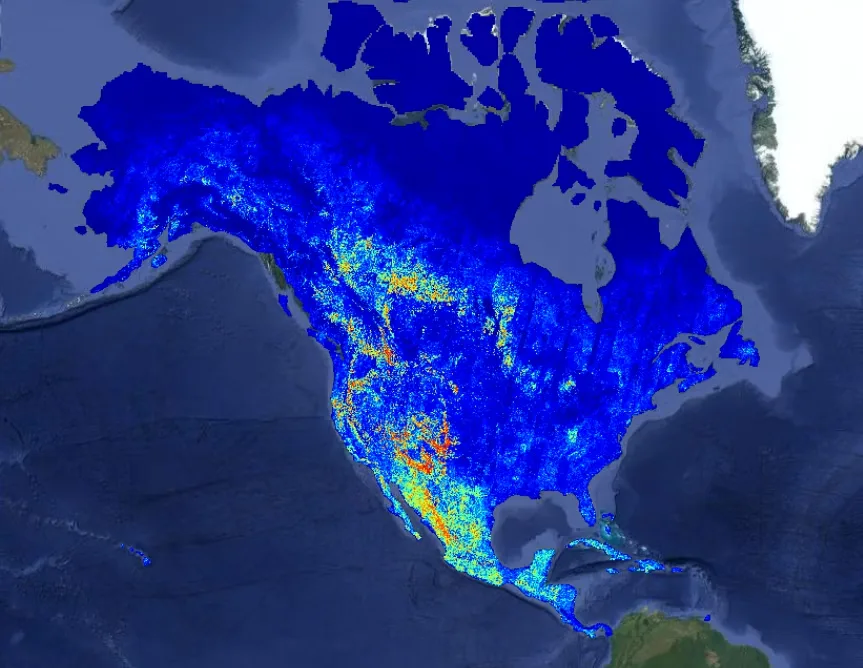
How we built the OlmoEarth Platform to fine-tune geospatial models and run continent-scale satellite inference while managing massive data pipelines, distributed compute, and automatically recovering from failures at scale.
Why fully open models and research artifacts are essential to independent scrutiny, broader participation, and continued U.S. scientific leadership in AI.
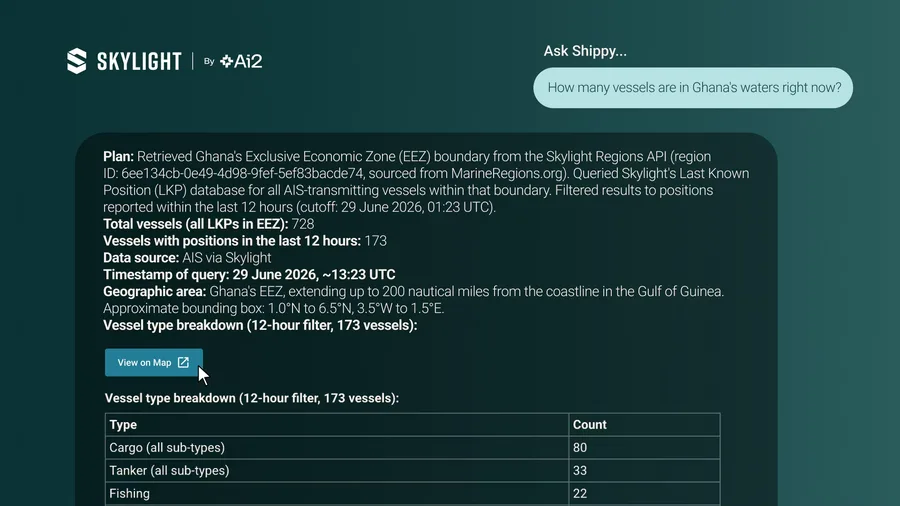
Building Shippy taught us that reliable agents depend less on the model itself than on deterministic tools, explicit guardrails, isolated infrastructure, and evaluations grounded in real-world workflows and live data.
Danish Foundation Models is using FlexOlmo as the basis for FlexMoRE, a more efficient modular LLM architecture that lets institutions contribute specialized experts trained on sensitive or proprietary data without sharing that data—and run the resulting models on highly accessible hardware.
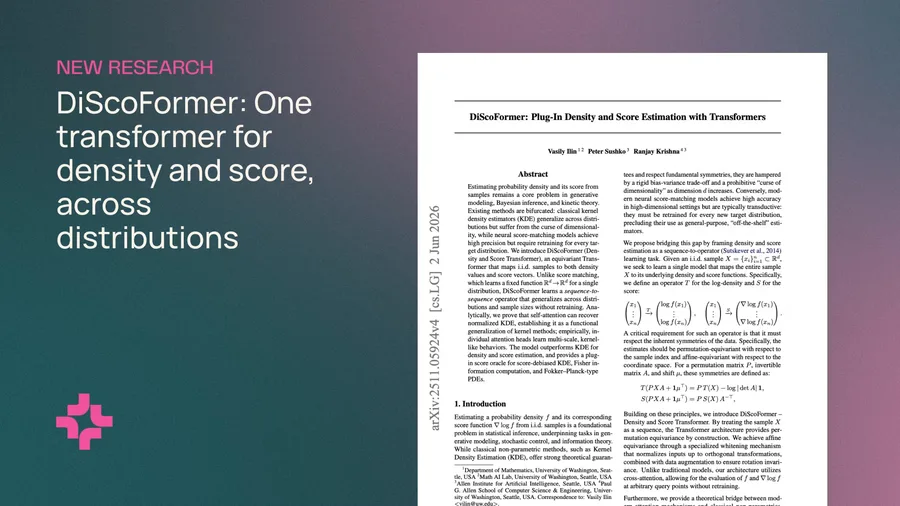
DiScoFormer is a transformer-based density and score estimator that can infer both quantities from a finite sample in one forward pass, generalizing classical KDE while staying accurate in high-dimensional and out-of-distribution settings without retraining for each new distribution.
New token-level analyses of Olmo 3 and Olmo Hybrid show that hybrid models predict meaning-bearing, context-dependent tokens better than transformers, while transformers retain an edge on verbatim copying.
Domyn and AISquared show how Ai2’s open releases are helping AI labs build models for regulated industries, where transparency, provenance, licensing, and control are essential for customer trust and compliance.
MolmoMotion is an open, language-guided 3D motion forecasting model that predicts how object points will move in the future, enabling stronger motion prediction for robotics, video generation, and other systems that need to reason about what happens next.
olmo-eval is an open evaluation workbench that helps model developers add, run, and analyze benchmarks across changing LLM checkpoints, extending OLMES from final-score reproducibility into the day-to-day model development loop.
PointCheck, an independent project, uses Molmo, MolmoWeb, and Olmo 3 to test web accessibility the way a keyboard user would—by navigating real pages and inspecting what's actually on screen.
OlmoEarth v1.1 is a more efficient family of remote-sensing models that cuts compute costs by up to 3x while maintaining similar performance, making large-scale satellite mapping faster and cheaper to run.
AIMIP is a new open benchmark and dataset for evaluating AI climate models, showing they can match or beat conventional models on some historical climate metrics while still struggling to generalize reliably to long-term warming trends and unseen climate scenarios.
Artificial Analysis uses Ai2’s open IFBench eval because it captures a stubborn, real-world capability many benchmarks miss: whether models can reliably follow complex, multi-part user instructions.
EMO is a new mixture-of-experts model trained so modular expert groups emerge from data, enabling users to select small task-specific expert subsets while preserving near full-model performance.









 research.io