Sometimes we need a good approximation to the derivative of a real-valued function at some real value . So here’s a fun fact that you may not know. If is a small positive number and can be evaluated at a complex argument, then where is the imaginary unit and denotes the imaginary part of a complex number. This unexpected but highly accurate approximation is called complex step differentiation . T…
Today econometrics.blog got a long-overdue update from blogdown to Quarto . Thanks to Claude Code , the transition was seamless: all existing links are preserved, along with the Utterances comment sections. During the upgrade I also corrected an embarrassingly large number of typos across the site and added privacy-respecting site analytics using GoatCounter . To find out whether econometrics has…
I was saddened to hear of Chris Sims’s passing yesterday. Although I’m not a macroeconometrician, his work has strongly influenced the way I think about econometrics. I covered his famous helicopter tour paper on this blog a while back. Some of my other favorites are unpublished notes or slides from his website , many of them with a philosophical bent. Thinking about instrumental variables is a p…
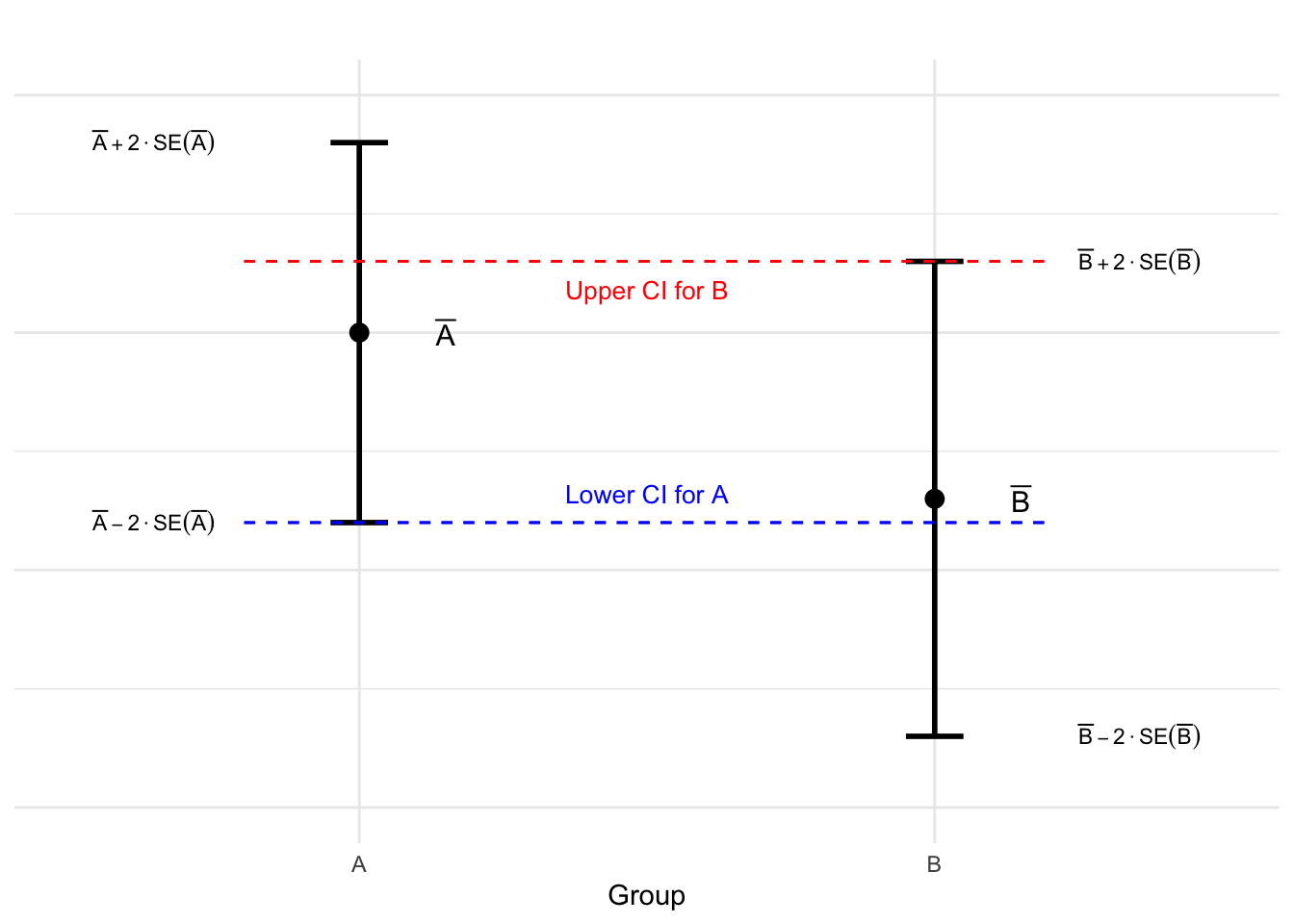
In my earlier post on Overlapping Confidence Intervals I asked what we can learn from the overlap, or lack thereof, between confidence intervals for two population means constructed using independent samples.
To recap: if the individual confidence intervals for groups A and B do not overlap, there must be a statistically significant difference between the population means for the two groups.
In o…
Perhaps you’ve seen a claim like this in an applied paper: “the estimated effect for Group A is statistically significant, but the estimated effect for Group B is not; this treatment helps As but not Bs.”
But this reasoning is flawed . To see why, consider the following example from Gelman & Stern .
We have data from two independent samples: Group A and Group B.
For Group A our estimated effect i…
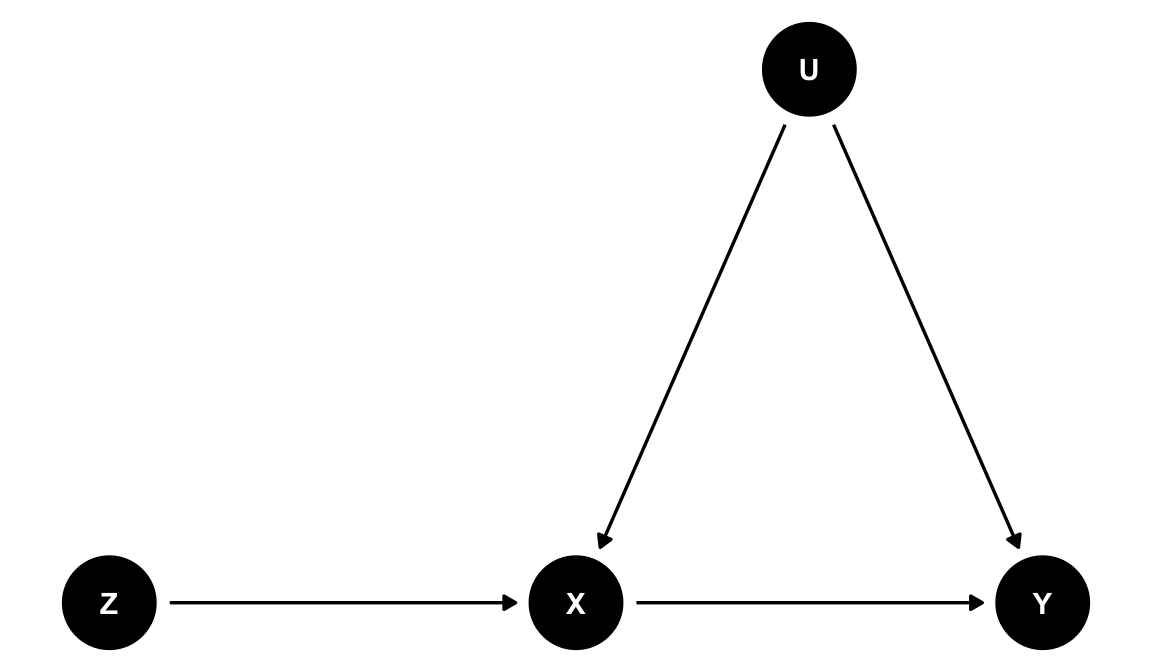
At a recent seminar dinner the conversation drifted to causal inference, and I mentioned my dream of one day producing a Lady Gaga parody music video called “Bad Control”. 1 A lively discussion of bad controls ensued, during which I offered one of my favorite examples: a good instrument is a bad control .
To summarize that earlier post: including a valid instrumental variable as a control variabl…
The result that I prefer to call Yule’s Rule , more commonly known as the “Frisch-Waugh-Lovell (FWL) theorem”, shows how to calculate the regression slope coefficient for one predictor by carrying out additional “auxiliary” regressions that adjust for all other predictors .
You’ve probably encountered this result if you’ve studied introductory econometrics.
But it may surprise you to learn that t…
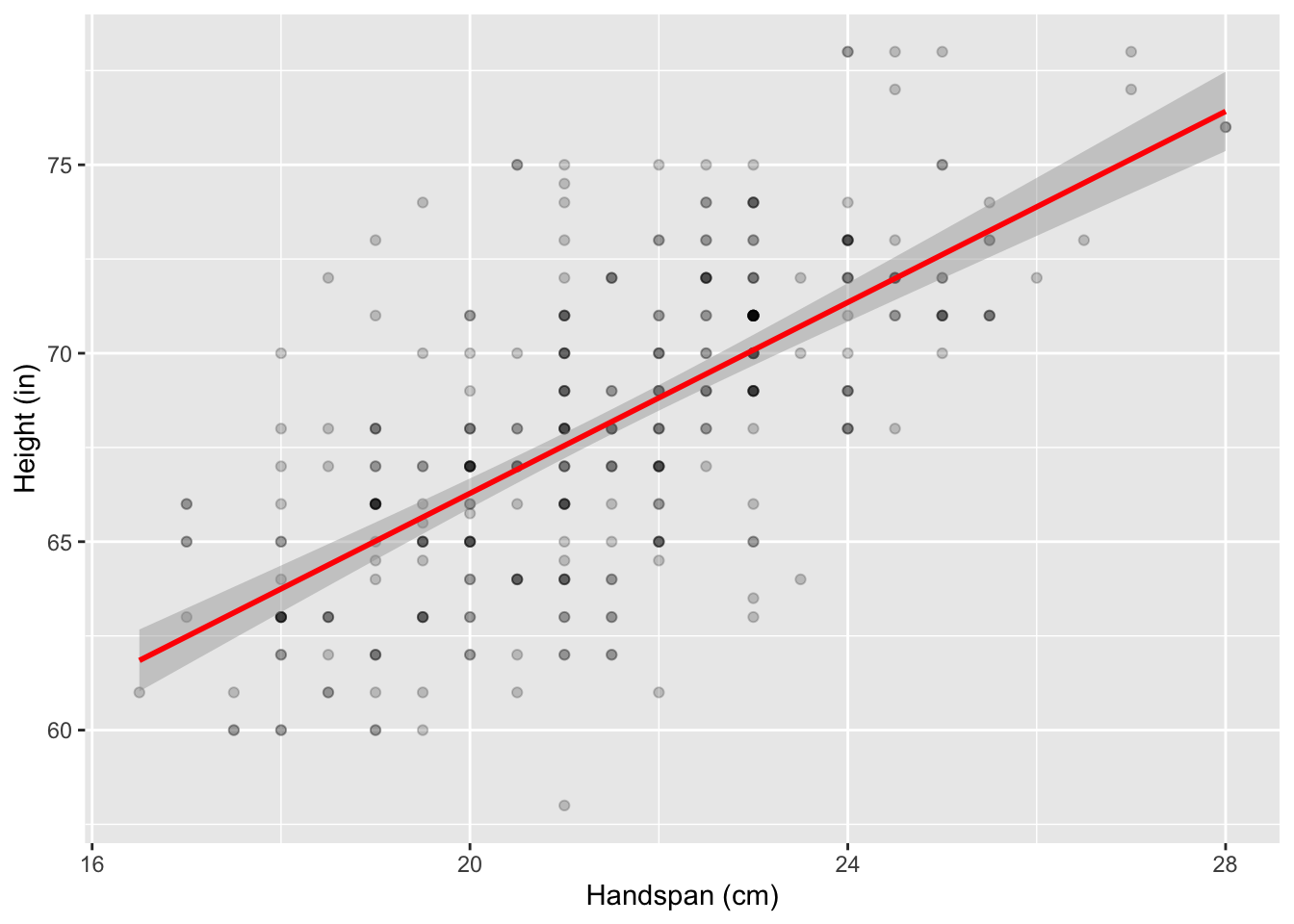
Suppose I run a simple linear regression of an outcome variable on a predictor variable. If I save the fitted values from this regression and then run a second regression of the outcome variable on the fitted values, what will I get? For extra credit: how will the R-squared from the second regression compare to that from the first regression? Example: Height and Handspan Here’s a simple example: …
Welcome to the first installment of the Econometrics Puzzler , a new series of shorter posts that will test and strengthen your econometric intuition. Here’s the format: I’ll pose a question that requires only introductory econometrics knowledge, but has an unexpected answer. The idea is for you to ponder the question before reading my solution. Many of these questions are based on common misconc…
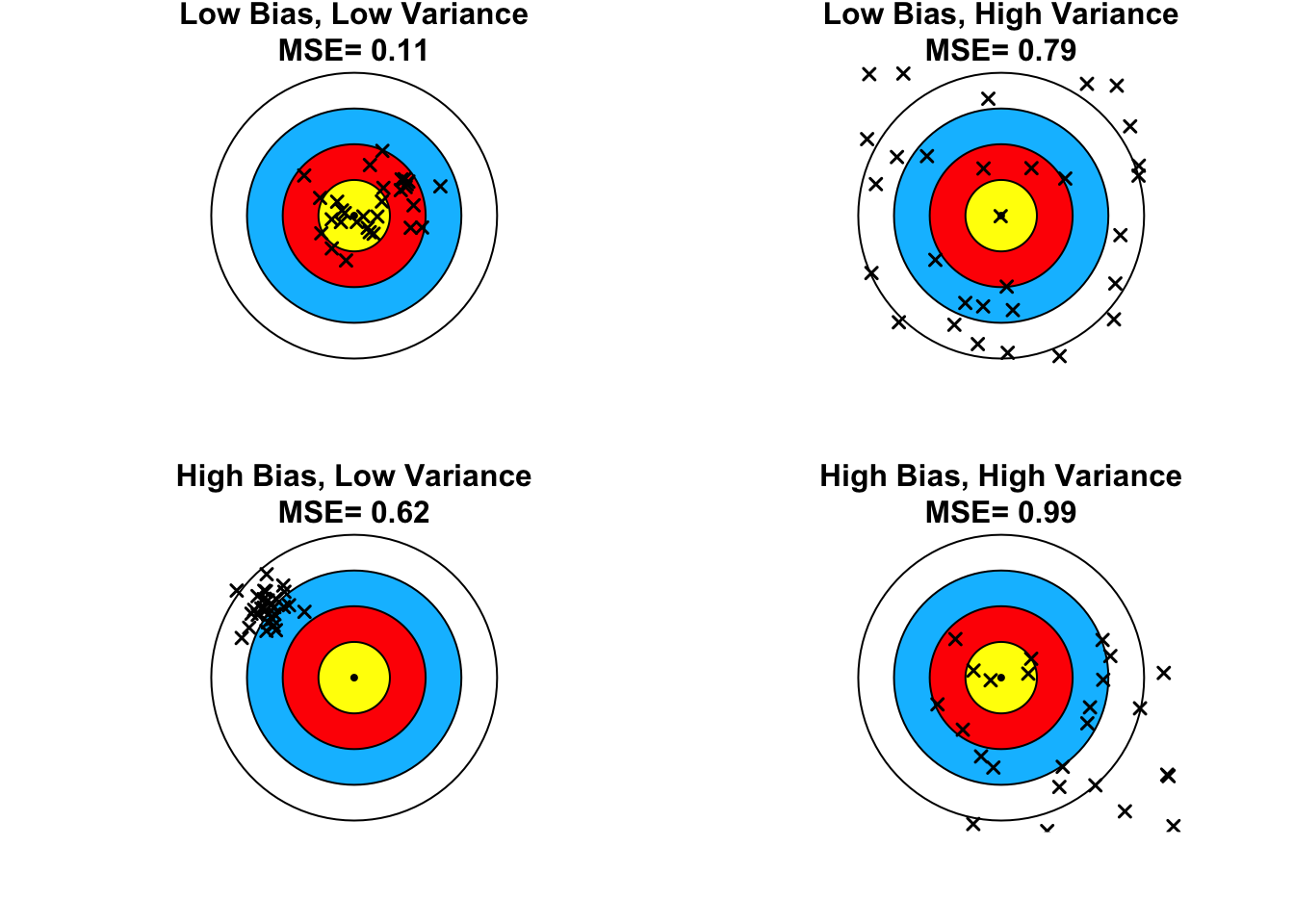
If you study enough econometrics or statistics, you’ll eventually hear someone mention “Stein’s Paradox” or the “James-Stein Estimator” . You’ve probably learned in your introductory econometrics course that ordinary least squares (OLS) is the best linear unbiased estimator (BLUE) in a linear regression model under the Gauss-Markov assumptions. The stipulations “linear” and “unbiased” are crucial…
By the end of a typical introductory econometrics course students have become accustomed to the idea of “controlling” for covariates by adding them to the end of a linear regression model. But this familiarity can sometimes cause confusion when students later encounter regression adjustment , a widely-used approach to causal inference under the selection-on-observables assumption. While regressio…
Here’s a slightly unusual exercise on the topic of Bayes’ Theorem for those of you teaching or studying introductory probability. Imagine that you’re developing a diagnostic test for a disease. The test is very simple: it either comes back positive or negative. You have a choice between slightly increasing either your test’s sensitivity or its specificity . If your goal is to maximize the positiv…
Reading and understanding econometrics papers can be hard work. Most published articles, even review articles, are written by specialists for specialists. Unless you’re already familiar with the literature, it can be a real uphill battle to make it through a recent paper. In grad school I remember our professors repeatedly admonishing me and the rest of the cohort to “read the papers!” But when I…
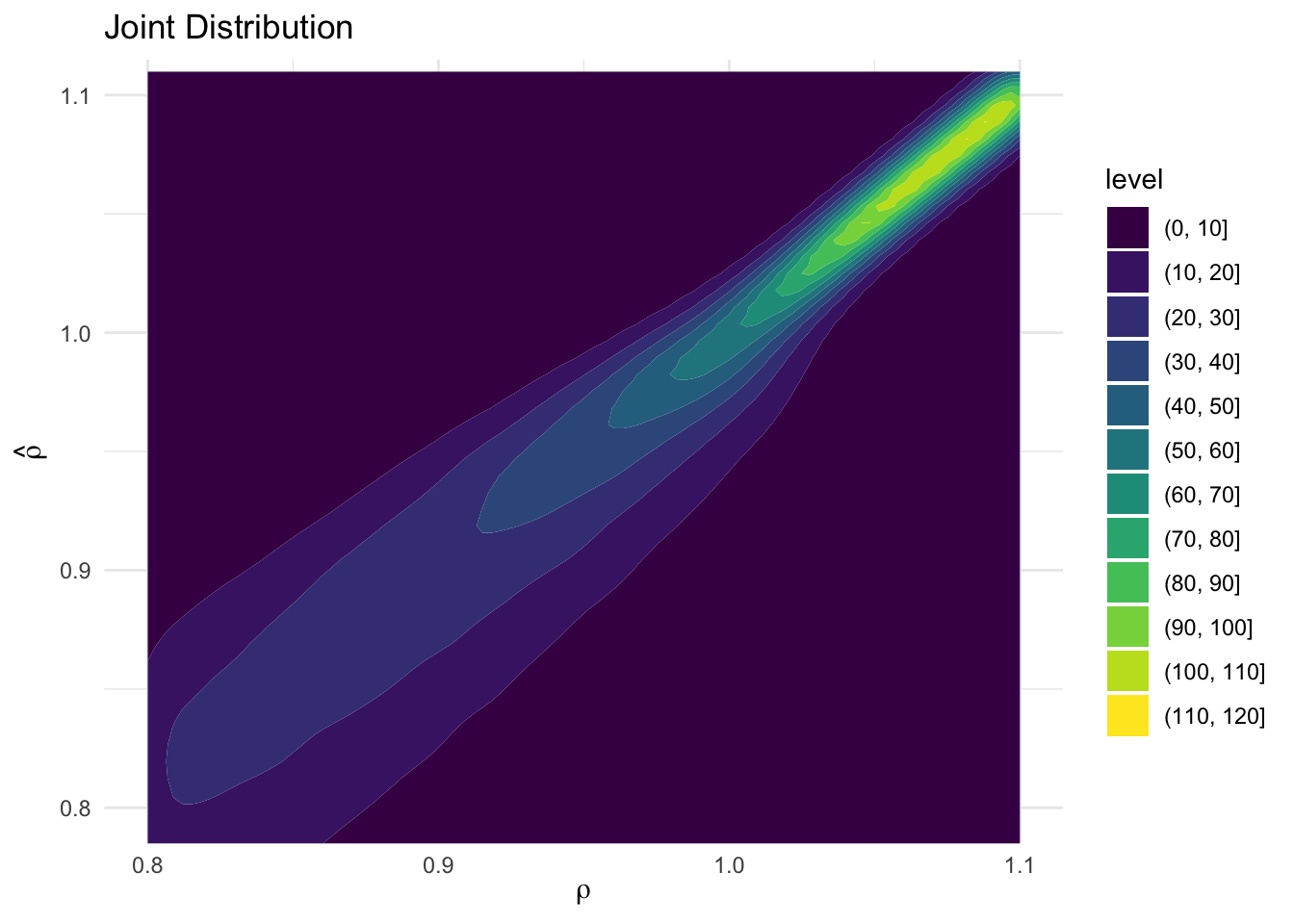
As a teaser for our upcoming (2024-07-23) virtual reading group session on Bayesian macro / time series econometrics, this post replicates a classic paper by Sims & Uhlig (1991) contrasting Bayesian and Frequentist inferences for a unit root. In the post I’ll focus on explaining and implementing the authors’ simulation design. In the reading group session (and possibly a future post) we’ll talk m…
After a year-long hiatus, I’m excited to return to regular blogging about econometrics! I have a long list of posts that I’m eager to write, and I hope you’ll find them interesting. To whet your appetite, here’s a preview of some of the topics I plan to cover in the coming weeks: Bayesian versus Frequentist Approaches to Unit Roots How Not To Do Regression Adjustment Understanding the James-Stein…
Here’s a puzzle for you.
What will happen if we regress some outcome of interest on both an endogenous regressor and a valid instrument for that regressor?
I hadn’t thought about this question until 2018, when one of my undergraduate students asked it during class.
If memory serves, my off-the-cuff answer left much to be desired. 1 Five years later I’m finally ready to give a fully satisfactory a…
R’s formula syntax is extremely powerful but can be confusing for beginners. 1 This post is a quick reference covering all of the symbols that have a “special” meaning inside of an R formula: ~, +, ., -, 1, :, *, ^ , and I() .
You may never use some of these in practice, but it’s nice to know that they exist.
It was many years before I realized that I could simply type y ~ x * z instead of the le…
To do well in an econometrics or statistics course at any level, you need to have a large number of simple properties of random variables at your fingertips. Some years back I made a handout containing the most important properties for my undergraduate students at the University of Pennsylvania. In the hopes that this might be of use to others, I’ve released an updated pdf on github . You can for…
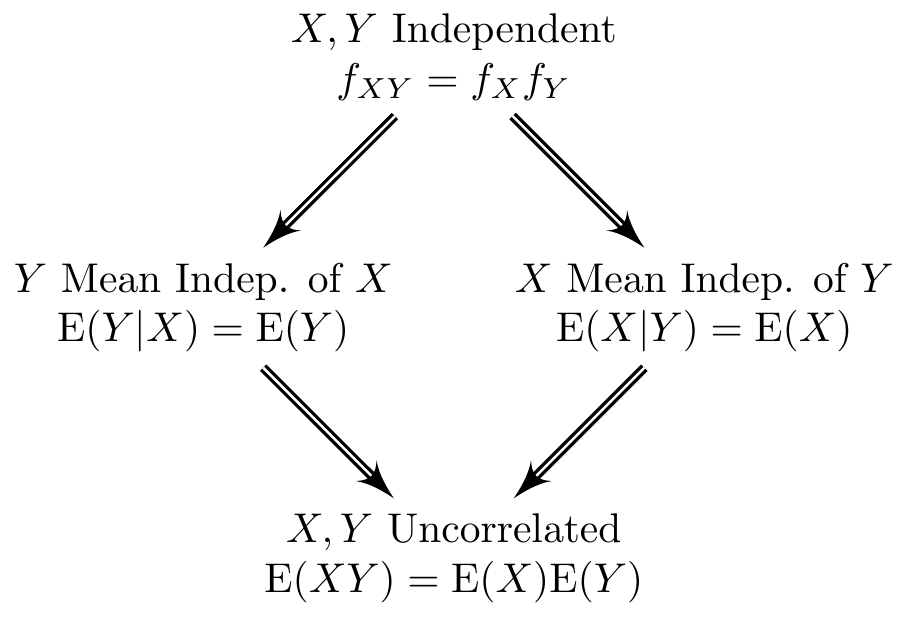
In econometrics it’s absolutely crucial to keep track of which things are dependent and which are independent . To make this as confusing as possible for students, a typical introductory econometrics course moves back and forth between different notions of dependence, stopping occasionally to mention that they’re not equivalent but never fully explaining why, on the premise that “you’ve certainly…
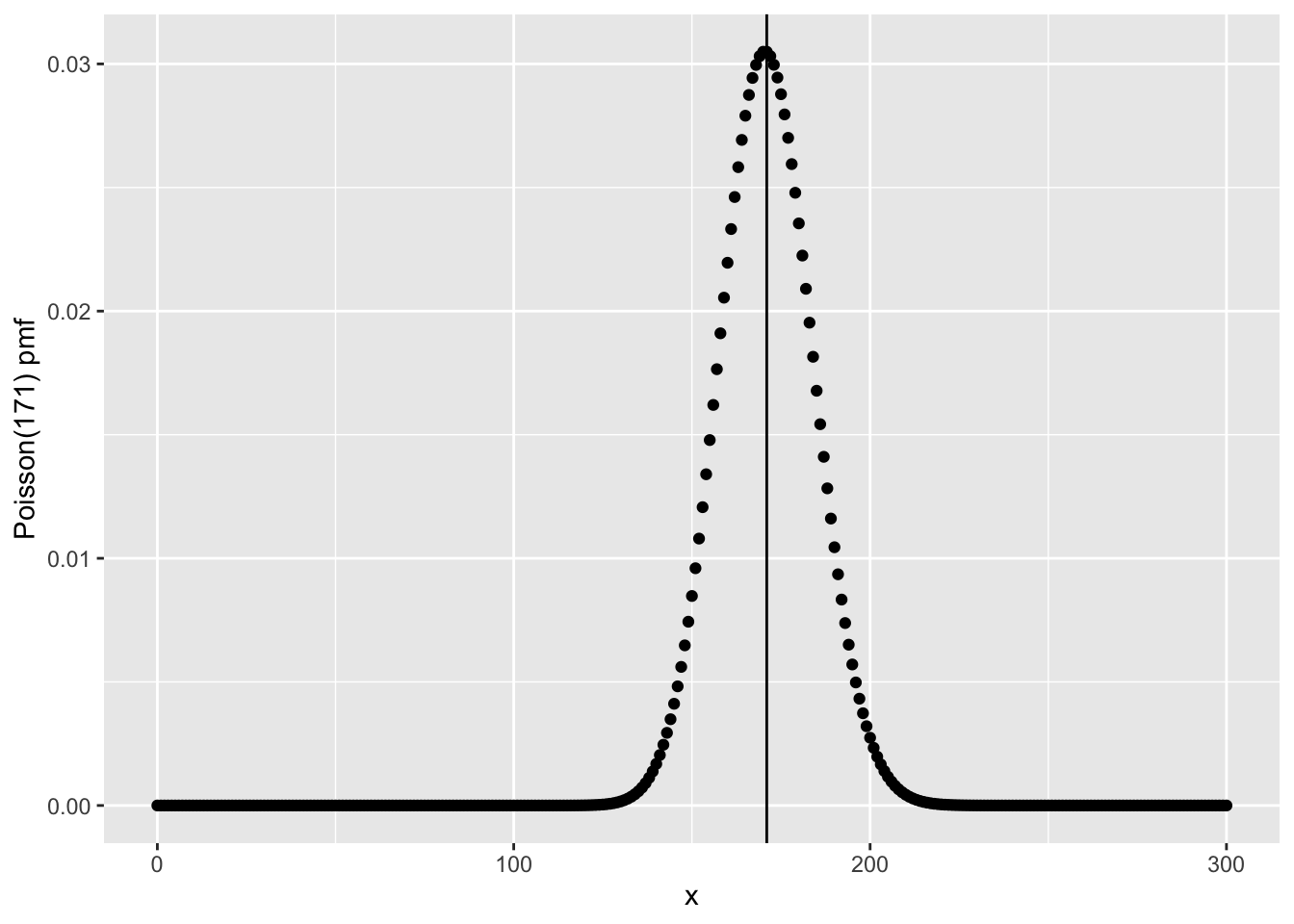
The Poisson distribution is the most famous probability model for counts , non-negative integer values. Many real-world phenomena are well approximated by this distribution, including the number of German bombs that landed in 1/4km grid squares in south London during WWII.
Formally, we say that a discrete random variable \(X\) follows a Poisson distribution with rate parameter \(\mu > 0\) , abbre…

 research.io