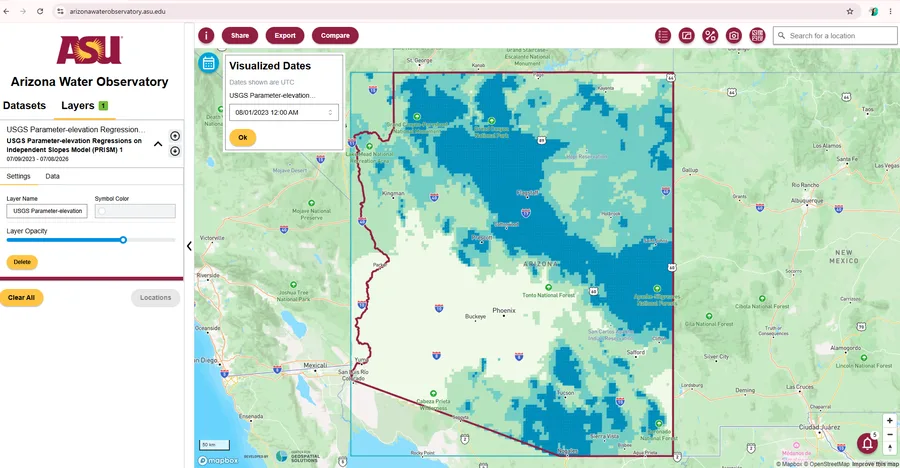
In this tutorial, you’ll explore groundwater conditions in the Santa Cruz Active Management Area (AMA) using data available through the Arizona Water Observatory (AWO) . We begin by retrieving the Santa Cruz AMA boundary, then identify groundwater wells within the AMA and retrieve depth-to-water observations for each well. Finally, we compare annual median groundwater levels with those in 1995, t…
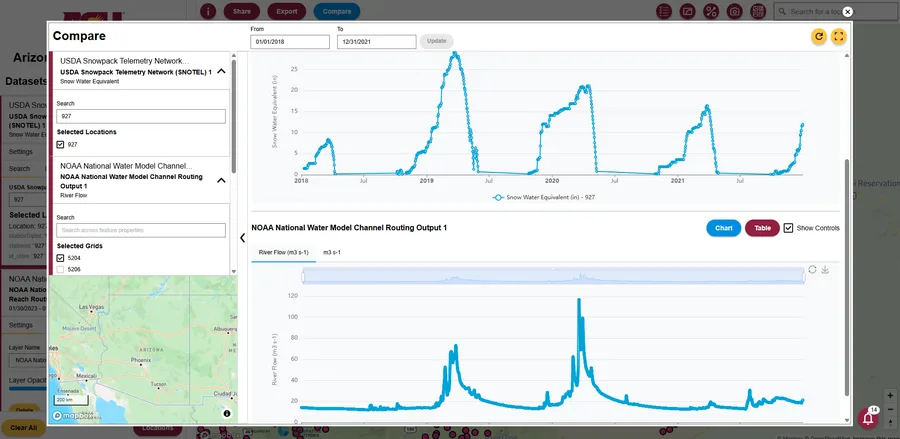
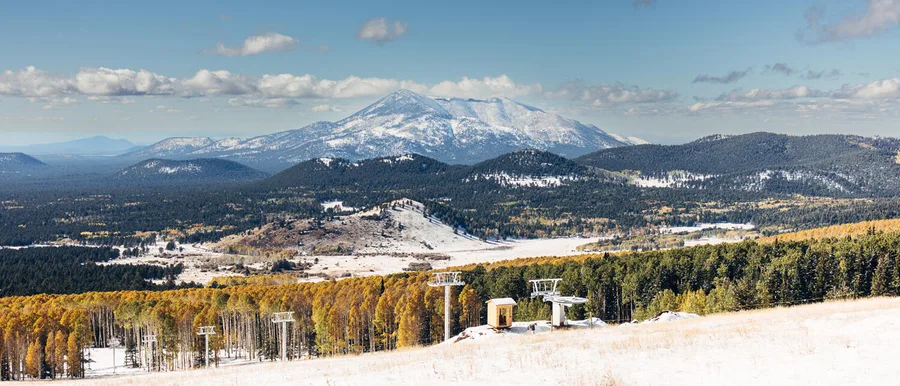
In this tutorial, we demonstrate how the Arizona Water Observatory (AWO) can be used to follow the movement of water through a watershed in Arizona. We begin with snowpack observations from a SNOTEL station in the San Francisco Peaks, then identify the watershed that receives the snowmelt. Next, we retrieve watershed-averaged soil moisture data from NASAʼs Soil Moisture Active Passive (SMAP) miss…
A new publication in the journal Atmosphere ( Huang et al., 2026 ) used the Aurora AI weather forecasting model to provide reliable deterministic guidance within 7 days for a series of different types of extreme events. These findings are importance for numerical weather prediction at short-to-medium range. Congratulations to the authors associated with the Center for Hydrologic Innovations ! Abs…
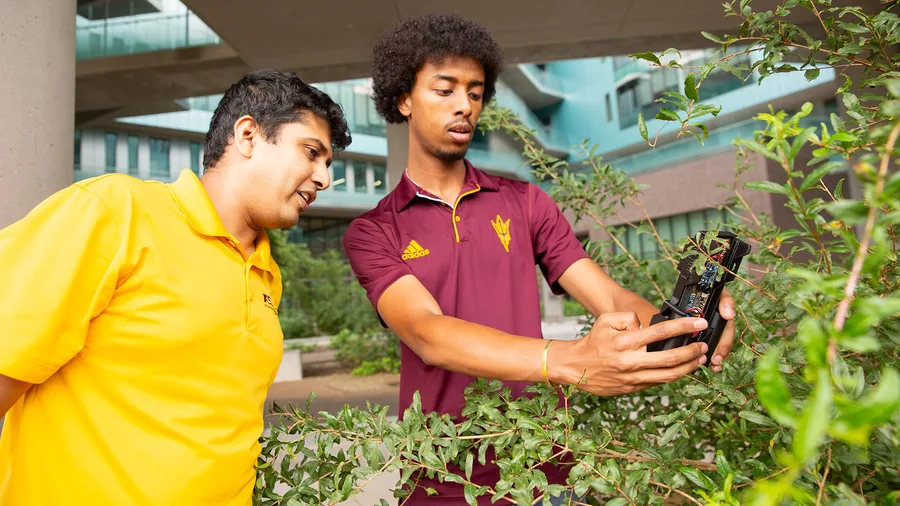
At ASU’s Center for Hydrologic Innovations , the city itself is the laboratory. The center's work takes researchers into parks, neighborhoods and other urban spaces, where lawns, trees and the built environment become part of an experiment unfolding across one of the hottest metropolitan regions in the country. Congratulations to the researchers from the Center for Hydrologic Innovations featured…
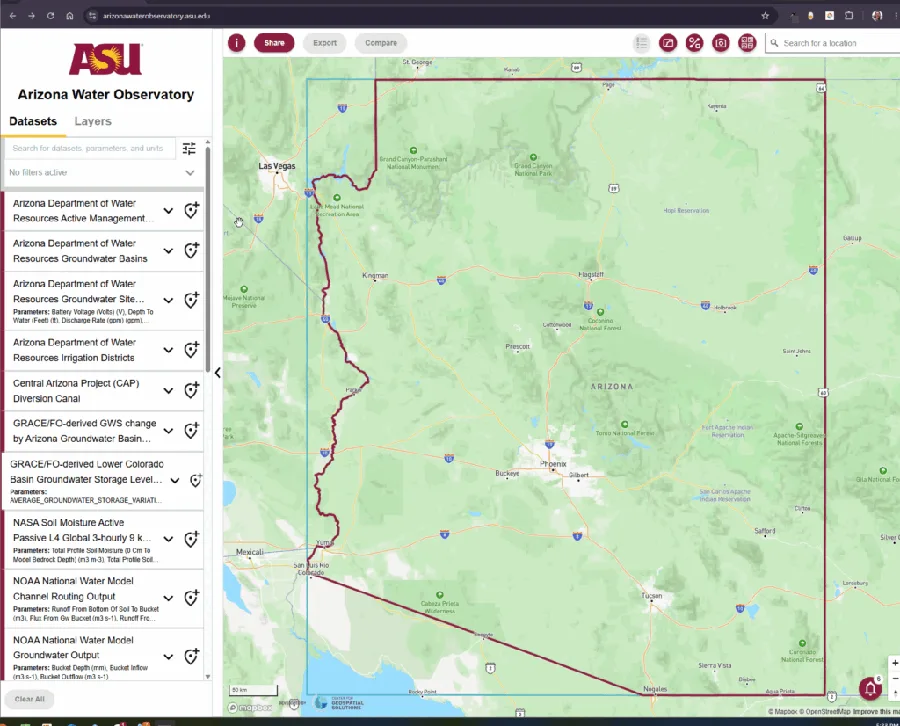
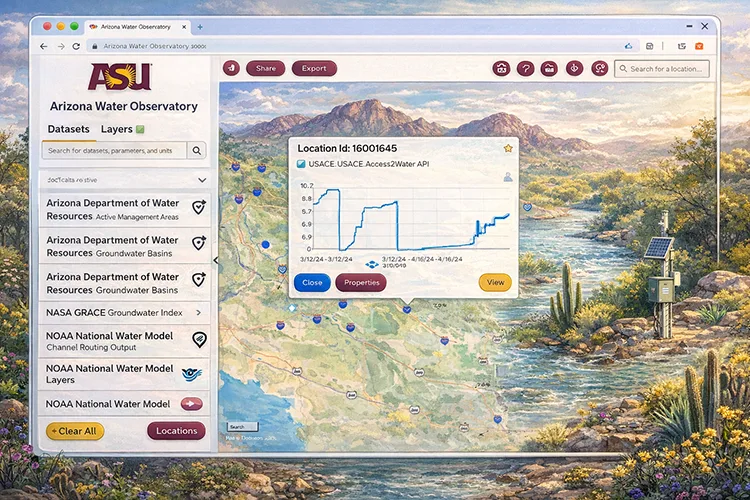
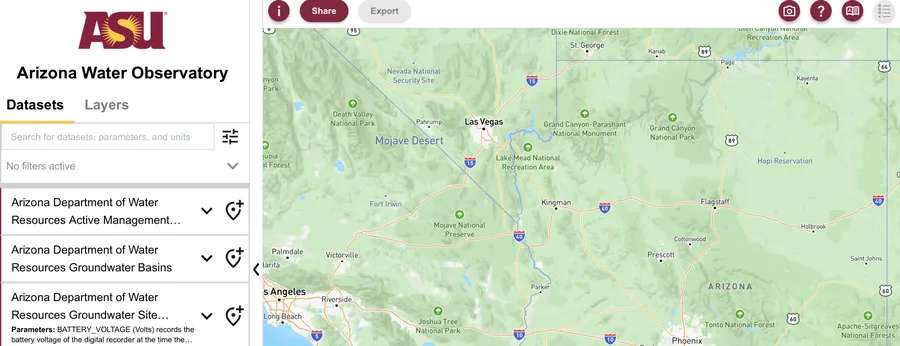
With the Arizona Water Observatory (AWO), ASU's Center for Hydrologic Innovations and the Center for Geospatial Solutions at the Lincoln Institute of Land Policy have teamed up to develop a new open-source clearinghouse, visualization and analysis platform for Arizona’s water data. Through a series of quick start blogs, you can also learn how to use AWO for your day-to-day data needs. Check out t…
A new report stems from the Arizona Tri-University Recharge and Water Reliability Project , includes contributions from Prof. Giuseppe Mascaro and Prof. Tianfang Xu from the Center for Hydrologic Innovations. The project goal was to analyze and identify mechanisms to capture water that would otherwise evaporate across the state and establish region-specific guidance about how and where water can …
A new publication in the journal Water Resources Research ( Ghimire et al., 2026 ) examined the roles of fall soil moisture and spring weather on modulating snow-streamflow dynamics in the Colorado River Basin using the Variable Infiltration Capacity model . These findings indicate that in the Upper Basin, soil moisture can help predict how much water will flow months in advance. Congratulations …
A new publication in the journal Water Resources Research ( Tiwari and Mascaro, 2026 ) provides a statistical characterization of high flow volumes across the United States for an assessment of managed aquifer recharge projects. The approach provide a consistent foundation for screening and siting locations where floodwaters are used to recharge aquifers. Congratulations to the authors associated…
A new publication in the journal Scientific Reports ( Wang et al., 2026 ) describes an updated version of the Variable Infiltration Capacity (VIC) model in the Colorado River basin. The revised model is compared to independent observations from GRACE and SMAP satellites. VIC supports short- and long-term streamflow forecasting and hydrologic investigations in the vital basin. Congratulations to t…
A new publication in the journal Environmental Modelling & Software ( Srivastava et al., 2026 ) describes a new model, PSI-Cascade, to couple stormwater flooding and power outages for the analysis of cascading infrastructure failures, with an application to Phoenix, Arizona. Congratulations to the authors associated with the Center for Hydrologic Innovations ! Abstract: Urban infrastructure is ty…
Congratulations to the team from the Center for Hydrologic Innovations that was recently featured by the Arizona Water Innovation Initiative! Center program manager Vivian Hobbins wrote ap update of the Arizona Water Observatory along with partners at the Center for Geospatial Solutions (CGS) at the Lincoln Institute for Land Policy. Check out the full story at: https://azwaterinnovation.asu.edu/…
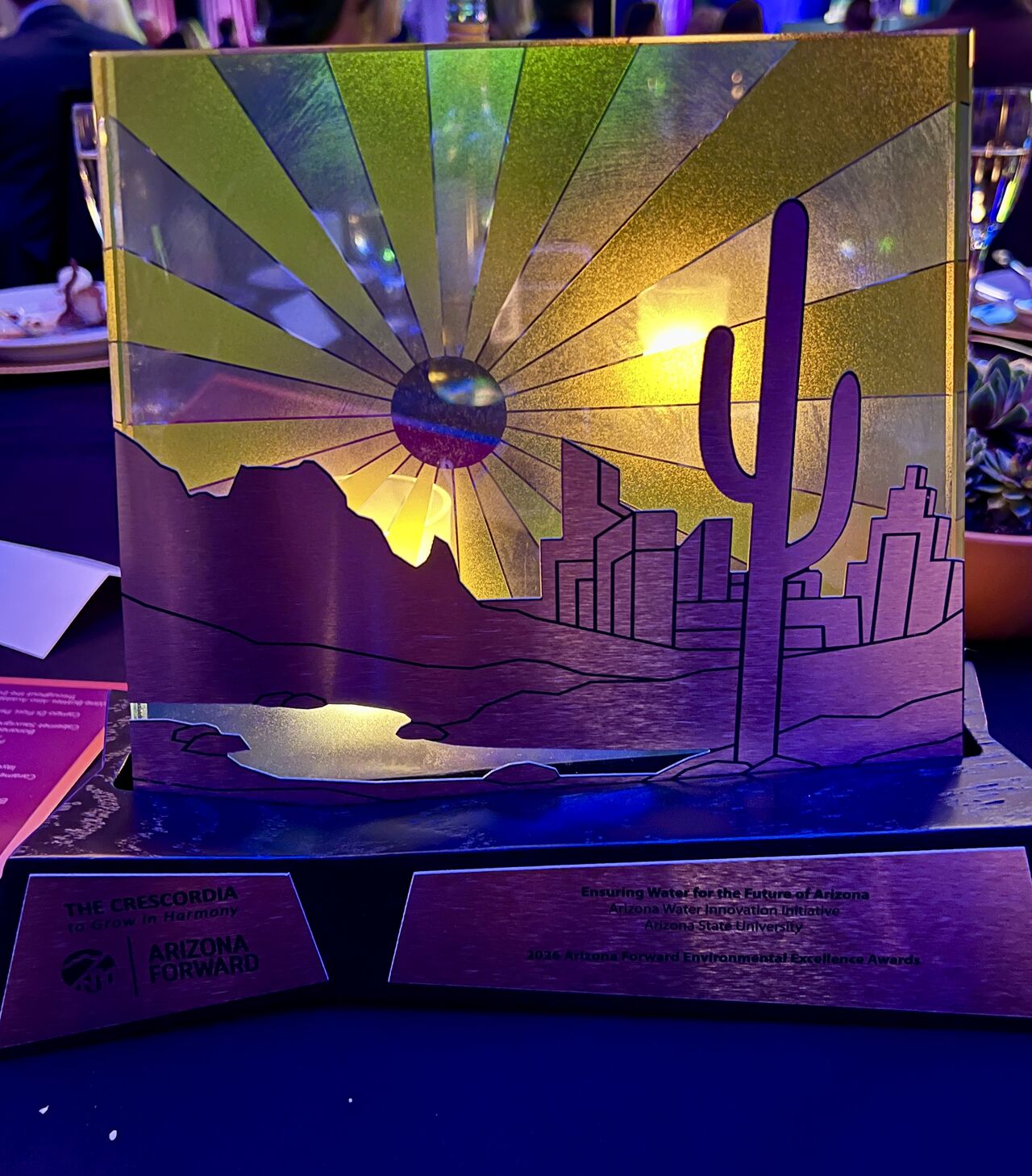
Faculty, postdocs, and graduate students from the Center for Hydrologic Innovations were recognized as part of the winning team for the 2026 Crescordia Award from the Arizona Forward Environmental Excellence Awards. This award was in collaboration with the Arizona Water Innovation Initiative at ASU and recognized: "Ensuring Water For the Future" . Congratulations to all awardees! The post Center …
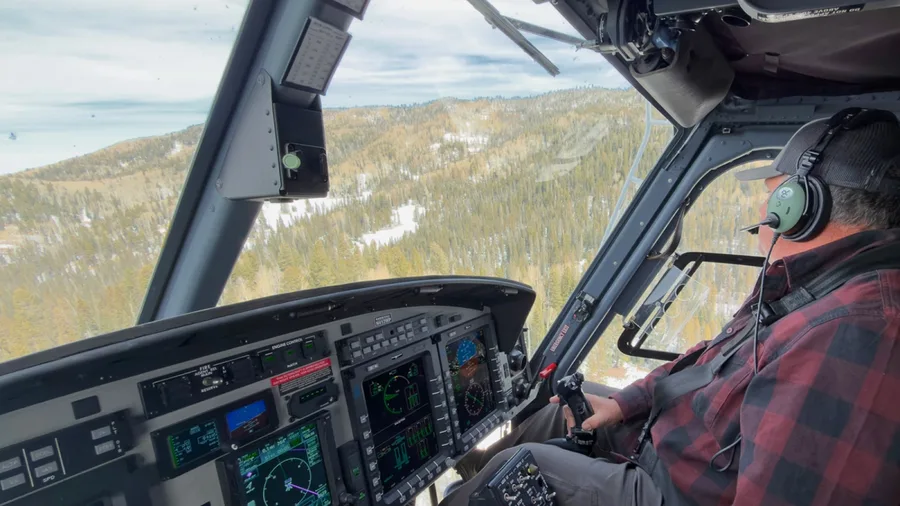
Repeat airborne snow surveys over the Upper Black River found that due to a dry and warm winter, most of the snow water measured in January and February had melted by mid-March, offering water managers a view of how quickly the season changed. The first flight in January measured about 9.1 thousand acre-feet (TAF) of snow water equivalent. A second survey in February measured 9.5 TAF, showing onl…
The Phoenix Chapter of the Arizona Hydrological Society hosted speakers from the ASU Center for Hydrologic Innovations during their seminar series. Dr. Vivian Hobbins and Callahan Stormer presented on: The Arizona Water Observatory: Open-Source Infrastructure for Water Data Analytics . This activity helped disseminate the process and outcomes of the development of the Arizona Water Observatory (A…
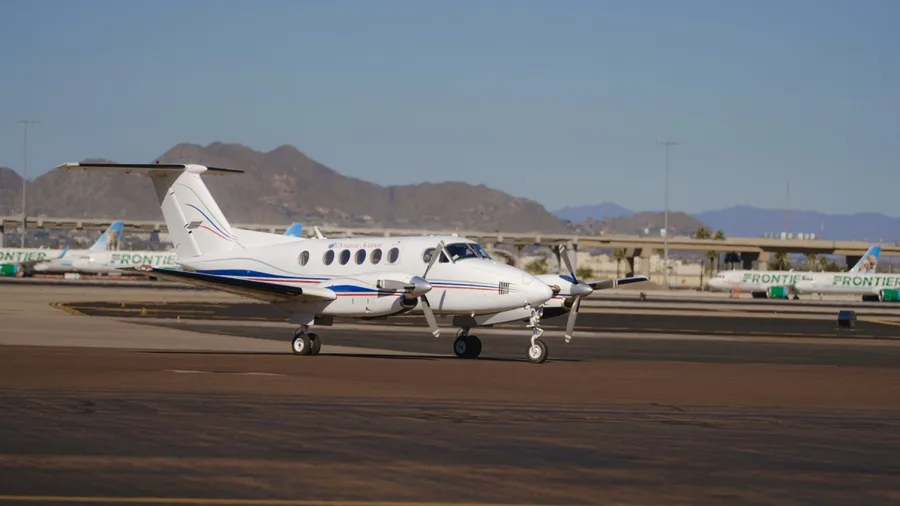
Arizona State University and Salt River Project are working with Airborne Snow Observatories Inc. on an innovative project to measure snowpack in the Salt River watershed — providing crucial data to improve water management. For the first time, a collaborative research team is using an airplane equipped with state-of-the-art scanning lidar and imaging spectrometers, along with innovative computat…
A new publication in the journal Water Resources Research ( Kimsal et al., 2026 ) describes the flooding characteristics (depth, duration, frequency) and their geological controls for a large set of ephemeral playas in the Chihuahuan Desert as part of the Jornada Long Term Ecological Research program. Congratulations to the authors associated with the Center for Hydrologic Innovations ! Abstract:…
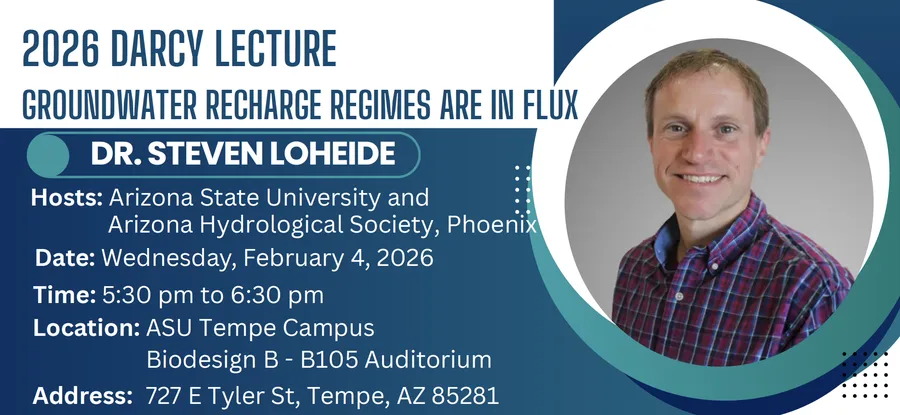
The 2026 Darcy Lecture from the National Ground Water Association will be hosted at Arizona State University on Wednesday, February 4, 2026, 5:30-6:30 pm. Prof. Steven Loheide from University of Wisconsin, Madison will speak on "Groundwater Recharge Regimes Are In Flux". This event is co-hosted by the Arizona Hydrological Society Phoenix Chapter and the ASU Center for Hydrologic Innovations . Abs…
A new publication in the Journal of the American Water Resources Association ( Moiz and Mascaro, 2026 ) evaluates the National Water Model for the state of Arizona and quantifies its ability to reproduce water balance observations at multiple scales over the Millennium Drought period. Congratulations to the authors associated with the Center for Hydrologic Innovations ! Abstract: Arizona, located…
Congratulations to Prof. Saurav Kumar who was recently interviewed by the Ira A Fulton Schools of Engineering on his mentorship activities with the FURI, MORE and GCSP research programs. Check out the full interview: https://forge.engineering.asu.edu/2025/10/qa-with-faculty-mentor-saurav-kumar/ The post Prof. Kumar highlighted as Fulton Mentor appeared first on Center for Hydrologic Innovations .