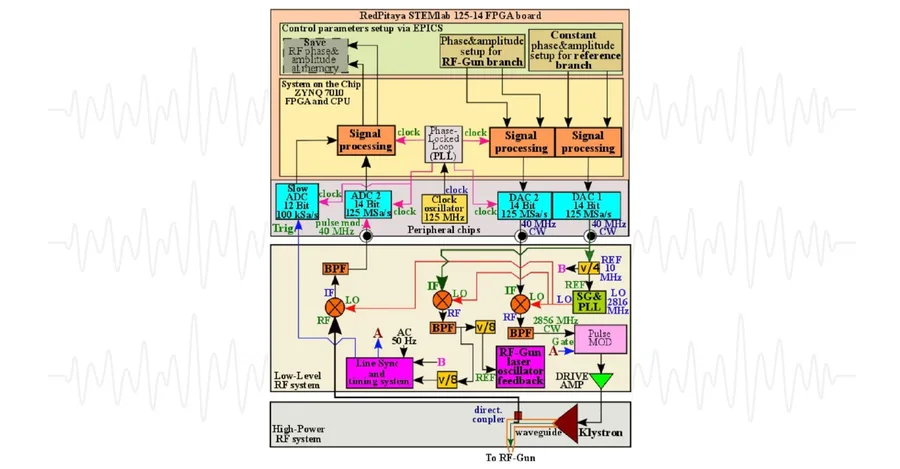
The evolution of FPGA development boards and control electronics over the last two decades has enabled the implementation of FPGA-based Low Level Radio Frequency (LLRF) feedback and feedforward systems for precise control of the accelerating field using high frequency ADCs and DACs in combination with the down-conversion approach.
Modern high-speed optical systems—such as hyperspectral imaging, interferometry, and spectroscopy—generate data faster than traditional centralized servers can process, creating massive bandwidth and storage bottlenecks. In a recent article for Vision Systems Design , Red Pitaya CTO Črt Valentinčič explains how shifting from centralized cloud architectures to on-device edge processing (using SoCs…
In an interview published in the April 2026 issue of All Instrumentation Industry magazine, Red Pitaya CEO Mateja Lampe Rupnik discusses how compact, FPGA-based and software-defined instrumentation is changing the way engineers and researchers approach test and measurement.
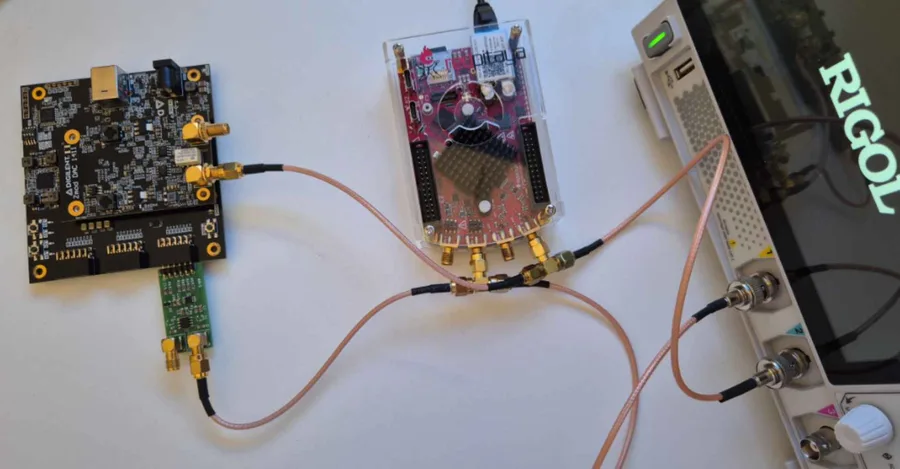
Artificial intelligence is beginning to transform FPGA verification and automated test workflows. In a recent article, FPGA engineer Pablo Trujillo demonstrates how an AI agent can control a Red Pitaya STEMlab PRO Gen 2 using the Model Context Protocol (MCP) to generate signals, configure test equipment, acquire measurements, and verify FPGA designs with minimal manual intervention.
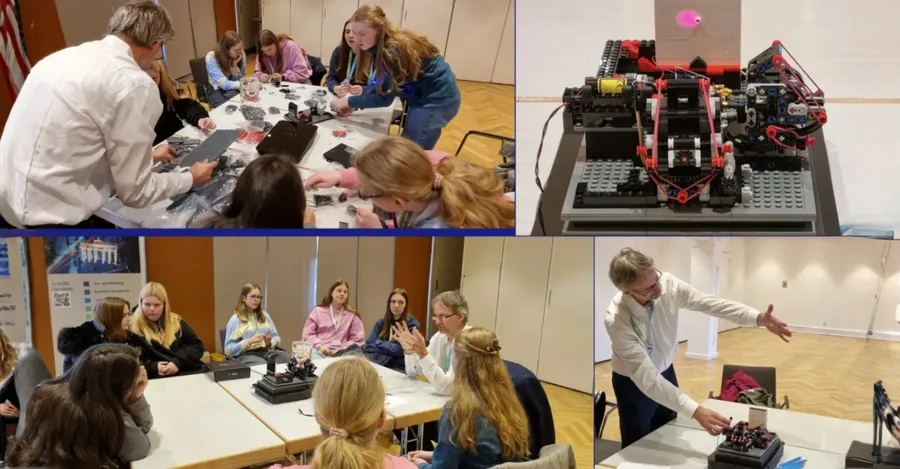
On October 16, 2025 , we had the pleasure of participating in the Girls' Technology Congress, an event for female students in grades 7 through 12 from Berlin and Brandenburg. The congress gives young women the opportunity to explore science and technology through hands-on laboratory experiments, inspiring discussions with experts from research and industry, and guided tours of the Technology Park…
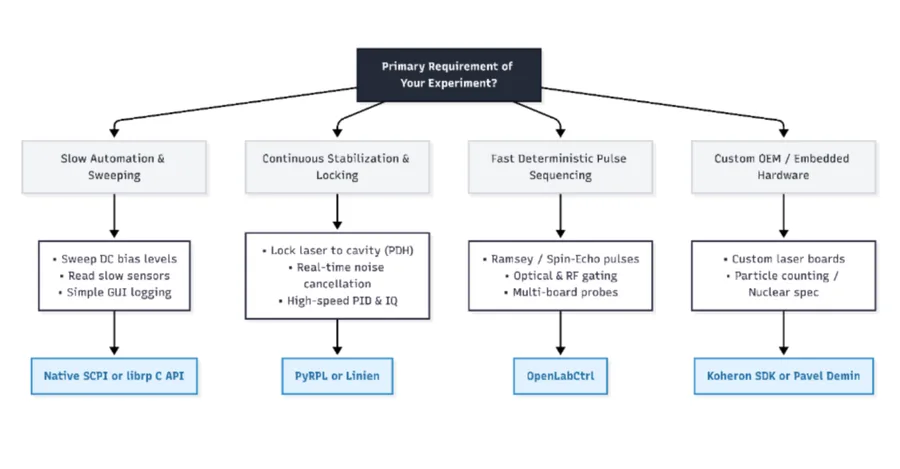
When setting up a laboratory, researchers face a choice: invest heavily in proprietary commercial instrumentation or spend months writing custom FPGA Hardware Description Language (HDL) code. Red Pitaya boards—combining ARM Cortex-A9 processors with programmable logic (PL)—bridge this gap. This review evaluates the primary open-source experimental control solutions available for Red Pitaya, detai…
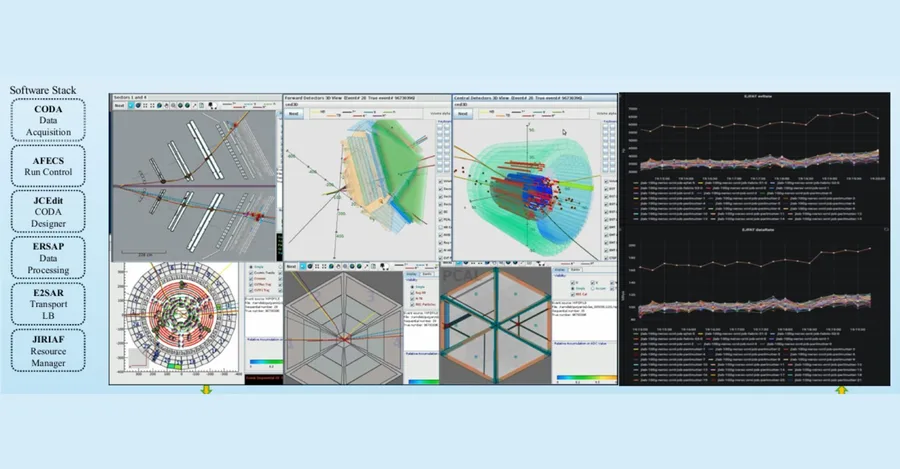
Modern particle accelerators generate enormous amounts of measurement data that must be acquired, synchronized, processed, and analyzed with extremely low latency. Whether monitoring beam stability, controlling pulsed magnets, or performing high-voltage measurements, engineers increasingly need flexible instrumentation that can be customized without designing hardware from scratch.
ControlPaths demonstrates how to transform a Red Pitaya STEMlab into a flexible software-defined radio (SDR) using GNU Radio. The article walks through hardware setup, software configuration, and signal processing, showing how engineers can use Red Pitaya as a compact SDR platform for RF experimentation, wireless communications, and signal analysis.
Overcoming the classical latency bottleneck in Xanadu’s Aurora to suppress optical erosion and phase instability in spatiotemporal cluster states. In continuous-variable measurement-based quantum computing (CV-MBQC), the path to fault tolerance does not rely on scaling static physical qubits inside dilution refrigerators. Instead, it scales by entangling flying photons into high-dimensional spati…