SetupAlpha

Hi, Which indicator actually tells you what bitcoin does next month? I tested 17 of them. On the last day of every month since September 2015 I read one indicator. If it said trend was up, my test held bitcoin for that month. If it said down, my test held cash. Then I measured what happened. That is 132 months, run 17 times over. The best rule turned $10,000 into $4,742,074. The worst turned the …

Strategy version everyone tests loses to the index. This one does not, and the difference is not in the rules.

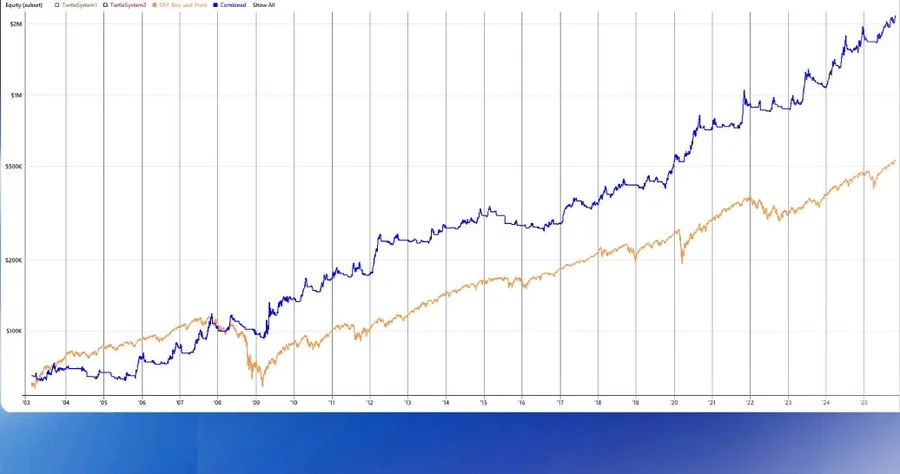
Hey! I tested a 3 rule strategy on SPY, the fund that tracks the S&P 500, across 26 years from January 2000 to August 2026. It made profit on 73.71% of its trades. Its worst losing drawdown was 15.52% but holding SPY across the same years would have put you 49.91% down at the worst point. Here is what it did, and where the difference came from.

“I’d feel more comfortable if I had a stop-loss in place.” Yes, that is the case for a stop and it is a fair one. If you are out at 5%, no single position can keep taking money off you week after week. I tested it on a - Long mean reversion system - Trading SPY 0.00%↑ 500 members - From 3 January 2000 to 7 August 2026. - Backtest in-sample (2000-2012) - Backtest out-of-sample (2013-2026) With no …

The worst exit here wins 47% of its trades. 8 exits ranked worst to best on identical trades, each with the RealTest code.

The S&P 500, Nasdaq 100, Dow and Russell universum compared side by side, and what each one already filtered out before your first line of code runs.

A 26-year test of 12 momentum indicators across the Russell 1000 reveals which signals actually predict next month's winners.
Tested on every Russell 1000 stock, every month since 2000. The RealTest code for all 21 is included.
We tested 5 classic candlestick patterns. Only one survived the 2008 and 2022 bear markets. Here is the code:
Part 2 of Market Edges. Government contracts, insider clusters, ETF flows, ship tracking, and weather. With Python code you can run today.
VIX, breadth, credit, bonds, gold. 800+ backtests, plus the final ranking of all 45 filters in the series.
1,600+ backtests across SPY, QQQ and Bitcoin. RSI, MACD, ADX and friends, scored on protection, cost, stability and reach. One of them finished worse than no filter at all.
2,700+ backtests across SPY, QQQ and Bitcoin. Every filter scored on protection, cost, stability and reach. Find yours, then see what it has been charging you.

Hey! There is a certain kind of AI trading answer that looks useful for about 15 seconds. Ask ChatGPT or Claude, “Give me a profitable mean-reversion strategy,” and you usually get the same recipe with different wording: buy weakness, sell the bounce, add RSI, maybe add a volatility filter, optimize the lookback. Nothing is technically wrong with that answer, which is why it wastes time. It sound…

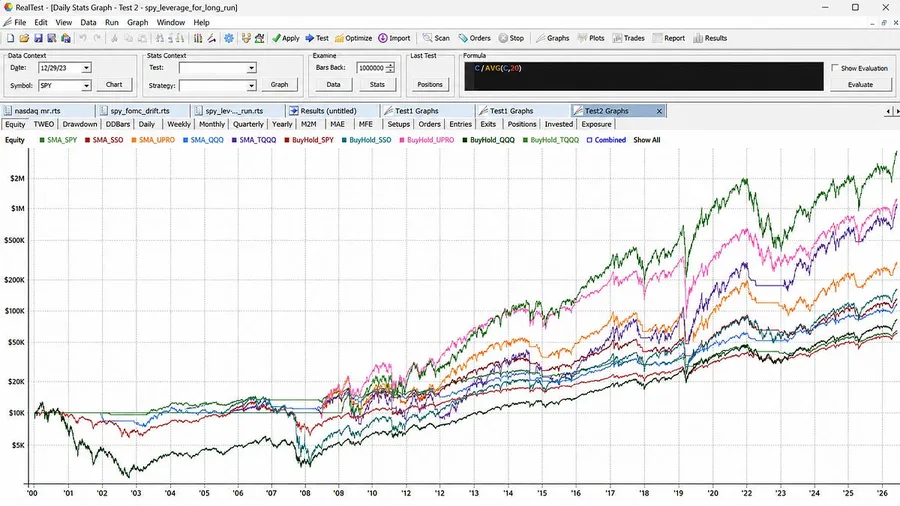
TQQQ is easy to sell with one screenshot. Start with $10,000. End with millions. Make regular index investing look slow. Then leave out the years where the account gets cut by more than 80%. Leave out the trade list. Leave out the moment a real trader starts reducing size, overriding signals, or deciding the backtest was never realistic. My test is smaller and more practical: - define the rule, -…

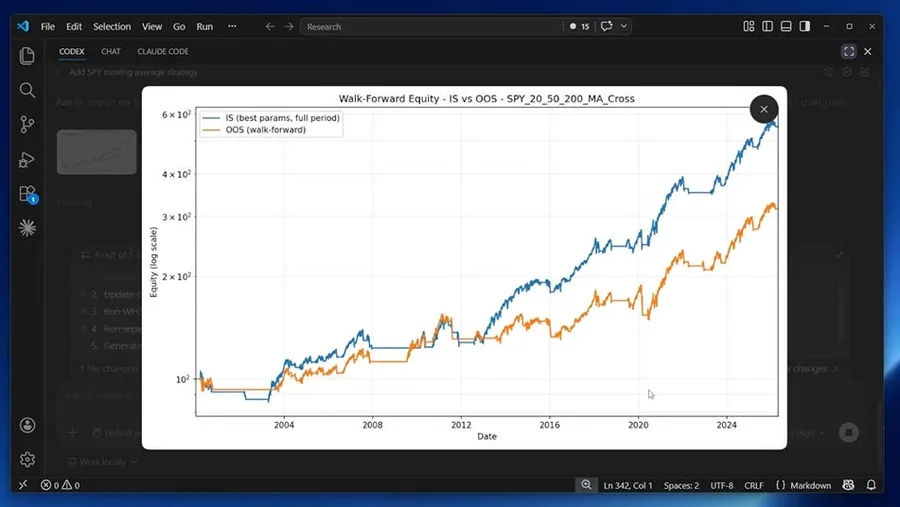
Hey Trader! If you have tried using AI for trading research, you know the trap. The first AI answer can look amazing. Then you spend the next hour: - fixing syntax - waiting the AI reponse - checking the rule logic - struggling with AI hallucination - pointing the agent back to the right data - rerunning the backtest - etc. So I gave Codex, Gemini, and Claude Code the same job: Create the strateg…

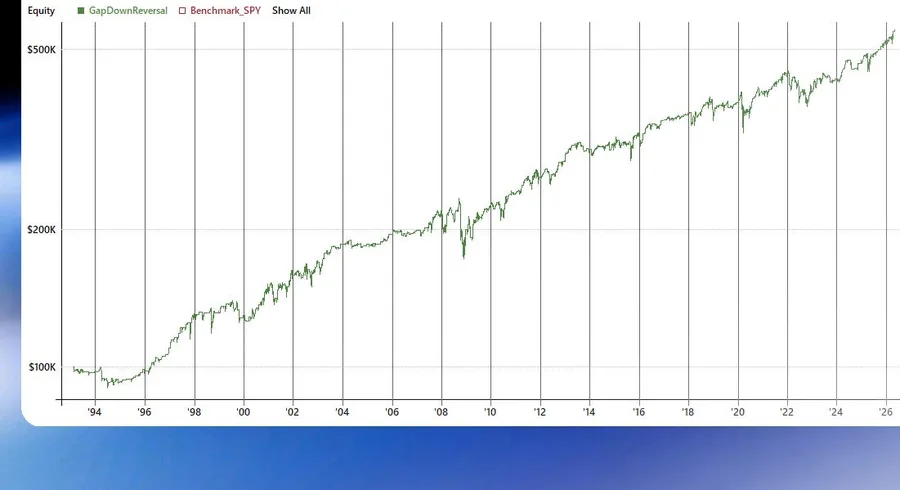
Hey, I’m sure you want a clean reversal setup. The one nice setup is where SPY gaps down, shakes everyone out, and then rips higher while the trade looks obvious in hindsight. This idea is actually very simple. - But how does it work? - What are the rules? - And should you even use it? In this article, we’ll find out. Gap Down Only Proves Weakness, Not Exhaustion A gap below yesterday’s low tells…
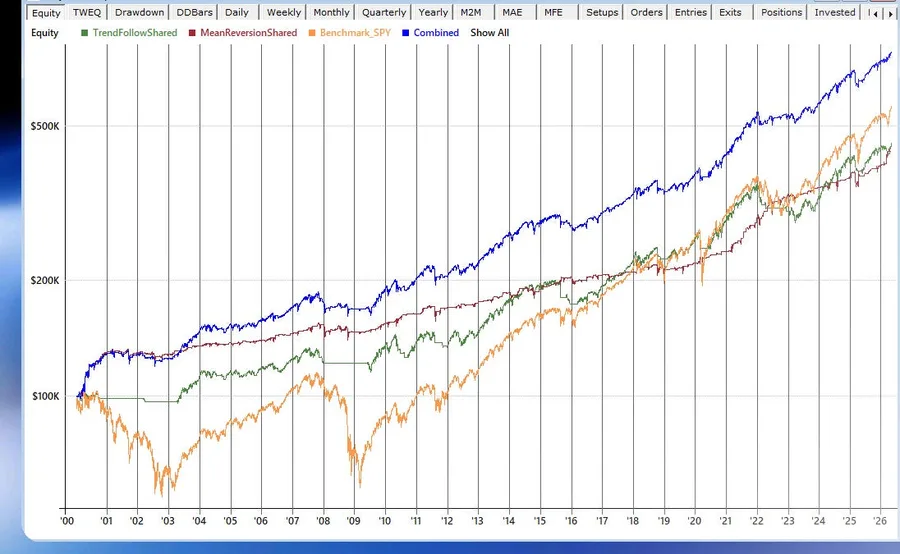
Hey Trader, You’ve probably heard that before: Trend following and mean reversion are usually framed as a contest. Which one wins? Which one has the better Sharpe? Which one survives 2026? That’s the wrong test. A trend system gets paid when movement persists. A mean-reversion system gets paid when movement snaps back. One wants continuation. The other wants exhaustion. If you only compare them a…
I tested a 4-rule and 12-rule mean-reversion strategy. The complex version looked better in-sample. Out of sample it collapsed. Here's why.

research.ioSign up to keep scrolling
Create your feed subscriptions, save articles, keep scrolling.