Making something run automatically and having it actually get handled to completion turned out to be two different sentences This is the English version of a post originally written in Korean for my algorithmic trading system devlog (new tab). I designed this system to judge and trade on its own, without needing human approval for each decision. The order execution and safety-guard layer (new tab…
Commercial banks can strengthen credit decision-making by connecting credit monitoring, risk measurement, stress testing and problem-loan recovery within a single end-to-end workflow, according to an April 28, 2026 case study from S&P Global Market Intelligence. The analysis argues that fragmented Read More ... The post S&P Global Outlines Four-Pillar Model for Modernising Credit Risk Management …
Discover the best crypto trading bots for 2026, featuring smart automation and customization options to elevate your trading strategies. The post Best Crypto Trading Bots for Active Traders in 2026 appeared first on Tickerly .
The scariest bug in a backtest (the thing that estimates a strategy's returns on past price moves) isn't a crash. It's accidentally using tomorrow's price. It's called lookahead bias, and if you let even a sliver of tomorrow's close leak into today's math, your strategy turns into a prophet. The backtest numbers glow. Then you ship it live and it melts on contact. And the code never throws a sing…
Every trading bot post ends the same way: a green equity curve and a suspicious silence about whether it made real money. This post is the other one. I spent months building an algorithmic trading system, tested it as honestly as I know how, and here is the headline result: My best strategy returned +4.33% over three years of out-of-sample testing. Buying Bitcoin once and holding it returned +127…
The Quest Begins (The “Why”) Honestly, I was staring at a candlestick chart at 2 a.m., coffee gone cold, wondering why my “gut feeling” trades kept landing me in the red. I’d read a dozen blog posts that shouted “use moving averages!” and “RSI is your friend!” but every time I tried to slap them together in a script, I ended up with a tangled mess of loops, off‑by‑one errors, and signals that loo…
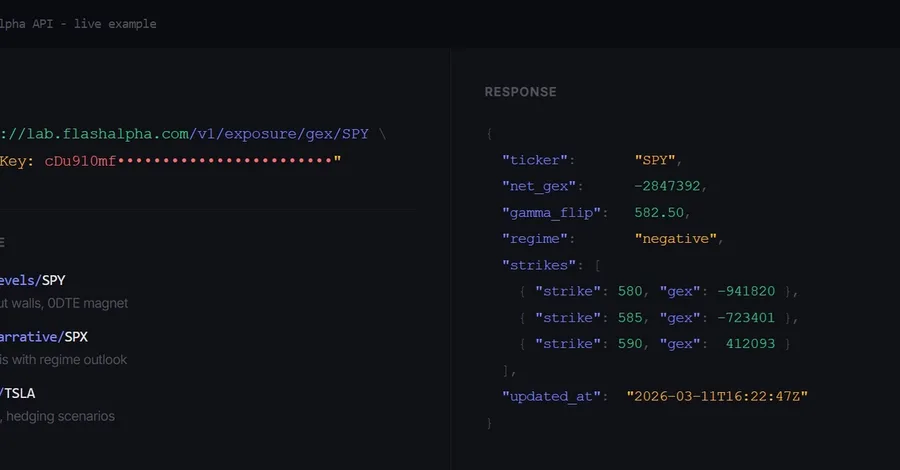
Originally published at flashalpha.com . If you are comparing these two, you are probably not choosing between them. Most desks that run FlashAlpha also have Bloomberg in the building. The useful question is narrower: can the terminal you already pay for feed your systematic options research? Usually it cannot, and the reason is quotas rather than quality. Full disclosure: I built FlashAlpha. Blo…
The modern artificial intelligence and semiconductor markets are heavily dependent on two major technological titans, which shape how chips are […]
The oldest person in the world, Kane Tanaka of Japan, died in April 2022 at 119 years. The record of Jeanne Calment of France, who died at 122, has stood for almost 25 years. Will it be beaten?
Statistics shows data is often grouped on a bell curve distribution, but a business study reveals that extreme outliers can skew research – with big implications.
If you build features for Numerai Signals from fundamentals, the single most common way to silently overstate your live performance is joining on the wrong date. Most fundamentals vendors ship data keyed by fiscal period end or a generic "report date" that gets overwritten on every revision. Neither tells you when the number was actually knowable. Numerai's tournament resolves against real future…




 research.io