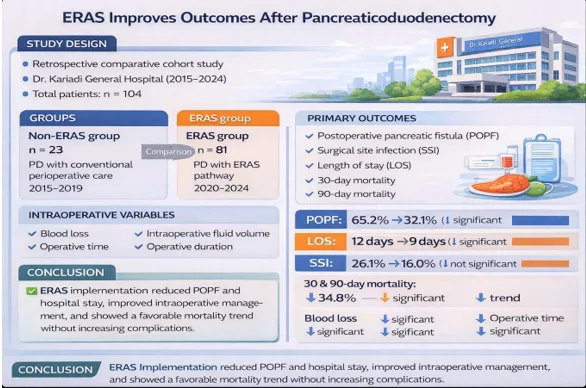
Pancreaticoduodenectomy (PD) is the only potentially curative treatment for periampullary cancer, but it carries high postoperative morbidity and mortality. Enhanced Recovery After Surgery (ERAS) protocols aim to standardize perioperative care and accelerate recovery. This study evaluated the association of ERAS implementation with postoperative outcomes after PD at Dr. Kariadi General Hospital. This single-center retrospective comparative pilot study included 104 patients undergoing PD: non-ERAS (n=23) and ERAS (n=81). ERAS exposure was defined by treatment period and documentation of management under the institutional ERAS pathway. Outcomes included postoperative pancreatic fistula (POPF), surgical site infection (SSI), length of stay (LOS), 30- and 90-day mortality, intraoperative fluid volume, estimated blood loss, and operative duration. ERAS was associated with a lower POPF rate (32.1% vs. 65.2%; p=0.009; OR 0.25, 95% CI 0.09–0.67) and shorter LOS (median 9 vs. 12 days; p=0.023). SSI was lower in the ERAS group (16.0% vs. 26.1%) but not statistically significant (p=0.210; OR 0.54, 95% CI 0.18–1.63). Thirty- and 90-day mortality were both lower with ERAS (17.3% vs. 34.8%) but not statistically significant (p=0.067; OR 0.39, 95% CI 0.14–1.10). No additional deaths were documented between days 31 and 90. Estimated blood loss, intraoperative fluid volume, and operative time were all significantly lower in the ERAS group (all p<0.001). In this retrospective pilot cohort, ERAS implementation was associated with improved key outcomes after PD, particularly lower POPF and shorter LOS. These findings are exploratory and require prospective validation with a standardized ERAS compliance assessment.