


Freezing can turn a productive subtropical orchard into a landscape of damaged leaves and stalled growth, but triploid loquat appears to carry an internal defense. Researchers found that these plants preserve photosynthesis during freezing by accumulating highly unsaturated phosphatidylcholine (PC), especially PC 18:2/18:2, which helps stabilize cellular and chloroplast membranes. The team connected this lipid response to the EjFAD2 gene and its upstream regulator, the EjMYBS3 transcription factor. By linking chromosome number, membrane composition, and photosynthetic performance, the study explains why triploid loquat survives cold more effectively than its diploid and tetraploid parents and identifies molecular targets that could support breeding for climate-resilient, seedless fruit cultivars.
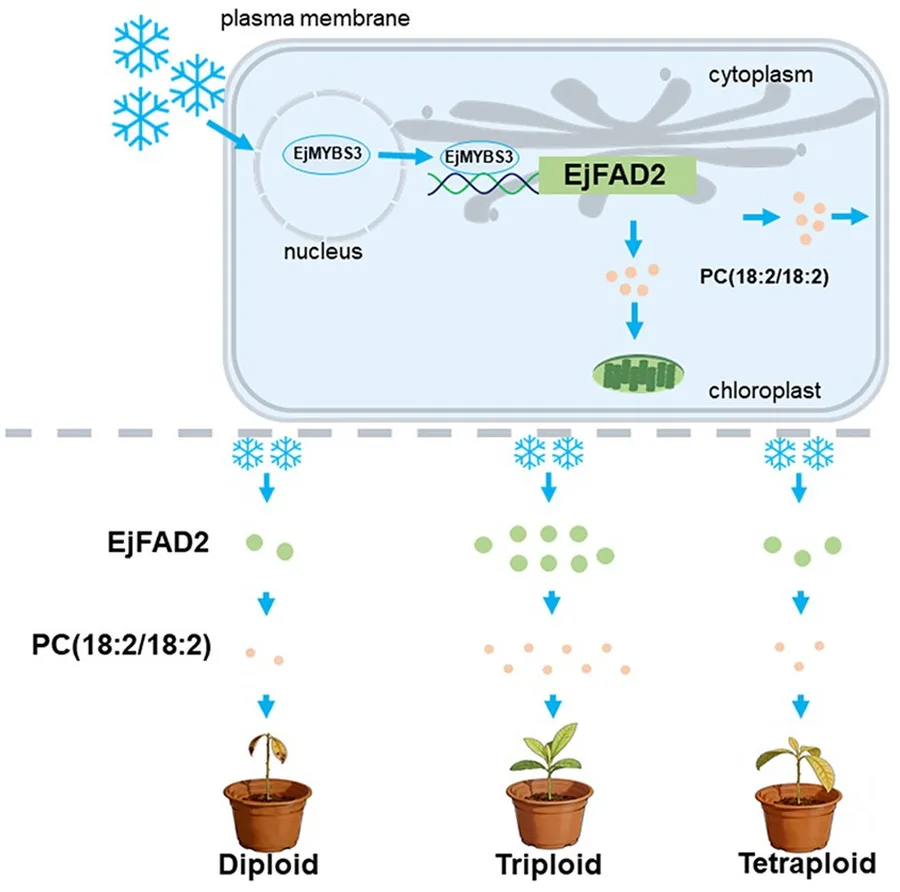
Triploid Loquat Builds a Lipid Shield Against Freezing
Chinese Academy of Sciences