


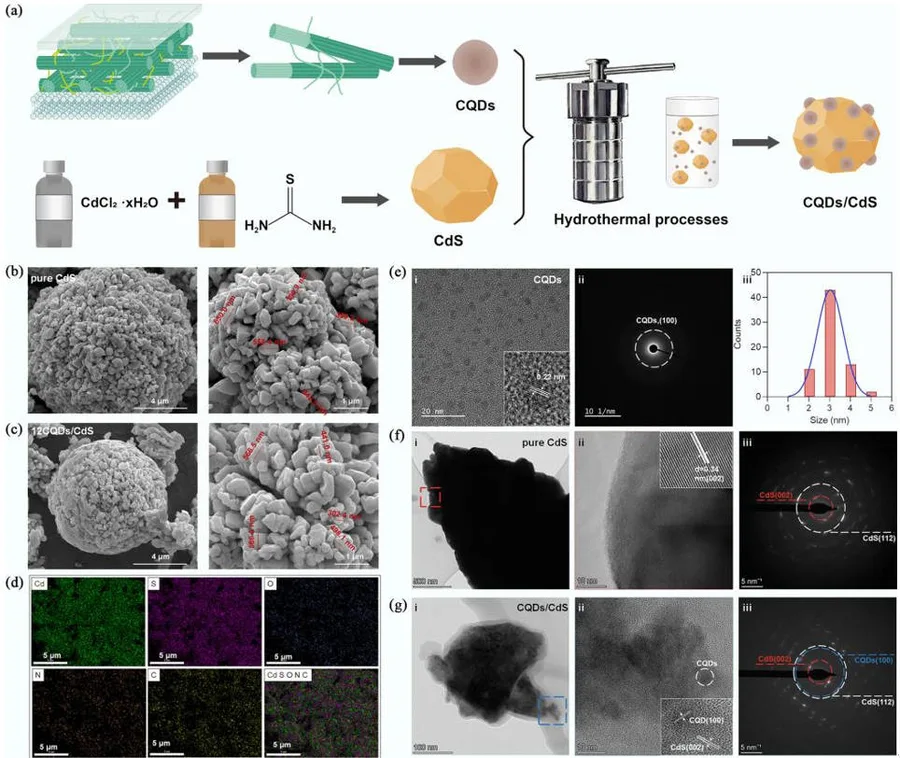
A research team has developed a visible-light photocatalyst that nearly doubled hydrogen production by decorating cadmium sulfide (CdS) nanoparticles with carbon quantum dots (CQDs) derived from cellulose. The optimized composite produced 7,812.5 (micro)mol of hydrogen per gram within five hours, compared with 4,633.5 (micro)mol/g for unmodified CdS. The CQDs improved light harvesting, accelerated electron transfer, and reduced the recombination of photogenerated charge carriers. By combining a biomass-derived carbon material with a visible-light-responsive semiconductor, the strategy could support the development of more sustainable and cost-effective systems for converting solar energy into clean hydrogen fuel.
Cellulose Quantum Dots Nearly Double Solar Hydrogen Production
Chinese Academy of Sciences