

On Jan. 11, 2026, I watched anxiously at the tightly controlled Vandenberg Space Force Base in California as an awe-inspiring SpaceX Falcon 9 rocket carried NASA’s new exoplanet telescope, Pandora, into orbit. Exoplanets are worlds that orbit other stars. They are very difficult to observe because – seen from Earth – they appear as extremely faint dots right next to their host stars, which are millions to billions of times brighter and drown out the light reflected by the planets. The Pandora...
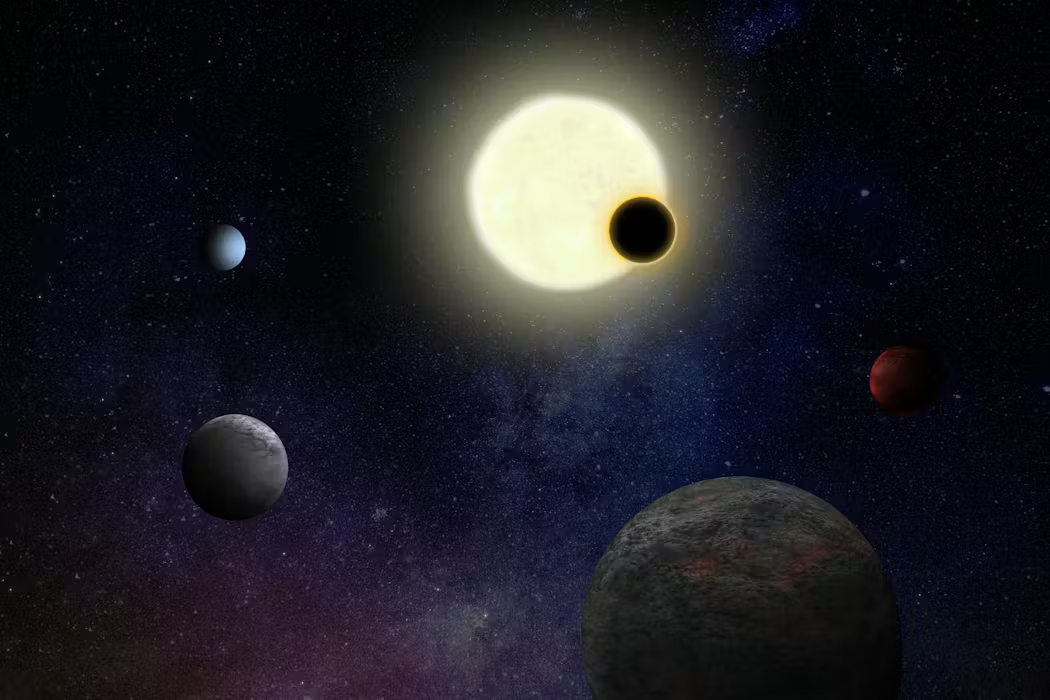
NASA’s Pandora telescope will study stars in detail to learn about the exoplanets orbiting them
Daniel Apai, Associate Dean for Research and Professor of Astronomy and Planetary Sciences, University of Arizona