Discoveries of molecules in space that suggest extraterrestrial life are exciting, but they need to be taken with a grain of salt – an astrochemist explains why.
“Project Hail Mary,” the movie adaptation to Andy Weir’s 2021 novel about a science teacher attempting to save the Earth from sun-eating microbes, was released in March 2026 to stellar ratings from critics and audiences alike. The movie explores a few unique forms that extraterrestrial life could take, from space microorganisms that produce both infrared light and an unfathomable amount of energy…
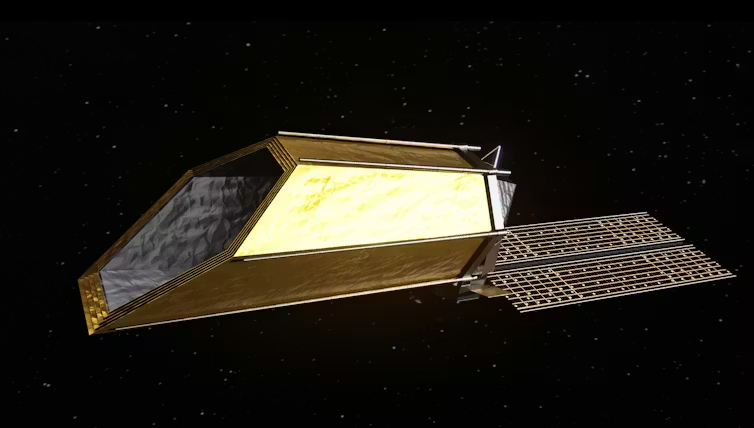
On Jan. 11, 2026, I watched anxiously at the tightly controlled Vandenberg Space Force Base in California as an awe-inspiring SpaceX Falcon 9 rocket carried NASA’s new exoplanet telescope, Pandora, into orbit.
Exoplanets are worlds that orbit other stars. They are very difficult to observe because – seen from Earth – they appear as extremely faint dots right next to their host stars, which are mi…
We live in a very exciting time: answers to some of the oldest questions humanity has conceived are within our grasp. One of these is whether Earth is the only place that harbours life.
In the last 30 years, the question of whether the Sun is unique in hosting a planetary system has been resoundingly answered: we now know of thousands of exoplanets orbiting other stars.
But can we use telescopes …
When astronomers search for planets that could host liquid water on their surface, they start by looking at a star’s habitable zone. Water is a key ingredient for life, and on a planet too close to its star, water on its surface may “boil”; too far, and it could freeze. This zone marks the region in between.
But being in this sweet spot doesn’t automatically mean a planet is hospitable to life. O…
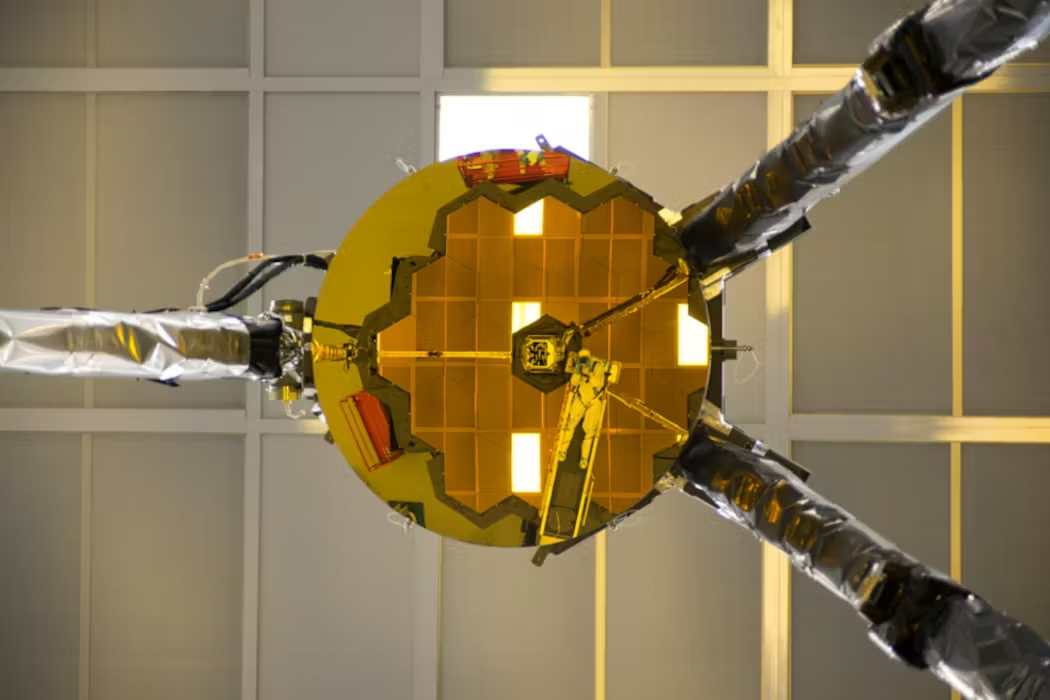
After Christmas dinner in 2021, our family was glued to the television, watching the nail-biting launch of NASA’s US$10 billion (AU$15 billion) James Webb Space Telescope. There had not been such a leap forward in telescope technology since Hubble was launched in 1990.
En route to its deployment, Webb had to successfully navigate 344 potential points of failure. Thankfully, the launch went better…
On October 6 1995, at a scientific meeting in Florence, Italy, two Swiss astronomers made an announcement that would transform our understanding of the universe beyond our solar system. Michel Mayor and his PhD student Didier Queloz, working at the University of Geneva, announced they had detected a planet orbiting a star other than the Sun.
The star in question, 51 Pegasi, lies about 50 light ye…
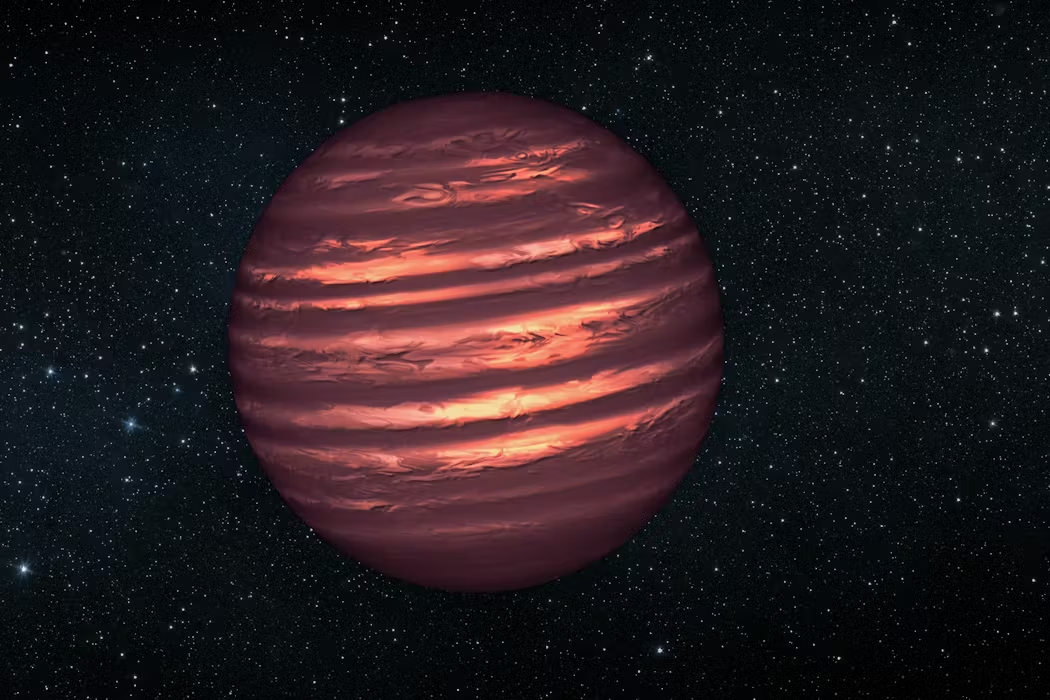
Brown dwarfs: too small to be stars, too big to be planets.
Only discovered in the 1990s, these in-between cosmic objects aren’t big enough to burn as hot and bright as a true star, instead usually giving off a warm dim glow.
In new research published today in Science, a team of astronomers report the detection of a surprising substance in a brown dwarf known as Wolf 1130C: a chemical called phos…
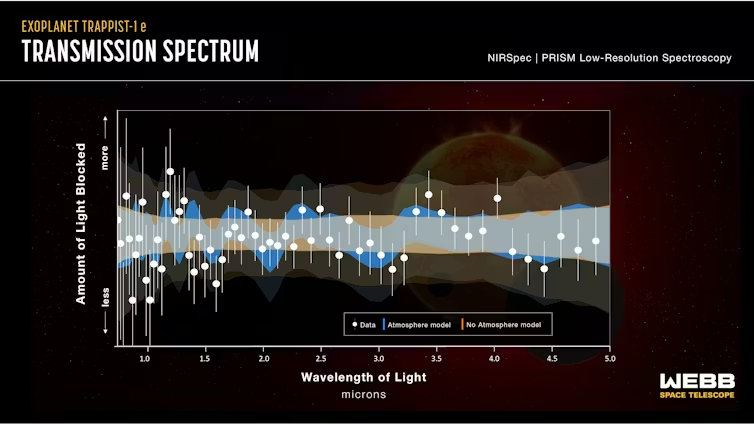
New research using Nasa’s powerful JWST telescope has identified a planet 41 light years away which may have an atmosphere. The planet is within the “habitable zone”, the region around a star where temperatures make it possible for liquid water to exist on the surface of a rocky world. This is important because water is a key ingredient that supports the existence of life.
If confirmed by further…
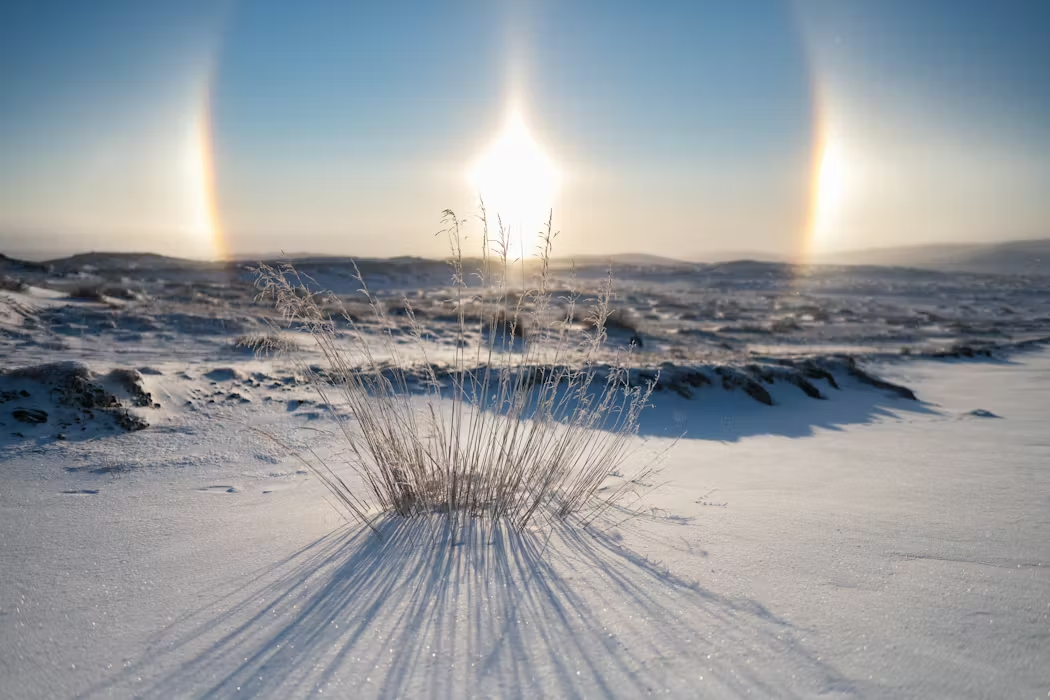
Every once in a while, you may look up towards the Sun and see strange bright lights on either side of it. Or perhaps you’ll be sitting in an aircraft, looking out the window at its shadow and see a circle of light, like a halo below (known as glories). Or, if you’re really adventurous, maybe you’ll even be out on a midnight walk with a full moon lighting your way, and see what appears to be a ra…
Juliette Becker·...·University of Wisconsin-Madison
8/28/2025
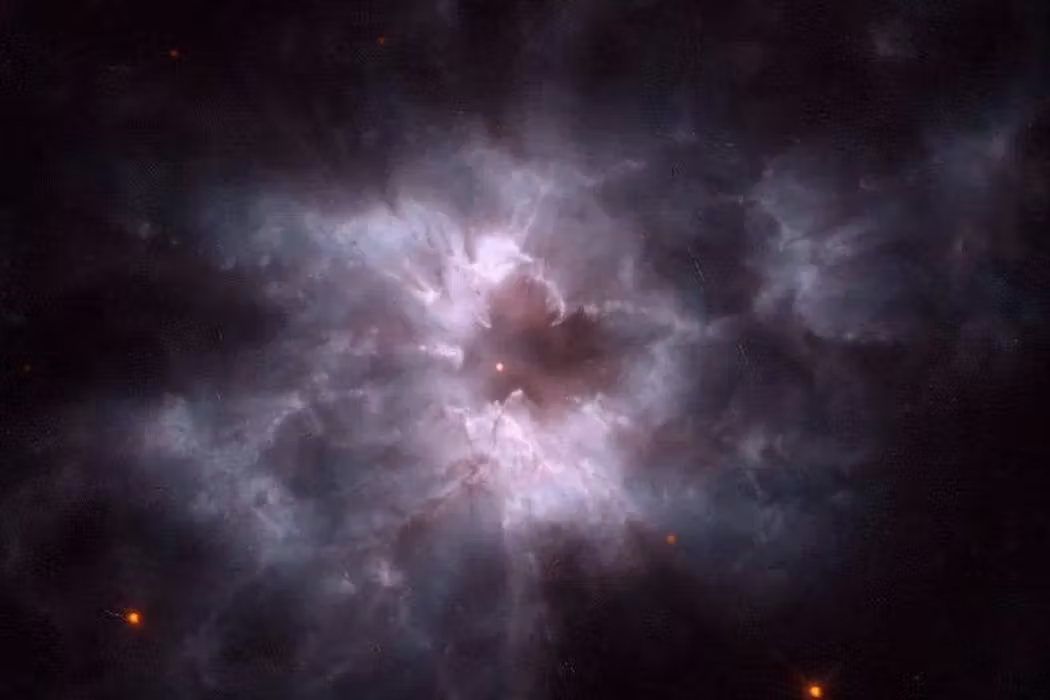
The Sun will someday die. This will happen when it runs out of hydrogen fuel in its core and can no longer produce energy through nuclear fusion as it does now. The death of the Sun is often thought of as the end of the solar system. But in reality, it may be the beginning of a new phase of life for all the objects living in the solar system.
When stars like the Sun die, they go through a phase o…
The search for life beyond Earth is a key driver of modern astronomy and planetary science. The U.S. is building multiple major telescopes and planetary probes to advance this search. However, the signs of life – called biosignatures – that scientists may find will likely be difficult to interpret. Figuring out where exactly to look also remains challenging.
I am an astrophysicist and astrobiolog…
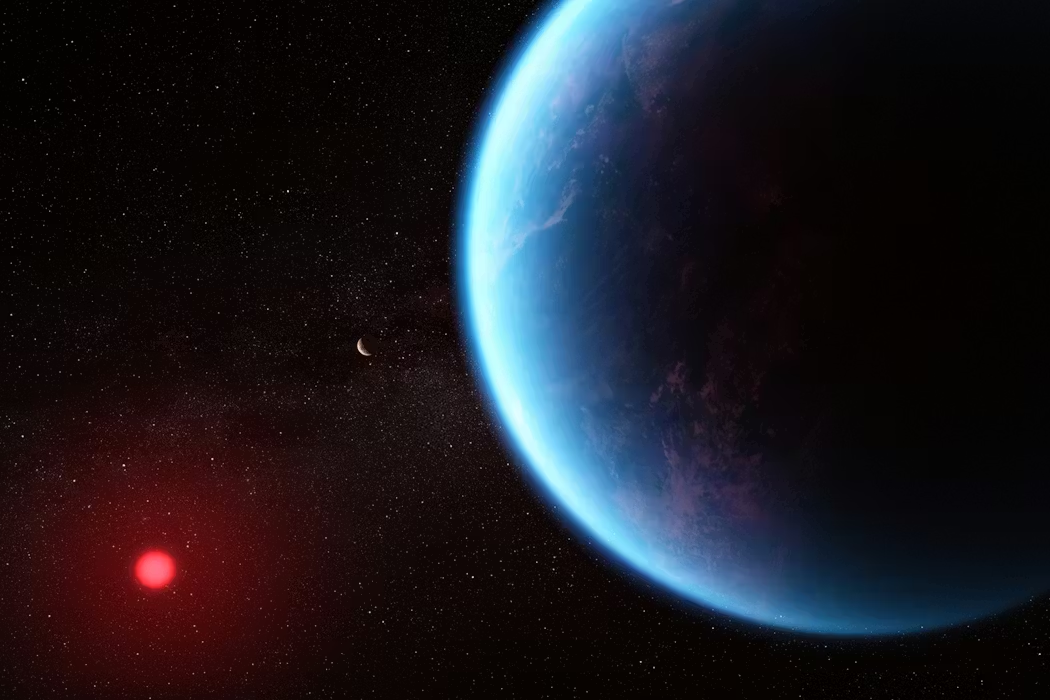
A team of researchers has recently claimed they have discovered a gas called dimethyl sulphide (DMS) in the atmosphere of K2-18b, a planet orbiting a distant star.
The University of Cambridge team’s claims are potentially very exciting because, on Earth at least, the compound is produced by marine bacteria. The presence of this gas may be a sign of life on K2-18b too – but we can’t rush to conclu…
Whether or not we’re alone in the universe is one of the biggest questions in science.
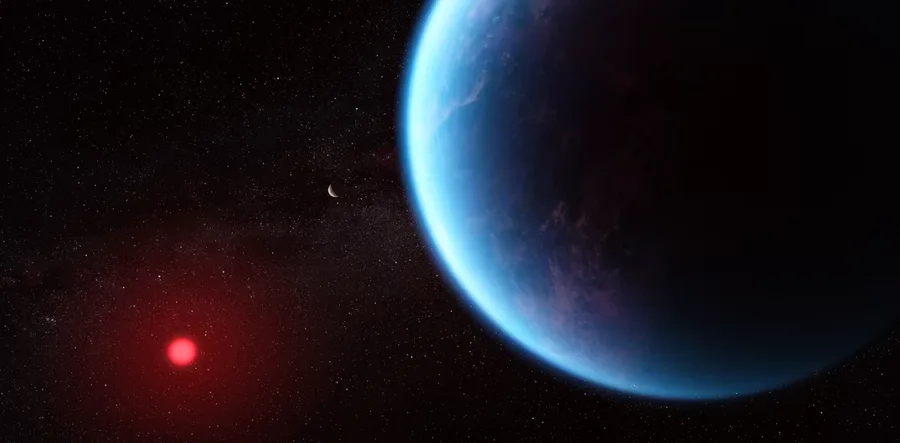
A recent study, led by astrophysicist Nikku Madhusudhan at the University of Cambridge, suggests the answer might be no. Based on observations from NASA’s James Webb Space Telescope, the study points to alien life on K2-18b, a distant exoplanet 124 light years from Earth.
The researchers found strong evidence o…
A team of astronomers announced on April 16, 2025, that in the process of studying a planet around another star, they had found evidence for an unexpected atmospheric gas. On Earth, that gas – called dimethyl sulfide – is mostly produced by living organisms.
In April 2024, the James Webb Space Telescope stared at the host star of the planet K2-18b for nearly six hours. During that time, the orbit…
What do you think of when it comes to extra terrestrial life? Most popular sci-fi books and TV shows suggest humanoid beings could live on other planets. But when astronomers are searching for extra-terrestrial life, it is usually in the form of emissions from bacteria or other tiny organisms.
A new research paper in the Astrophysical Journal suggests that Cambridge scientists have managed to fin…
Barnard’s Star is a small, dim star, of the type that astronomers call red dwarfs. Consequently, even though it is one of the closest stars to Earth, such that its light takes only six years to get here, it is too faint to be seen with the naked eye. Now, four small planets have been found orbiting the star. Teams in America and Europe achieved this challenging detection by exploiting precision i…
Julia Victoria Seidel·...·Observatoire Européen Austral
2/27/2025
The planet WASP-121b is extreme. It’s a gas giant almost twice as big as Jupiter orbiting extremely close to its star–50 times closer than the Earth does around the Sun. WASP-121b is so close to its star that tidal forces have locked its rotation in a “resonance”: the planet always shows the same face to its star, like the Moon to the Earth. Therefore, one side of WASP-121b constantly bakes in li…
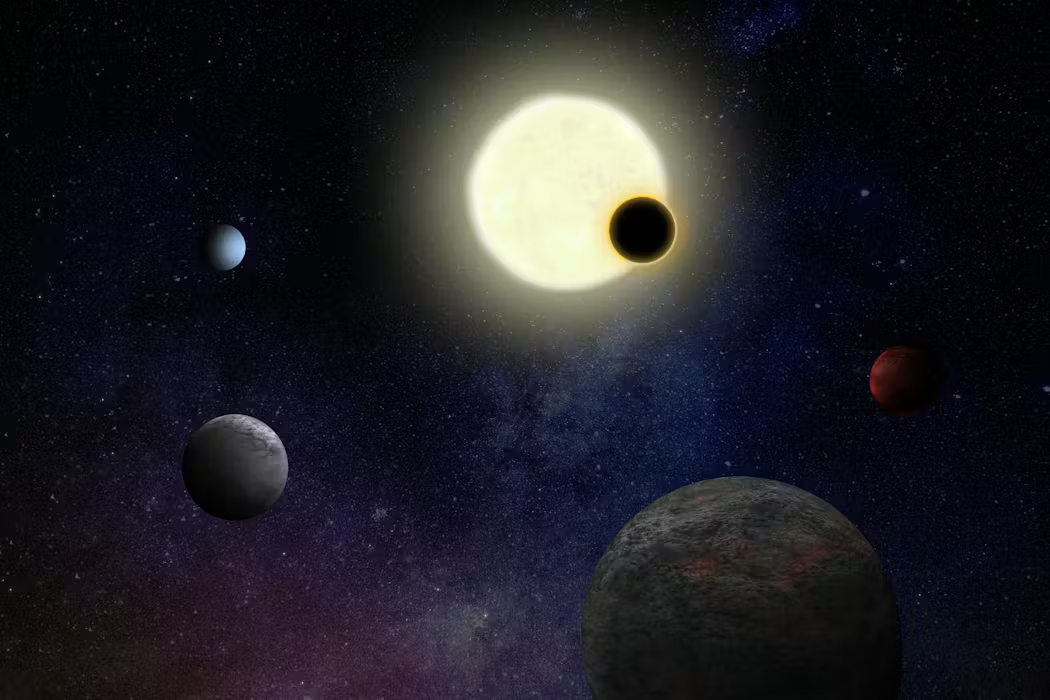
Today, we know of more than 5,000 exoplanets: planets outside our solar system that orbit other stars. While the effort to discover new worlds goes on, we’re steadily learning more about the exoplanets we’ve already detected: their sizes, what they’re made of and whether they have atmospheres.
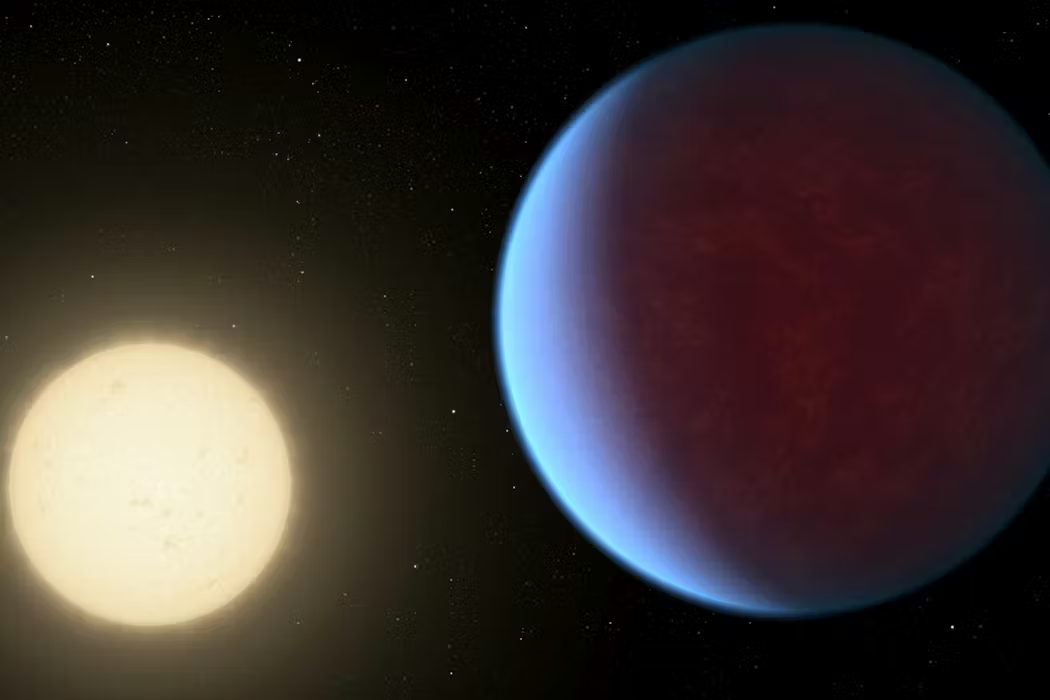
Our team has now provided tentative evidence for a sulphur-rich atmosphere on a world that’s 1.5 times t…
astronomyexoplanetsplanetary-science
research.io
Sign up to keep scrolling
Create your feed subscriptions, save articles, keep scrolling.
 research.io