


New research in perennial ryegrass identifies LpCbDR1, a drought-responsive transcription factor, as a molecular switch that helps the plant decide when old leaves should yellow and when stress defenses should rise. The study shows that LpCbDR1 activates the chlorophyll b reductase gene LpNOL, triggering chlorophyll breakdown and leaf senescence under prolonged drought. At the same time, it directly stimulates the stress-related genes LpPLA7 and LpERF1B, helping plants survive water shortage. By separating the visible "stay-green" trait from the deeper machinery of drought resilience, the work offers a more precise route for breeding turf and forage grasses that remain productive as dry periods intensify and irrigation becomes less reliable.
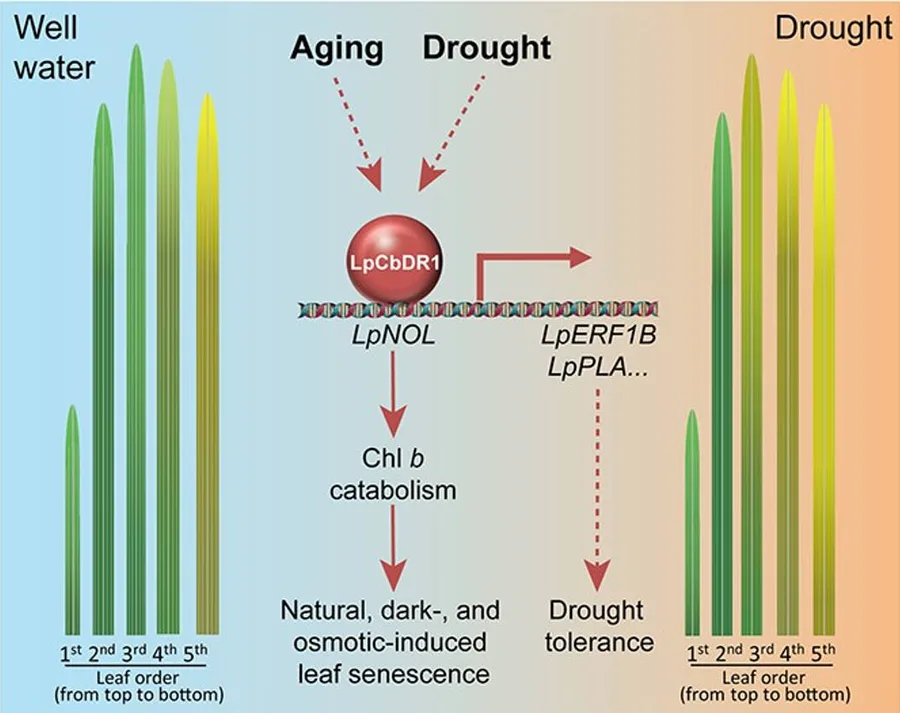
A Genetic Switch Helps Ryegrass Balance Greenness and Drought Survival
Chinese Academy of Sciences