Autism, ADHD, and AuDHD are common neurotypes that can all present similar issues around sexuality. What are these issues, and how can neurospicy folks and their loved ones deal?
Up to ten early- and mid-career researchers will receive USD 300,000 over three years to study children in crisis settings, neurodivergent inclusion , and AI -enabled learning. The LEGO Foundation Fellowship will support up to ten researchers with USD 300,000 each over three years. The LEGO Foundation has opened applications for a new global research fellowship offering up to ten early- and mid-c…
This paper develops a phenomenological, neurological, and comparative sociological account of life within the combined presentation of Autism Spectrum Disorder and Attention Deficit Hyperactivity Disorder (AuDHD). Drawing upon lived experience, contemporary neuroscience, disability theory, and institutional analysis, it examines the gap between external observation and internal experience in neur…
IntroductionBoth neurodiversity and mental health have become increasingly prominent topics in esports. Nevertheless, little is known about the mental health of neurodivergent esports players specifically.MethodsThe current study, therefore, examined whether neurotype-related differences in mental health outcomes (well-being, depression, anxiety, and sleep disturbance) differed across self-report…
I am just another woman diagnosed with ADHD much later in life.
When I was younger, I blamed both the hyperactivity and the inattention on
anxiety. Being unfocused was justified by an upcoming test. Racing thoughts
clouded my mind, causing me to misplace just about everything. I got in
trouble for tapping under my desk because… well… I’m a tap dancer. An
anxious tap dancer.
Live webinar presented by Brittany Bate, Ph.D. (she)June 4, 2026, 12:30pm90 min of CLE credit anticipated Criminal defense attorneys represent clients whose experiences are shaped by both neurodiversity and gender identity. Research and clinical observations suggest a higher incidence of transgender and nonbinary identity among neurodivergent individuals, creating important considerations for com…
The Cognitive Copernicus proposes a theoretical reorientation of how neurodivergent cognition is understood within institutional and computational environments. The work advances the argument that contemporary computational systems can function as mechanisms of temporal translation, enabling alignment between nonlinear cognitive processing and structurally linear institutional time. Drawing from …
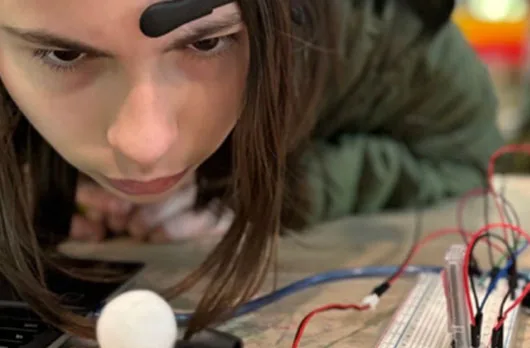
Exploring Brain-Computer Interfaces to Bring Diverse Brains to STEM The demand for STEM-literate workers is growing rapidly as fields like artificial intelligence, neuroscience, and robotics become central to the economy and society. With these shifts comes a pressing question: Who will step into these roles and shape the future of technology? Neurodivergent students are underrepresented in STEM,…
This is a submission for the Gemma 4 Challenge: Build with Gemma 4 Note: This project is aimed at solving a critical social issue in Brazil, but we are submitting it in English to align with the global nature of the Dev.to Challenge. Our ultimate goal is to localize the final platform to Brazilian Portuguese (pt-BR) to serve our local communities. What I Built GemmaBridge is an offline-first, mul…
The traditional clinical landscape of neurodiversity is currently undergoing a significant paradigm shift,transitioning from deficit-focused medical models toward "strength-based interventions." This evolution is driven by a growing recognition that individuals with ADHD, Autism Spectrum Disorder (ASD), and Sensory Processing Disorder (SPD) possess unique cognitive architectures that, while diffe…
Progress has always been made by people who think differently. Neurodiversity helps us think outside the box – and when we do, the sky’s the limit One of my favourite pieces of scientific equipment is something called a retrospectroscope. I admit that it only exists in my imagination, but it has turned out to be a very useful bit of kit. It allows me to look back through the years of my life and …
This post is by Víctor Fernández Castro (University of Granada) and Miguel Núñez de Prado-Gordillo (University of Granada). It is based on their chapter “Embodied, embedded, enactive, extended… and exclusionary? Toward an inclusive E-Cognition for cognitive diversity,” published in Analytic Philosophy and 4E Cognition, which explores how 4E approaches can be made more inclusive of neurodiversity.
Autism, or autism spectrum disorder (ASD), encompasses a broad range of neurological and developmental differences that influence how individuals communicate, learn, process sensory input, and navigate social environments. A clear understanding of autism can help build more inclusive spaces, support better learning and wellness outcomes, and help neurodivergent patrons and families feel welcomed …


 research.io