Aiswarya C K, Bharata Mata School of Legal Studies, Aluva ABSTRACT The expansion of international trade has brought significant economic benefits while also exposing domestic industries to unfair trade practices, such as dumping and subsidised imports. This article analyses anti-dumping measures and countervailing duties within the framework of international trade law and the Indian legal system.…
Happymol C A, Bharata Mata School of Legal Studies, Aluva ABSTRACT The Customs Act, 1962, which regulates the movement of goods across the customs border and imposes duties, and the Foreign Trade (Development and Regulation) Act, 1992, which gives the Directorate General of Foreign Trade the authority to create a licensing and policy regime for imports and exports, are the two regulatory framewor…
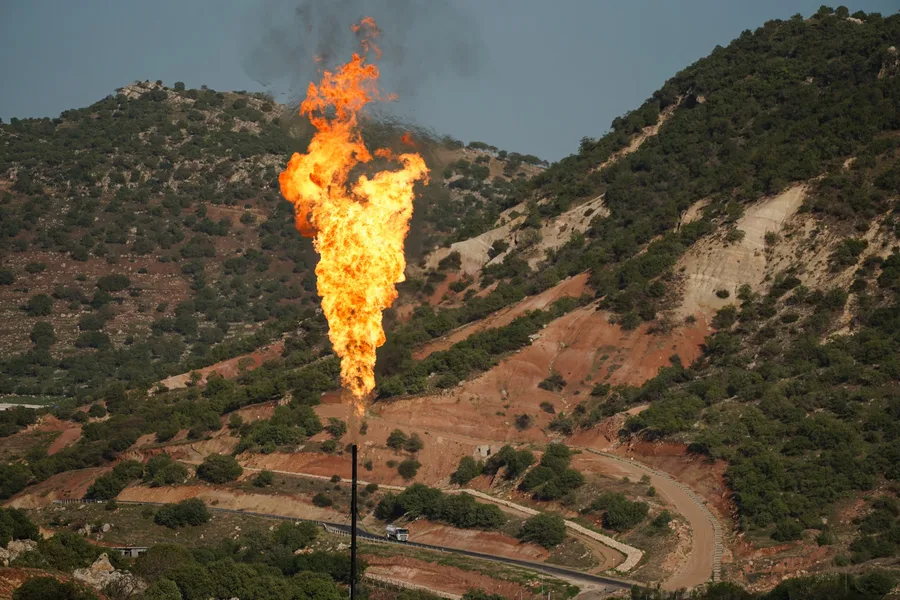
Turkeyʼs multifaceted approach to diversifying its gas supplies away from Russia, including by buying from the US and Azerbaijan, may finally be paying off. The post Turning to Azerbaijani gas and US LNG, Turkey seeks to break its reliance on Russian energy appeared first on Atlantic Council .
Two sides agree to try to make bilateral relationship ‘more balanced’ after weeks of threats The EU and China have agreed to enter three months of talks to try to avoid a trade war over the bloc’s €360bn (£310bn) annual import/export imbalance. In their first joint statement in seven years, the two sides agreed in Brussels to open a formal trade consultation after weeks of threats and recriminati…
As China’s industrial surpluses flood global markets, the EU is quietly debating whether it needs its own version of US Section 301—marking a potential shift toward more assertive trade defense tools against Beijing. The post As China’s surpluses become unbearable, the EU is edging toward its own Section 301 appeared first on Atlantic Council .
MEPs had twice frozen ratification process in protest at Trump’s threats to increase tariffs and take control of Greenland The EU has finally agreed to implement its trade deal with the US after five hours of talks between members of the European parliament and member states in the hope of averting more tariffs threatened by Donald Trump. It means the agreement struck last July at the US presiden…
Economists have resolved a seeming paradox regarding how competition from China affects the price and volume of products exported from other countries into the U.S. The findings shed new light on how the effects of trade competition differ for poor nations compared to their wealthy counterparts.
On Tuesday, the European Union and India announced a free trade deal—an example of how the global system is reorganizing itself. The post The ‘mother of all’ trade deals in the time of Trump appeared first on Atlantic Council .
Filippo Vergara Caffarelli, Ana M. de Almeida and Horatiu Lovin in this ECB paper show the impact of Brexit on US-EU trade and investment: This paper looks at how Brexit has affected trade and foreign direct investment (FDI) between the United Kingdom and the EU. In 2020 the United Kingdom and the EU signed the […]
The recent US-China trade de-escalation in South Korea is likely to reverberate beyond these two countries, reshaping European trade as well. The post What the Trump-Xi trade truce means for the European Union appeared first on Atlantic Council .
John Haller·...· Balthazar Von Moltke and Jonathan Zegele
10/13/2025
This research paper analyses how the WTO and IMF work, and often struggle, to mediate the competing interests between dumping and non-tariff barriers, and how digital trade may be the modern solution.
The last decade has revealed serious weaknesses in the World Trade Organization, especially during the United States-China trade war. This paper explores how protectionism, mainly through the use of tariffs, has challenged the WTO’s ability to act as a fair referee in world trade.
From the China shock to the breakdown of free trade, any assessment of the US-EU trade agreement and the future of transatlantic trade hinges on understanding the leverage that both parties brought to Scotland. The post Stable US-EU trade requires a new approach to globalization appeared first on Atlantic Council .
This paper examines how the U.S.-China strategic rivalry is reshaping the norms and institutions of global trade governance, with a focus on tariffs, currency competition and semiconductor export controls. These cases illustrate the fusion of national security with economic statecraft, reshaping global supply chains and accelerating the emergence of rival technological ecosystems.
Iraq is among the countries to face a 30 percent tariff starting August 1 on its exports to the United States. The post Beyond tariffs: Building a win-win relationship between the US and Iraq appeared first on Atlantic Council .
Henrik Horn and Petros C. Mavroidis in this voxeu article suggest US to part ways with WTO: The US embrace of power politics in the trade arena violates both the letter and spirit of the WTO’s General Agreement on Tariffs and Trade, undermining the integrity of the multilateral trading system. This column suggests that such […]
Listen to the podcast here The post Lipsky quoted in The President’s Daily Brief Podcast on US-China Trade Negotiations appeared first on Atlantic Council .
Image generated by ChatGTP-4o illustrating tariffs. Douglas Irwin, a professor of economics at Dartmouth College, may be the leading historian of international trade in the United States today. Irwin has posted at this link a useful overview of the economics of tariffs. Irwin’s feed on X offers day-to-day commentary on current developments in the Trump … Continue reading "Douglas Irwin on Tariffs"
Preferential trade agreements are becoming the norm globally as a way to keep trade predictable and for economies to defend themselves against lawlessness. The post Why protectionism and market accessibility are now driving international trade appeared first on Atlantic Council .
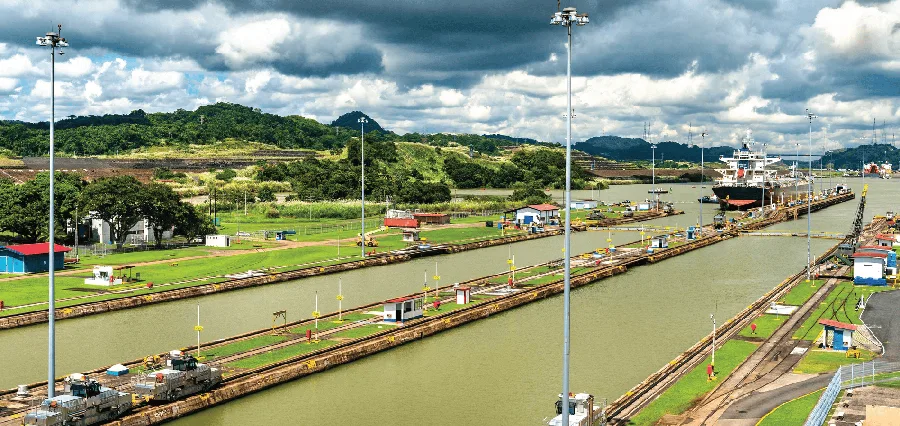
The Panama Canal is at the center of a growing dispute. The U.S. raises concerns over tolls and foreign influence, while Panama asserts its sovereignty. As diplomatic talks unfold, legal, economic, and geopolitical stakes shape the future of this vital trade route.






 research.io