Nature Communications, Published online: 13 June 2026; doi:10.1038/s41467-026-74318-z Mechanisms underlying effective immune escape in HPV-associated oropharyngeal cancers despite the presence of immune cells are incompletely understood. Here, authors use single-cell spatial analysis to show that tumors form distinct local immune niches, including hypoxic regions and chemokine foci, that shape im…
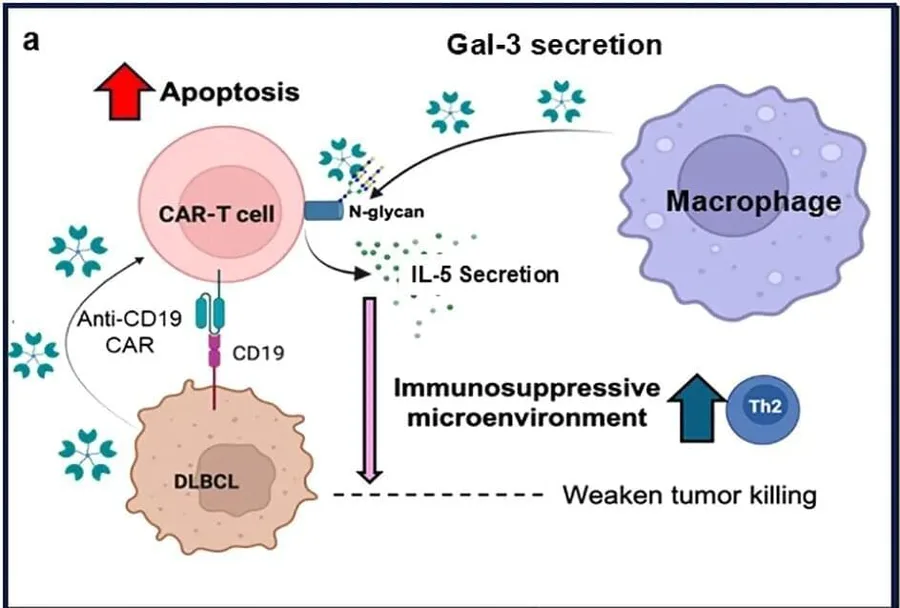
Scientists at Florida International University may have found a way to make a powerful cancer treatment work even better. The treatment, called CAR-T therapy, uses a patient’s own immune cells to fight cancer. Doctors remove special immune cells called T-cells from the body, genetically change them in a lab so they can recognize cancer, and […]
Nature Communications, Published online: 13 June 2026; doi:10.1038/s41467-026-73931-2 Bone metastases derived from lung cancer typically exhibit an immunosuppressive microenvironment. This study identifies a YBX1 glycosylation–dependent mechanism that drives both metastasis and immunosuppression, and proposes the small molecule Icaritin as a potential therapeutic strategy through YBX1 degradation.
Metastasis remains the leading cause of death in breast cancer, yet the mechanisms that allow disseminated tumor cells to evade immune surveillance remain poorly understood. We found that NCOR2 promotes metastasis by suppressing antigen presentation and limiting tumor recognition by CD8 T cells.
The U.S. Food and Drug Administration (FDA) has approved pembrolizumab, an immunotherapy, plus belzutifan, a HIF-2α inhibitor, as adjuvant treatment for adult patients with renal cell carcinoma with a clear cell component (ccRCC) at intermediate-high or high risk of recurrence following nephrectomy, with or without resection of metastatic lesions.
The University of Oklahoma has received an $11.5 million award from the National Institutes of Health to establish the Oklahoma Center of ImmunoEngineering, a new research center designed to accelerate the study and treatment of diseases rooted in the immune system.
Nature Communications, Published online: 13 June 2026; doi:10.1038/s41467-026-74162-1 Alveolar macrophages can contribute to systemic anti-tumor responses. Here the authors describe a cascaded targeted liposomal nanomedicine for generating chimeric antigen receptor-modified alveolar macrophages via intrapulmonary nebulization, promoting anti-tumor immunity in lung cancer models.
Researchers at the Federal University of São Paulo (UNIFESP) in Brazil have discovered a new strategy that may protect neurons and other brain cells involved in Parkinson's disease in the future.
Research from CCR scientists points toward a strategy for making chimeric antigen receptor (CAR) T-cell therapy, the cell-based immunotherapy that has revolutionized the treatment of some blood cancers, safer and more effective for treating solid tumors. The study, led by Grégoire Altan-Bonnet, Ph.D., Deputy Chief of the Laboratory of Integrative Cancer Immunology, Naomi Taylor, M.D., […]
A bacterial pathogen that causes colitis and colorectal cancer creates a nutrient-rich niche and “rewires” epithelial cell signaling in the inflamed gut, which promotes bacterial colonization and disease, mechanisms that may be promising therapeutic targets, according to a recent study published in the journal Cell. The post Bacteria ‘Rewire’ Epithelial Cells and Drive Disease in the Gut appeared…
A new treatment that blocks an aging-related protein restored lost cartilage in old mice and helped prevent arthritis after knee injuries. Human cartilage samples showed similar signs of regeneration, raising hopes for a future drug that could repair joints instead of replacing them.
biologyimmunologymedicineregenerative-medicine
Frontiers in Pharmacology | New and Recent Articles
CpG oligonucleotides are potent immunoadjuvants that hold great promise for cancer immunotherapy, but their clinical use is limited by in vivo instability, off-target toxicity, and poor tumor targeting. Intelligent nanoplatforms offer effective solutions to these challenges by protecting CpG, improving delivery precision, and enabling on-demand cargo release. This review summarizes four major des…
A comprehensive review led by Associate Researcher Linnan Zhu and Academician Zemin Zhang at Biomedical Pioneering Innovation Center (BIOPIC), Peking University, China, and Chongqing Medical University, China, was published in Volume 2, article number 27 of the journal Immunity & Inflammation on June 05, 2026.
Nature Communications, Published online: 12 June 2026; doi:10.1038/s41467-026-74194-7 Polysaccharide vaccines are crucial to immunize against bacterial infections but require efficacious adjuvants to induce protective immune responses. Here the authors explore the use of Pam3CSK4 as an adjuvant for polysaccharide vaccines in mouse and non-human primate models.
biologyimmunologymedicinevaccines
research.io
Sign up to keep scrolling
Create your feed subscriptions, save articles, keep scrolling.








 research.io