Plant phenology is a sensitive indicator of global changes such as climate change and nitrogen deposition. Climate change is responsible for earlier spring phenology (leaf out and flowering) but has less effect on fruiting and the end of the autumn season. Nitrogen deposition delays most phenological phases, such as spring phenology, fruiting, and the end… Continue reading... The post How Does Cl…
Plant health monitoring can improve agricultural practices, profits, crop yield, safety, and quality. Non-destructive technologies for early disease detection on-site include spectroscopy and image processing. Among these techniques, vis-NIR spectroscopy-based devices are the most widely used for non-destructive, early detection of plant diseases. Plant diseases result in the annual global loss o…
Nitrogen (N) deposition from air pollutants such as nitrogen oxides and ammonia has been increasing for over a century, with no signs of a halt. N-deposition effects on growth, leaf traits, and physiological processes are species-specific and are influenced by other environmental factors. Positive effects occur as long as N deposition is moderate; higher doses,… Continue reading... The post What …
Key Takeaways Global change, such as higher carbon dioxide, warming, pests, and diseases, has common effects on mycorrhizal community composition and abundance. The effects of drought, forest fires, and nitrogen deposition on the mycorrhizal community differ among forest types. As the temperature rises, the abundance of arbuscular mycorrhizal fungi is increasing, and ectomycorrhizal fungi are… Co…
Field phenotyping has always required a balance between precision and practicality. Researchers want high resolution data, but they also need workflows that hold up under real field conditions. That is where automated field phenotyping becomes essential. By integrating portable, purpose-built tools into your protocol, you can standardize measurements, reduce user bias, and collect more data… Cont…
Plant canopy analysis is moving well beyond simple LAI estimates and light measurements. In 2025, researchers expect more integrated, data-rich, and field-ready approaches that connect canopy structure, physiology, and spectral responses in real time. As climate variability increases and breeding programs accelerate, the need for fast, accurate, and non-destructive plant canopy analysis is more u…
If you just started working with the CI-340 Handheld Photosynthesis System, you probably have a list of practical questions. That is normal. Even experienced plant physiologists want to know how a new gas exchange system will perform in real field conditions. The CI-340 Handheld Photosynthesis System is designed to make photosynthesis measurements straightforward, portable, and… Continue reading.…
Root imaging technology is quickly becoming a central tool in plant science. For decades, researchers focused heavily on aboveground measurements such as leaf area, canopy structure, gas exchange, and spectral reflectance. Those metrics still matter. But more scientists now recognize that understanding what happens belowground is just as critical. Roots drive nutrient uptake, water acquisition,… …
Leaf area index data shows up in more grant calls than many researchers expect. Whether you are studying crop productivity, forest carbon dynamics, ecosystem resilience, or climate adaptation, reviewers often want quantitative canopy metrics. Leaf area index data connects plant structure to function. It links canopy architecture to light interception, water use, carbon exchange, and… Continue rea…
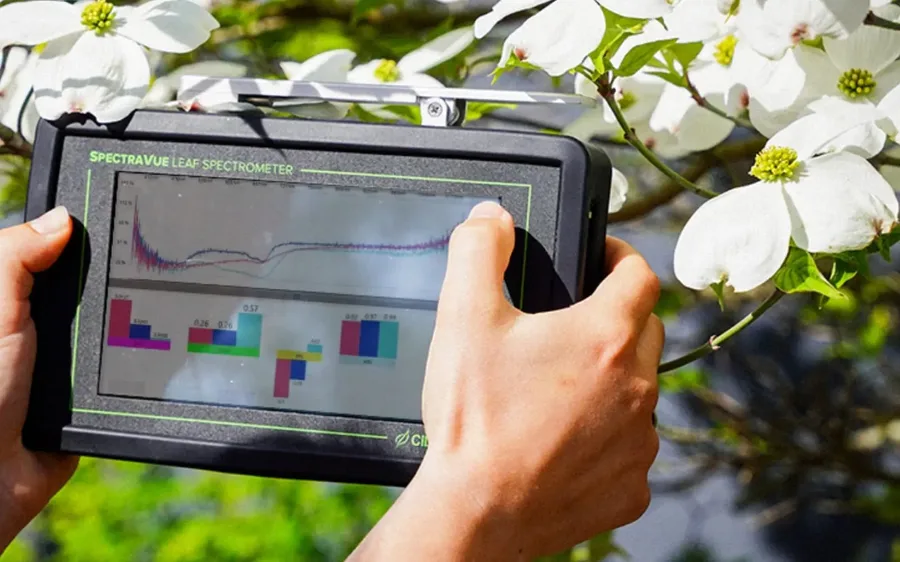
Understanding spectral leaf metrics is now central to plant phenotyping, crop management, and stress physiology. As spectral leaf metrics become more integrated into field workflows, researchers need tools that move beyond theory and deliver reliable measurements under real conditions. Whether you are tracking nutrient status, quantifying canopy structure, or linking pigment shifts to gas exchang…