The number of people dying in natural disasters is lower today than it was in the past; the world has become more resilient.
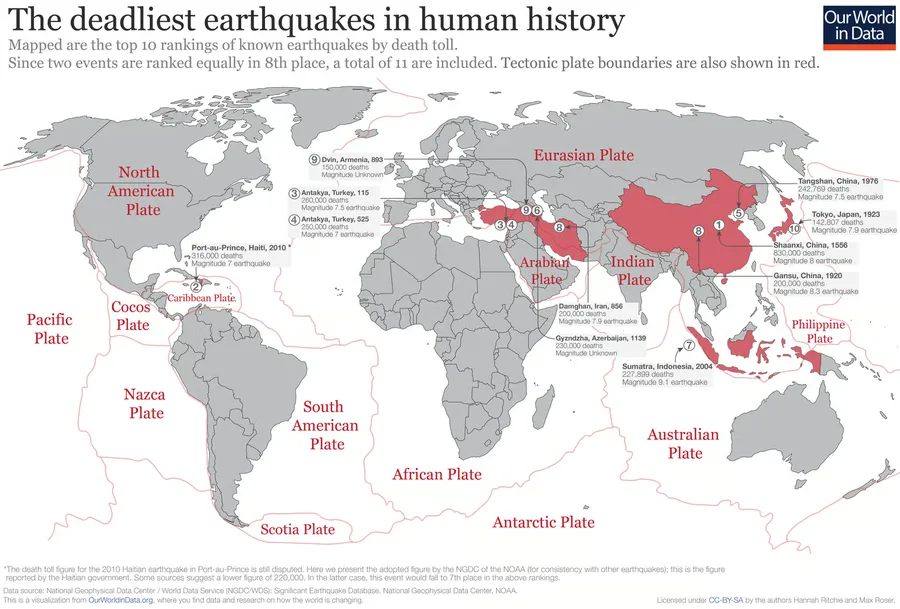
Earthquakes, however, can still claim a large number of lives. Whilst historically, floods, droughts, and epidemics dominated disaster deaths, a high annual death toll in recent years often results from a major earthquake and possibly a tsunami caused by them. Since 2000, t…
With almost minute-by-minute updates on what’s happening in the world, we are constantly reminded of the latest disaster. These stories are, of course, important but they do not give us a sense of how the toll of disasters has changed over time.
For most of us, it is hard to know whether any given year was a particularly deadly one in the context of previous years.
To understand the devastating t…
This article was published in 2017, and has not been updated with the latest news coverage data.
Our World in Data presents the empirical evidence on global development in entries dedicated to specific topics.
This blog post draws on data and research discussed in our entry on Natural Disasters.
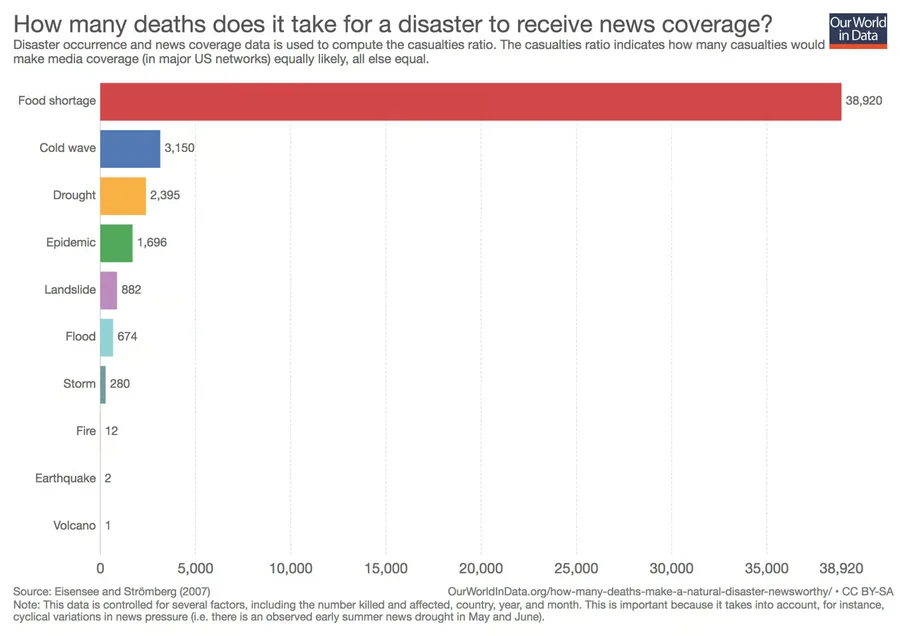
How many deaths does it take for a natural disaster to be newsworthy?
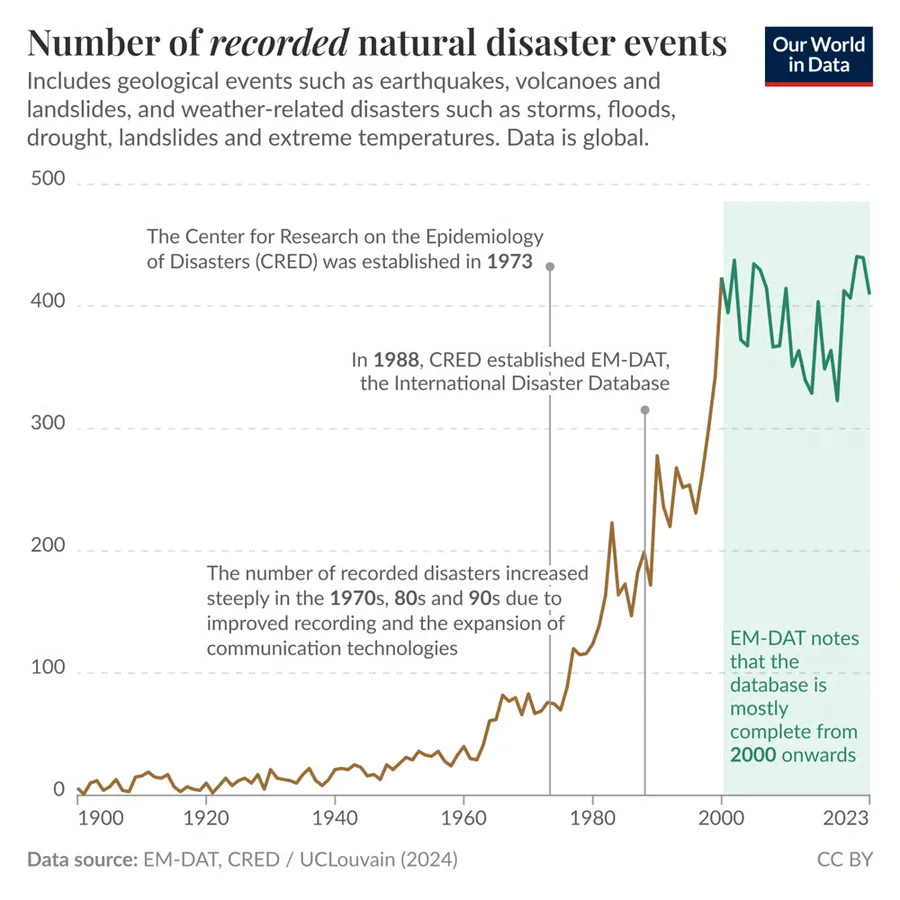
This is a question researchers T…
If we want to reduce the risks of disasters, we need to track where they’re happening; what types of events they are; their human and economic impacts; and how these trends change over time.
High-quality data helps us see patterns in the data on factors such as increased resilience, climate change, and humanitarian response.
There are now several dedicated research groups that publish in-depth da…
Weather forecasts are often seen as just a nice thing to have. Useful when planning a Sunday barbecue or when we want to know if we’ll need an umbrella for the day. But in many ways, weather forecasts are absolutely crucial: they can be a matter of life and death.
Accurate forecasts can save lives by giving early warnings of storms, heat waves, and disasters. Farmers use them for agricultural man…
Data InsightsBangladesh has become much more resilient to cyclones, saving many lives
October 27, 2025
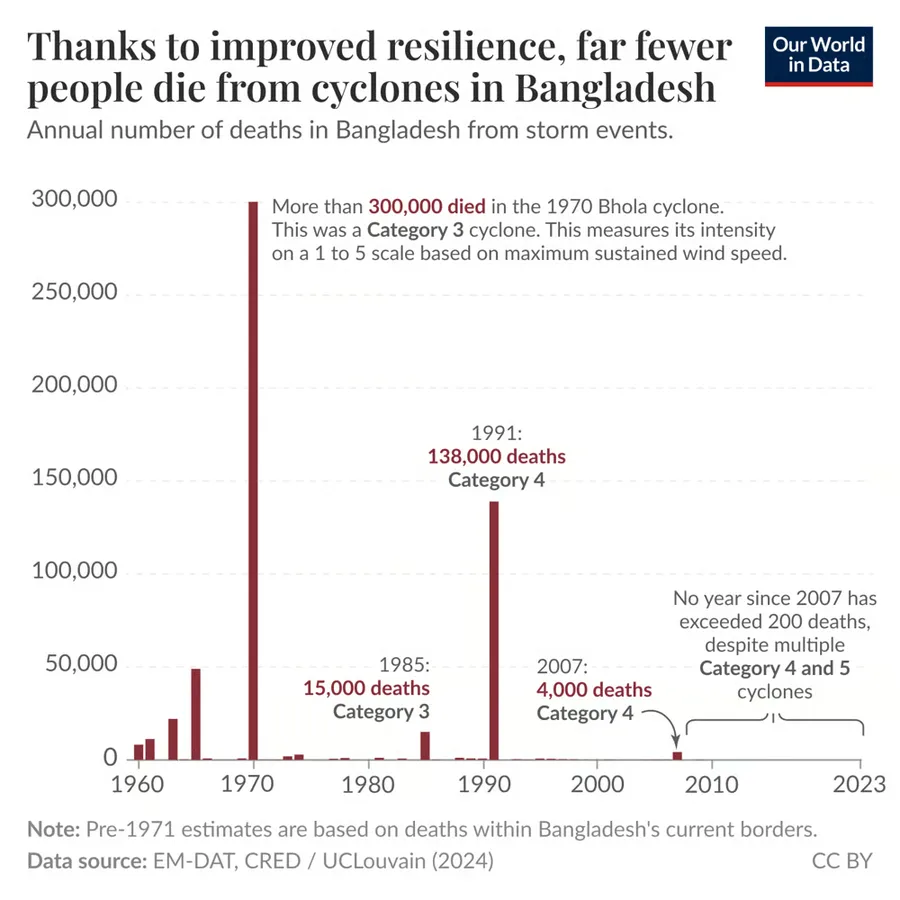
Bangladesh has become much more resilient to cyclones, saving many lives
In 1970, Cyclone Bhola hit Bangladesh, killing more than 300,000 people. It was a strong cyclone, but not unprecedented. What made it so deadly was the lack of any early detection sys