


Weather forecasts are often seen as just a nice thing to have. Useful when planning a Sunday barbecue or when we want to know if we’ll need an umbrella for the day. But in many ways, weather forecasts are absolutely crucial: they can be a matter of life and death. Accurate forecasts can save lives by giving early warnings of storms, heat waves, and disasters. Farmers use them for agricultural management, which can make the difference between a lost harvest or a harvest of plenty. Grid operators rely on accurate forecasts of temperatures for heating and cooling demand, and how much energy they’ll get from wind and solar farms. Pilots and sailors need them to carry people across oceans safely. Accurate information about future weather is often absolutely vital. In this article, I look at improvements over time and the global inequalities that need to be closed to protect lives and livelihoods around the world. Weather forecasting has come a long way. In 650 B.C., the Babylonians would try to predict weather patterns based on cloud patterns and movements. Three centuries later, Aristotle wrote Meteorologica, discussing how phenomena such as rain, hail, hurricanes, and lightning formed. Much of it turned out to be wrong, but it represents one of the first attempts to explain how the weather works in detail. It wasn’t until 1859 that the UK’s Meteorological Service (the Met Office) issued its first weather forecast for shipping. Two years later, it broadcasted its first public weather forecast. While meteorological measurements improved over time, the massive step-change in predictions came with the use of computerized numerical modeling. This didn’t start until a century later, in the 1960s. Forecasts have improved a lot since then. We can see this across a range of measurements, and different national meteorological organizations. The Met Office says its four-day forecasts are now as accurate as its one-day forecasts were 30 years ago. Predictions have gotten much...
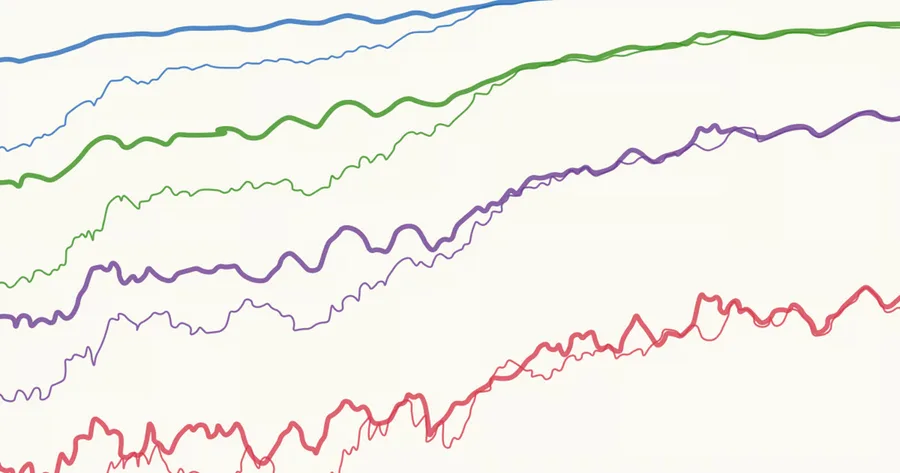
Weather forecasts have become much more accurate; we now need to make them available to everyone
Hannah Ritchie
3 min read