Learning Scientists Blog - The Learning Scientists

As AI and social media become, somehow, even more ubiquitous, I find myself having more and more conversations about critical thinking. The ability to think critically remains as relevant as ever, so here is re-post from 2019 examining what critical thinking is and whether it can be taught or improved.
One of my approaches to teaching (and to work in general) is to impose organization and structure for my students. It helps to decrease uncertainties, but it also makes tackling tasks more efficient and manageable…
GUEST POST: How Risk Measures Shape Public Understanding of Science Neal Asthana is a multi-disciplinary professional from the Washington D.C. area, with a lifelong passion for science & education. He is the founder of Caveat Scientia, a passion-project focused on bridging the gap between science research and public understanding. Neal has always been passionate about all fields of science, in ar…
"Blips" of Knowledge Reduce Accuracy and Increase Confidence [Cover image by Tung Nguyen on Pixabay] by Cindy Nebel What do you do when you get a random new physiological symptom? A new rash? A cough? That strange pain that comes and goes in your abdomen? If you’re like me, you do a quick internet search for possible causes or, more often, “When should I see a doctor for…?” On a personal note, I …
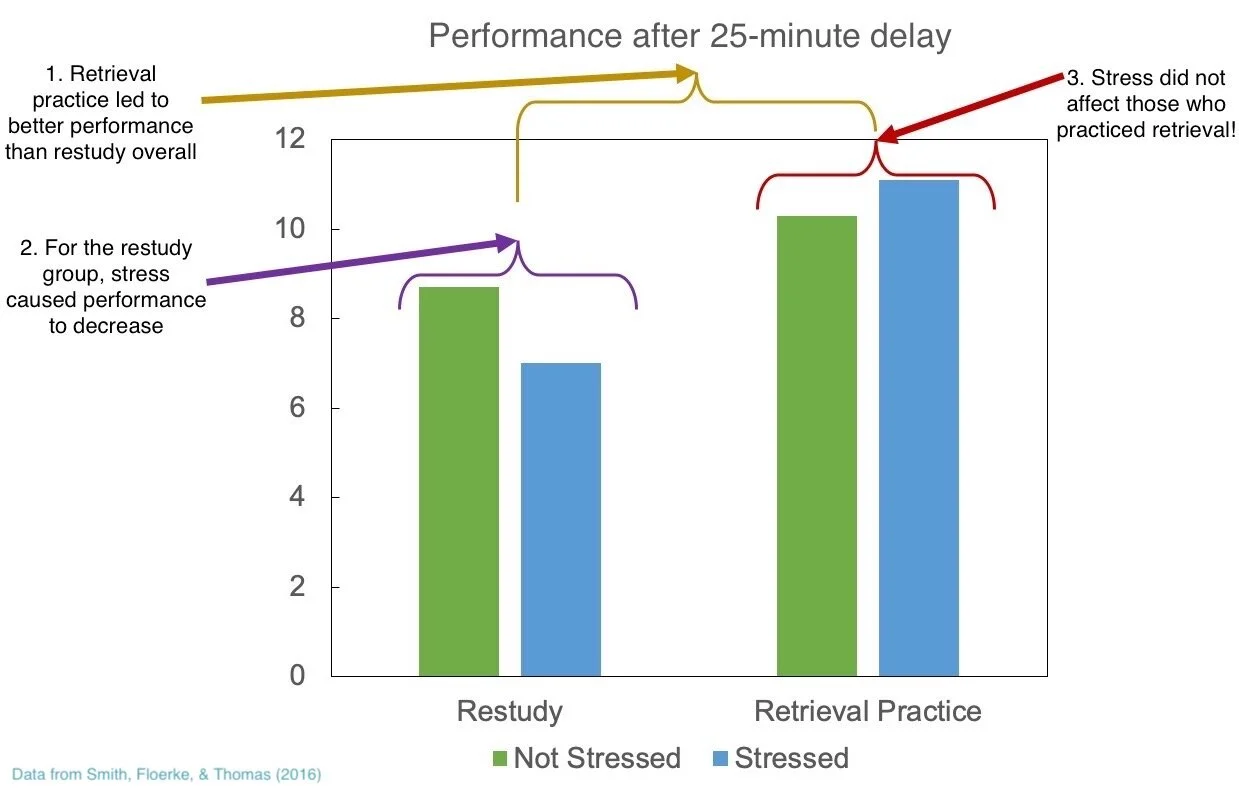
Retrieval Practice and Stress (repost) By Megan Sumeracki I recently remembered this post about retrieval practice and stress. I was talking to one of my students about retrieval practice and stress, and went back to the blog to help me remember some aspects of the research. Upon seeing the original publish date, June 25, 2020, I remembered how stressful that time was for so many of us, and the e…
The Benefits of Combining Collaborative Learning and Interleaved Practice By Carolina Kuepper-Tetzel In a recent paper, Danzglock, Berger, and Hänze (1) investigated the effects of combining collaborative learning with interleaved practice using complex material in physics in 376 secondary school students. Interleaved practice is when tasks or concepts are practiced together instead of organizing…
Learner Perceived Similarity and Transfer Cover image by katerinavulcova from Pixabay By Althea Need Kaminske Transfer of learning, the process by which people can recognize and apply previously learned information to different situations, is one of the primary goals of education. We can think of transfer and learning as happening along a continuum from highly similar to highly dissimilar. Learni…
Feedback emPower Tools: How to Make Your Feedback Go Further By Carolina Kuepper-Tetzel & Rob Nash For today’s blog post, I interviewed Dr Rob Nash who together with Prof Naomi Winstone and Dr Kieran Balloo created the website Feedback emPower Tools. Feedback emPower Tools sets out to help learners engage and process feedback they receive. For learners it can be challenging to engage with feedbac…
News and media headlines seem to be filled with hope and dread these days, with fast-spreading articles with bold claims of new research that proves a miraculous outcome of a new treatment or an increased change in harm linked to … News and media headlines seem to be filled with hope and dread these days, with fast-spreading articles with bold claims of new research that proves a miraculous outco…
GUEST POST: Bridging the Gap: Using the DIGPA Framework to Connect Teaching Practice and the Science of Learning Josh Kurzweil began his teaching career in 1990. He has taught and trained in Japan, Spain, the Republic of Georgia, and the United States. He received his Master's degree in teaching from the SIT Graduate Institute and also holds the Cambridge CELTA and DELTA. Josh has been a trainer …
Are You Sure You're Spacing? [cover image by akshayapatra on Pixabay] by Cindy Nebel What is the spacing effect? Let’s start with a little quiz shall we? Quiz Which of the following involves spacing? A. A new hire has a week-long onboarding. They learn the company’s pricing tiers on Monday morning. They see the same pricing chart again in a short quiz on Wednesday and again in a role-play activit…
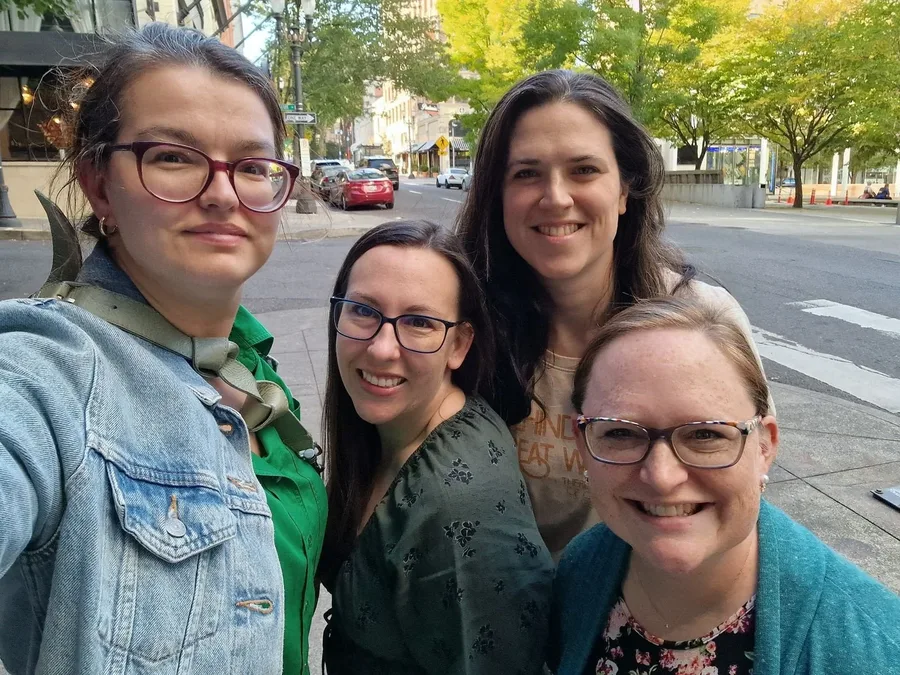
The Learning Scientist Blog TEN YEAR Anniversary! Cover Image: The Learning Scientists together in Portland, OR, October 2023 By Megan Sumeracki February 5, 2026 marks the 10 year anniversary of the Learning Scientists Blog. (A blogaversary, if you will!!) In late January, 2016, Jude Weinstein (who went by Yana at that time) and I started what we thought would be a fun little project to try to he…
Choice and Mental Effort Cover Image by Ted Erski from Pixabay By Althea Need Kaminske Thinking is hard. In general, we don’t like to put forth mental effort when we can avoid it. Further, when we do exert mental effort, we tend to not like it. And yet… there are times when we actually enjoy doing the hard work of thinking through something. There are times when we may even feel we’ve entered int…
Digest #183: The Importance of Belonging for Student Success Cover image by Zubair Rafiq on Pexels By Carolina Kuepper-Tetzel The feeling of belonging has been identified as an important factor in education (1) (2). The main components of student belonging are being connected to peers/teachers/institution; feeling safe and as a part of the community; feeling valued and accepted; and creating a di…
Reading Rates Among American Adults Cover image by Peggy und Marco Lachmann-Anke from Pixabay By Althea Need Kaminske As the days get shorter and the nights longer, I increasingly find myself wanting to stay inside to read a good book. A recent study by researchers at the University of Florida and University College London shows that I am in the minority of Americans. They found a consistent decl…
A Practical Guide to Exam Taking Strategies By Carolina Kuepper-Tetzel Taking exams is often associated with discomfort and anxiety in students. Students will feel nervous as these are high-stake performance situations. Exams require students to commit information to memory and to obtain an in-depth understanding of taught concepts. Thus, exams support knowledge construction, and knowledge is one…
Thank You To Our 2025 Community! Today is (American) Thanksgiving so we wanted to take the opportunity to thank our community! We are so grateful for the continued support, encouragement, and contributions of our community. Thank you to our Patreon sponsors! Your support keeps our email subscription service and podcast production going. The Learning Scientists is an entirely volunteer effort and …
The Box Metaphor for Working Memory [cover image by stocksnap on Pixabay] by Cindy Nebel How many boxes can you hold? Late last year, I went to a talk by Dr. Sarah Oberle where she posed this question and I have been using a modified version of this metaphor ever since. It is clearly a trick question. The answer, like so many things in our complex world of education is, of course, it depends. It …
A Framework for Training Students to Better Use Evidence-Based Learning Strategies Cover photo by RDNE Stock project on Pexels By Megan Sumeracki If you read our blog, even sporadically, you are almost certainly aware that investigations into evidence-based learning strategies have been ongoing for quite some time. In fact, as we near the end of 2025, I’m realizing that Ebbinghaus’ work on spaced…
research.ioSign up to keep scrolling
Create your feed subscriptions, save articles, keep scrolling.