Like a lot of my work, I take inspiration from many places. This post is going to reflexively unpack some of the process I used when taking the book Getting Research Funded: Five essential rules for early career researchers (by Tseen Khoo, Phil Ward, and Jonathan O’Donnell) and turning it into a series of grant-writing […]
Lorraine Bridger passed away recently. Most people won’t know who she is but Lorraine was special to me. She got me started as research administrator. I’m going to miss her. In 1990, Lorraine employed me to work at the Research Coordination Office at the Royal Melbourne Institute of Technology. I had one year of experience […]
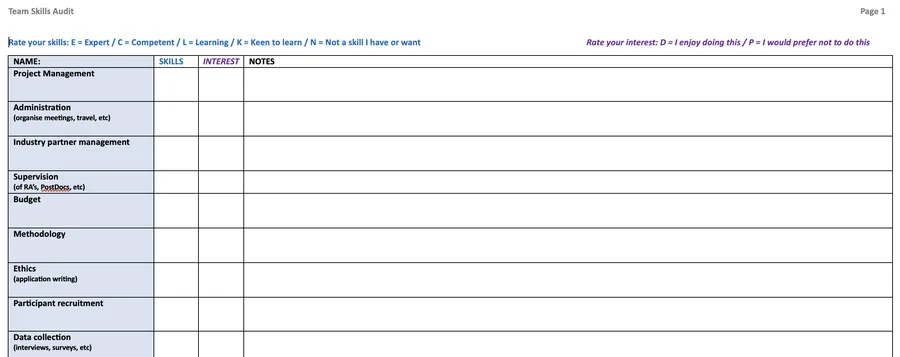
Inger Mewburn, Pat Thomson, Helen Kara and Aimee Grant recently published a book, Managing Your Research Project. The Research Whisperers think that it is a handy contribution so we asked the authors if we could publish this excerpt from Chapter 2: Approaches to project management. This post is drawn from pages 19-24 of Managing Your […]
Inger Mewburn, Pat Thomson, Helen Kara and Aimee Grant recently published a book, Managing Your Research Project. The Research Whisperers think that it is a handy contribution so we asked the authors if we can publish excerpts from the Introduction. This post is drawn from pages 1-5 of Managing Your Research Project, 1st edition, by […]
This second post by Neil Selwyn and his collaborators shares some of the preliminary results from their research survey, which was discussed in an RW post earlier this year ‘Academics’ uses of GenAI‘. Image from Lance Chang | unsplash.com “I think because it’s not openly discussed and yet it’s so easy to use, I feel […]
This article was originally posted Bron Eager’s Journal blog in March 2026, and can still be found there. We have republished it because Bron has written about an important issue in a clear and evocative way. We have republished it here under the under the Creative Commons Attribution 4.0 International (CC BY 4.0) licence, with the permission of Bron Eager. […]
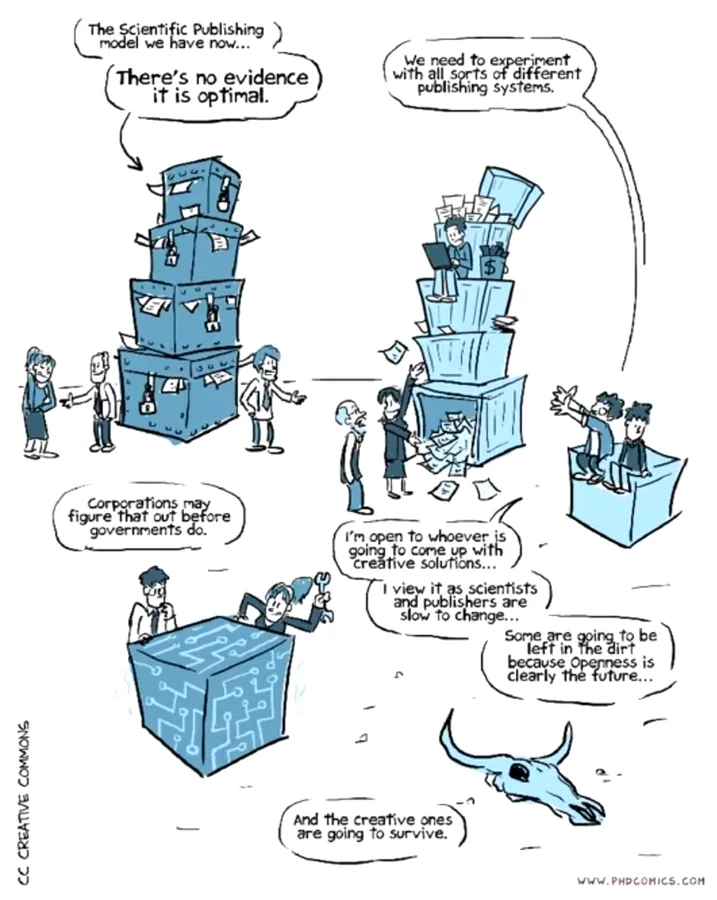
I’ve been thinking about Australian’s recent Open Access (OA) deal now that the dust has settled on the recent showdown with Elsevier. After all, we’d been spending some $500 million to $1 billion per year on journal subscriptions (an eye‑watering 5–10% of our national research spend), so it feels sensible to negotiate as a national […]
In my last post, ‘Transferring your funding‘, I talked in general about the things to consider for your grants when you move universities. This post covers the questions that I ask when someone says “I’m coming to your university and I need to transfer my grant”. As I said last time, it is worth remembering […]
When you move to a new university, what happens to your grants or fellowship? You might be moving because you have a new job and a promotion. You might be moving because things are bad where you are right now and you need to get out. You might be moving because someone you care about is moving and you want to go along. Whatever the reason, it is a really busy time, often full of emotion.
In this …
In economics and planning, there is a thing called the sunk cost fallacy. It comes about when people continue with something that isn’t working because they have put so much effort into it that they don’t want to abandon it. Rather than cutting their losses, they continue because, in part, they can’t let go of the time and effort that they have already invested. Their experience of the past limit…
Although universities remain keen to tackle inappropriate uses of generative AI (GenAI) by students, it is becoming increasingly clear that we need to talk much more openly about academics’ (mis)use of these technologies.
Many Research Whisperer readers might have begun to hear stories of GenAI being used to write academic papers and research proposals, to analyse research data, to write peer rev…
At times, I feel exhausted and irritable. I might get angry at a petty request to sign another PDF or because I have to send another reminder. I end up trapped between past times when I had the patience and time to take care of everything and my current need to minimise frustration and take care of my mental health,
A colleague recently said that I must have the patience of a saint to put up with…
Here at the Research Whisperer, we love librarians. They are smart, dedicated people who want to help you with your research. They are often keen on making the world a better place, too. They don’t get enough recognition for all that they do.
They are also, in our experience, unfailingly polite. So, it came as a bit of a shock to discover that the Council of Australasian University Librarians (CA…
Tseen is typing this as the first day of the ‘Community in Writing’ symposium happens! The Research Whisperers are very excited and having fun in a room where everyone is invested in creating a better academic environment for all. It’s refreshing. It’s inspiring. And we’re only a couple of hours in!
This post, by our wonderful colleague from Writing Partners / Shut Up & Write! Aaron Bolzle, joins…
Part-time postgraduate study can be an isolating experience, with students often having to balance their research with careers, family, or care commitments. Factoring remote working into this mix can leave postgraduate researchers (PGRs) without an established community to work within. This post shares insights from a writing retreat we developed as part-time PGRs, for part-time […]
Most researchers are honest and their work is a worthwhile addition to the scholarly record. However, a significant percentage of researchers are engaged in questionable practices or producing work lacking integrity. For example, Bik and colleagues have estimated ~2% of the biomedical literature is affected by image manipulation problems. Adam Day, who runs the Papermill […]
Peer review, like many things, sounds great in theory. When you submit a paper for publication, qualified experts objectively review your paper, comment on its suitability for publication and give you feedback that you can use to improve it. However, in reality, the problems with peer review go far beyond getting a reviewer who just […]
Competition for jobs and grants in academia has never been tougher. The constant drive to “publish or perish” can make you feel like your career will end unless your output is superhuman. Sometimes, it’s even before graduation as some programs demand publication before awarding a PhD. Adding to those worries are people whose output is […]
This post began life as a comment on Yvonne Kjorlien’s excellent blog, The Reluctant Archaeologist. Photo by Vidar Nordli-Mathisen on Unsplash. The economics of Australian universities First of all, there is the business model of the university. In Australia (where I’m based) almost all universities are teaching and research ‘liberal arts’ universities, and they are […]
In a recent post on Research Whisperer, two anonymous authors decry the universities’ rush to wind back work-from-home arrangements that were instituted during the COVID crisis. In particular, the authors argue that return-to-office (RTO) arrangements are counterproductive for introverts. Their post adopts a widely-accepted definition of an introvert as someone who finds social encounters taxing,…


















 research.io