


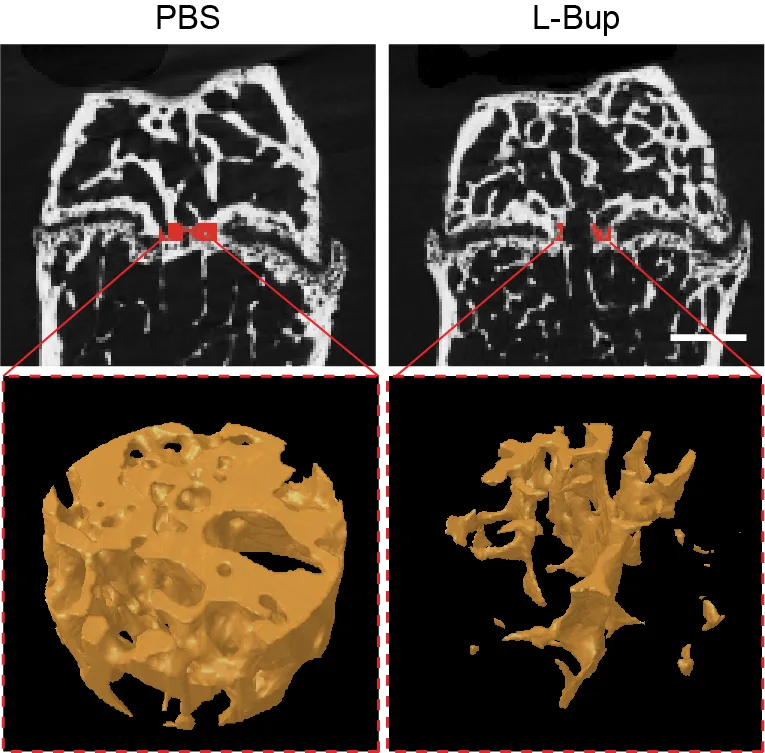
With the support of National Institutes of Health funding, Johns Hopkins Medicine investigators, led by pathologist Aaron W. James, M.D., Ph.D., previously discovered that sensory neurons in skeletal tissue are constantly sensing their environment and are quick to respond to injuries. Now, through federally-supported research published today in Science Translational Medicine, they describe how this response profoundly affects growth plates, the soft cartilage at the end of bones in children that support normal growth and development, and how it responds to targeted treatment in mice. Following a growth plate injury, a rapid invasion of nerve fibers and blood vessels triggers the formation of an unwanted "bony bar," a rigid bone-like structure that can ultimately impede recovery and lead to stunted or altered bone growth. Through this new research, the team found inhibiting TrkA+ sensory neurons with long-acting bupivacaine, an FDA-approved nerve-numbing anesthetic, reduced this abn
Targeting Sensory Nerves After Growth Plate Injuries May Bolster Healing
Johns Hopkins Medicine