


A research team developed an acid-metal bifunctional catalyst made from discarded fish bones that efficiently converted waste agricultural film into olefin-rich bio-oil through microwave-assisted pyrolysis. Under optimized conditions, the catalyst produced a bio-oil yield of 89.32 wt.%, with olefins accounting for 84.03% of the oil and C6-C12 compounds dominating the hydrocarbon fraction. By simultaneously valorizing fish-processing residues and difficult-to-recycle plastic mulch, the approach could support more economical plastic recycling and provide a sustainable route to high-value hydrocarbon feedstocks.
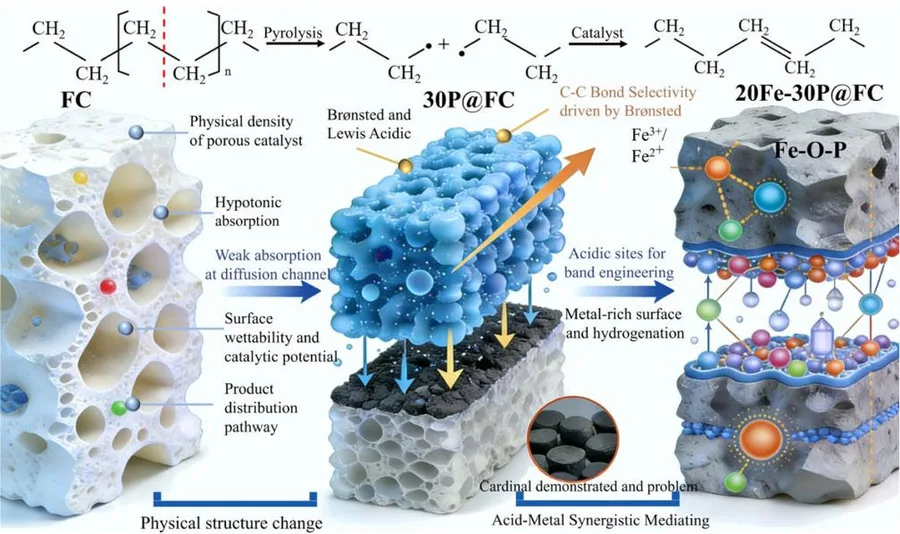
Fishbone Catalyst Turns Agricultural Plastic Waste Into Olefin-Rich Bio-Oil
Chinese Academy of Sciences