


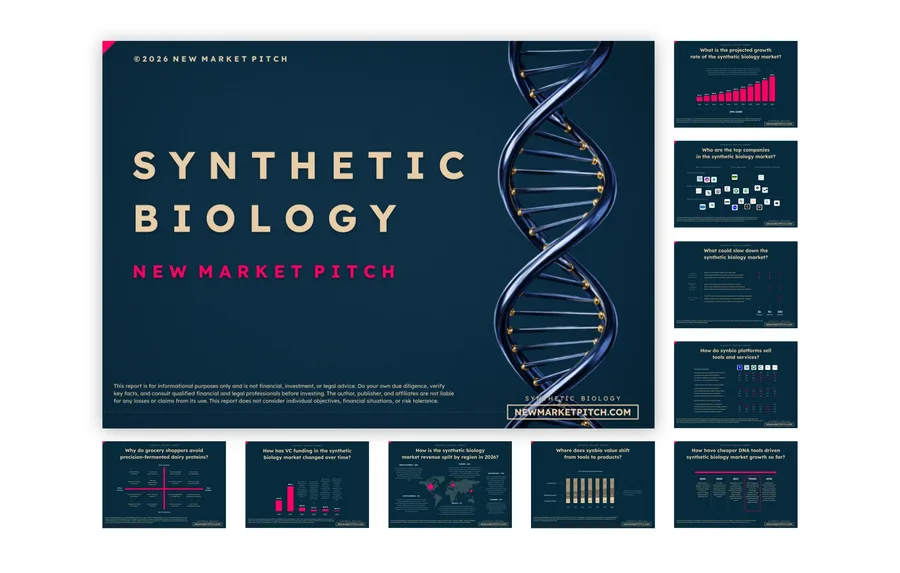
Biofoundries: which startup is ahead? Last updated: 31 July 2026 In our synthetic biology market deck , you will find everything you need to understand the market SUMMARY Asimov is ahead overall in the private biofoundry race, with Arzeda close behind and Culture Biosciences holding the strongest specialist position. The market is not converging around one universal biofoundry. Therapeutic cell engineering, industrial protein commercialization, bioprocess development, cloud protein testing and autonomous laboratory infrastructure are becoming separate businesses with different leaders. Asimov's lead comes from integration rather than one headline technology. Its cells, genetic parts, software, laboratory workflows and manufacturing partners sit around a customer program that can eventually reach the clinic, creating unusually high switching costs. Arzeda has the strongest commercial proof. ViaLeaf has moved beyond a technical demonstration into industrial production, measurable market adoption and global distribution through MANE, which is still rare among biofoundry-created products. Ginkgo remains the physical benchmark, but no longer the clean business-model benchmark. Its autonomous laboratories and large installations show what scale can look like, while falling revenue and continued cash use show how expensive that scale can become. Culture Biosciences occupies a less glamorous but important bottleneck. Many engineered cells fail during process development, so Culture's cloud bioreactors, software and installable hardware address the point where promising biology has to become reproducible manufacturing. Adaptyv Bio is the company most directly tied to the rise of AI-designed proteins. Transparent pricing, API ordering and short experimental cycles could make it the testing layer used by software agents that generate far more candidates than traditional laboratories can handle. Constructive Bio may own the deepest scientific moat, but it also carries the largest market-timing risk. Rewritten genomes and expanded genetic codes are hard to copy; the open question is how many customers need them badly enough to support a large platform business. Arzeda appears to have used its funding most efficiently, while Asimov has built the broadest high-value platform. Those are different achievements, and the gap between them explains why the overall ranking is close. For now, Asimov has the strongest combination of customers, clinical validation, manufacturing access and product expansion. Arzeda could overtake it with several more successful product launches, while Culture, Adaptyv and Constructive Bio each have a credible path to lead a narrower layer of the market. Which biofoundry startups are we actually comparing? We see six private biofoundry startups worth comparing today, with Ginkgo Bioworks kept as the public benchmark. A biofoundry should do more than sell software, manufacture somebody else's recipe or develop only its own biological products. For this comparison, a company must let outside customers use an integrated platform covering several stages of biological engineering, such as designing molecules, building organisms, running experiments, analyzing results or preparing a process for manufacturing. That definition gives us Asimov, Arzeda, Culture Biosciences, Constructive Bio, Adaptyv Bio and Triplebar. They remain very different businesses, but each gives customers access to biological engineering capabilities that would otherwise require a specialized laboratory, automation equipment and an experienced scientific team. We keep Ginkgo Bioworks in the analysis because it remains the largest commercial biofoundry benchmark. Ginkgo has been publicly traded since 2021, so calling it a startup would now be misleading. Leaving it out would also distort the comparison because every private biofoundry is still judged against the scale, ambition and difficulties of Ginkgo's model. We exclude Cradle because customers mainly use its software to design proteins before testing them elsewhere. Synthace sells laboratory software. Companies such as Generate Biomedicines and LabGenius operate sophisticated internal platforms, but they mainly use those platforms to develop their own drugs. Traditional contract research and manufacturing companies are also outside the scope when they simply carry out customer instructions. StrainX Bioworks recently emerged from stealth with 1.3 billion in private capital before and around its listing Public benchmark Asimov Designing and manufacturing biologics, viral vectors and RNA therapeutics About 101 million to 95 million Core competitor Constructive Bio Building synthetic genomes and organisms that use an expanded genetic code 21 million Core competitor Adaptyv Bio Synthesizing and experimentally testing designed proteins through an automated cloud laboratory About 47 million installation for Pacific Northwest National Laboratory are beyond the reach of the private companies. Its business performance is much less convincing. Continuing-operations revenue fell from 19 million in the first quarter of 2026, while Ginkgo completed the sale of its biosecurity division and concentrated the company around autonomous laboratories. Ginkgo owns the largest infrastructure. The private field, though, is Asimov's to lose. If you want more recent data on this point, please see our latest synthetic biology market report . This market map, featured in our synthetic biology market deck , highlights top companies and startups in the synthetic biology market Which biofoundry has built the strongest scalable business? Arzeda has the clearest proof of a biofoundry-created product selling at industrial scale, while Asimov has built the stronger platform for high-value therapeutic manufacturing. ViaLeaf Reb M gives Arzeda something most biofoundries still lack: a product moving through a normal commercial supply chain. The sweetener entered the market in 2024, and Arzeda later reported more than 5% of the global Reb M market. Production capacity has passed 500 metric tons per year through external manufacturing partners. MANE has since expanded its relationship with Arzeda and taken responsibility for ViaLeaf production and global commercialization. MANE already sells flavors and ingredients to large food and beverage manufacturers, so Arzeda does not need to build an international sales and distribution organization alone. Arzeda's path from designed protein to market share is unusually strong evidence. The company had to make the protein work, develop an economical production process, complete regulatory work, produce consistent material and persuade food companies to use it. That is a real business, not just a platform demo. Asimov sells a higher-value but less transparent service. Pharmaceutical companies use its cells, genetic parts, software and development teams to improve the production of complex medicines. The company has named major partners including Amgen, Cytiva, LOTTE Biologics, AGC Biologics and BARDA, but it does not disclose revenue, contract values or customer retention. Asimov's scaling model depends on manufacturing partners rather than company-owned factories. Cytiva provides media and process-development services. LOTTE Biologics has demonstrated scale-up of CHO Edge. AGC Biologics can offer Asimov's lentiviral packaging system from its cell and gene therapy facility. Culture Biosciences has also built a real operating business. Customers have completed more than 20,000 bioreactor runs through its platform, and Culture now sells a combination of services, Console software and Stratyx laboratory equipment. The company has not disclosed enough installations or recurring software revenue to show that the newer model is scaling yet. Ginkgo can build larger automated laboratories than any private competitor. It delivered an 18-instrument anaerobic system to Pacific Northwest National Laboratory and then won a 149 per protein for a 96-protein binding screen, including two experimental replicates. The company says customers can move from submitted sequences to experimental data in less than three weeks. A protein-design team can therefore test a batch of AI-generated candidates without buying automation equipment, hiring a complete wet-lab group or negotiating a long custom research contract. The API provides a cost estimate before an order is placed. Culture Biosciences is also commercially available. Companies can ask Culture to run experiments remotely, install Stratyx bioreactors in their own laboratories and manage data through Console. Recent company-run comparisons found that Stratyx produced higher viable-cell density and antibody titer than another 250-milliliter bioreactor under the tested conditions. Constructive Bio remains earlier. The company can use synthetic genomes and recoded organisms to manufacture proteins containing amino acids that natural biology rarely uses, but commercial manufacturing remains limited. The practical answer depends on the job. Arzeda is furthest along as a finished product, Adaptyv is easiest to buy, and Asimov offers the strongest value for difficult therapeutic programs. Which biofoundry startup has won the strongest customers and contracts? Asimov has the strongest private-company customer portfolio, while Ginkgo holds the largest disclosed biofoundry contract. Asimov's customer list combines pharmaceutical developers, major equipment suppliers, contract manufacturers and the U.S. government. Amgen used the platform to improve expression of a difficult bispecific antibody. BARDA selected Asimov for work on manufacturing antibodies against dangerous viruses. Cytiva, LOTTE Biologics and AGC Biologics connect the technology to development and manufacturing facilities. Several smaller biotechnology companies have trusted Asimov with specific drug programs. Mabylon used Rapid Pools to choose among trispecific-antibody candidates. Score Pharma is using CHO Edge for an improved anti-HER2 antibody. Ottimo Pharma received a stable cell line for a PD1 and VEGFR2 antibody and transferred the work toward GMP manufacturing. These relationships go deeper than ordinary product trials. Choosing a production cell line affects process development, regulatory filings and future manufacturing, and changing it later can cost a drug developer considerable time and money. Ginkgo's $47 million Pacific Northwest National Laboratory project is the largest contract disclosed by any company in the comparison. Ginkgo also introduced ADME-One with Tangible Scientific and Inductive Bio, giving drug developers access to automated testing of how compounds may behave inside the body. The company said its Datapoints business worked with ten large pharmaceutical customers during its first full year. Arzeda has fewer disclosed customers, but its relationship with MANE carries unusual weight. MANE is now responsible for producing and commercializing ViaLeaf globally. Arzeda has effectively connected its protein-design platform to an existing multinational ingredient business. Culture Biosciences has worked with MilliporeSigma, Nektar, Cytovance Biologics and Modern Meadow. Public case studies show that customers use its reactors for real process-development decisions, although contract values and renewal rates remain hidden. Constructive Bio's agreement with the Ellison Institute included an upfront licensing payment, shared commercial rights and potential future royalties. That is a credible early deal, but its technology still has less customer validation than Asimov's platform. The clinical use of a molecule produced with CHO Edge tips this category toward Asimov. It is the clearest private winner on customer quality. This chart, featured in our synthetic biology market deck , illustrates yearly VC funding for synthetic biology startups Which biofoundry startup advantage will be hardest to copy? Asimov currently has the most useful defensible platform, although Constructive Bio owns the more unusual science. Asimov's advantage comes from several assets working together. It owns production cells, genetic components, design software, laboratory data, development workflows and a proprietary genome-integration system. Manufacturing partners have also adapted their processes around its technology. A competitor could build another genetic-design model or license a different CHO cell. Reproducing the complete system would require years of experiments connecting individual molecule designs with expression, stability, product quality and manufacturing performance. Chrysalis strengthens that position because Asimov owns the integration technology instead of depending entirely on an outside tool. Customers can license Chrysalis separately, use it through Asimov's broader platform or include it in a cell-line development
Biofoundries: which startup is ahead?
NewMarketPitch Team