


At its core, a lot of modern technology depends on relatively simple patterns to receive and relay information. Incidentally, living things have also functioned this way for billions of years—a comparison that hasn’t gone unnoticed by engineers. In electrical circuits, transistors switch or amplify electric signals, but researchers at the Massachusetts Institute of Technology have swapped in electrical signals for biological ones, using three strains of the bacteria Pantoea agglomerans to “carry” signals across circuits. It takes the cells a lengthy eight hours to perform each calculation, but the findings, published this week in Nature Chemical Biology, demonstrate the potential of biotechnology in unexpected ways. “We’re not trying to replace computers, but rather put computational control into biology,” Christopher Voigt, head of MIT’s Department of Biological Engineering and the study’s senior author, told MIT News. “If you have bacteria on the root of a plant, or the plant itself is doing the computing, running a simple calculation overnight is fast enough relative to a growth season.” Organic limits According to the paper, similar approaches in the past primarily focused on using enzymes to run (relatively) large, singular cells hosting an entire circuit. But it’s been very tricky to get a tiny cell to perform calculations in the exact way researchers want, which puts a strict limit on the level of complexity that is allowed. On the other hand, transistors “do not define circuit logic” but “conditionally enable signal propagation,” the researchers wrote. If they could make these transistors work, then it would be possible to combine the bio-transistors in different arrangements to create more diverse circuits. To create their prototype, the researchers printed colonies of bacteria onto tiny plates, with each colony living around 5 millimeters apart from each other. The mechanism behind these transistors involved a family of molecules used in biochemical...
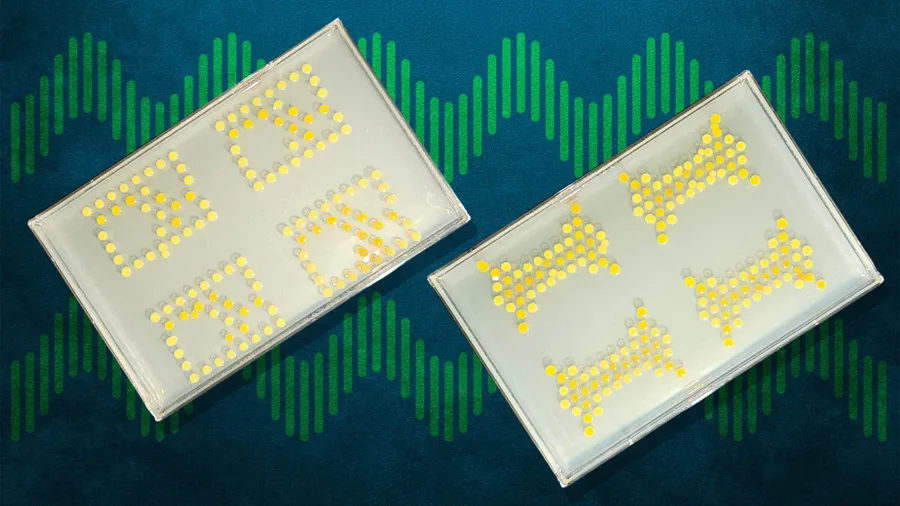
These Transistors Engineered With Bacteria Are Literally Alive, if a Little Slow
Gayoung Lee
3 min read