


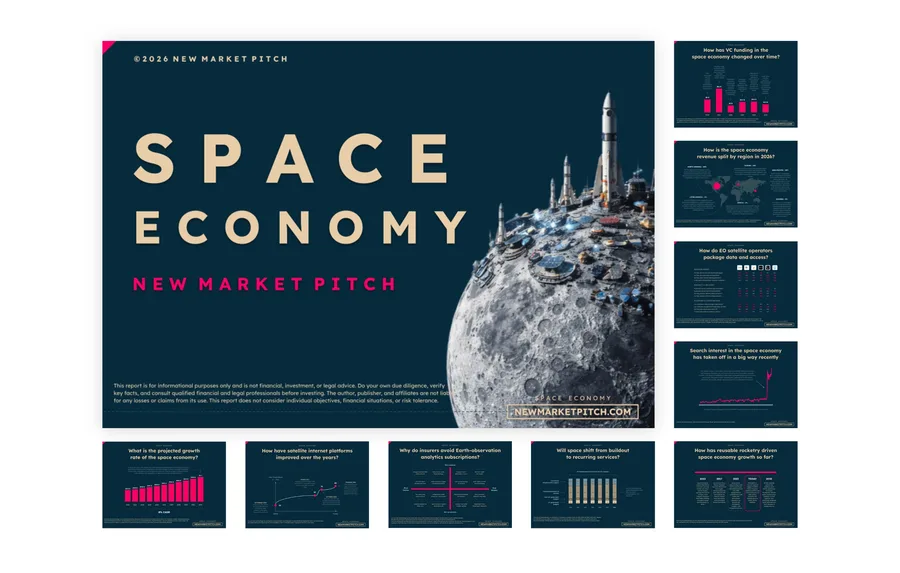
Who is Europe's next SpaceX? Last updated: 31 July 2026 In our space economy deck , you will find everything you need to understand the market SUMMARY Isar Aerospace is Europe’s best current candidate to become its next SpaceX, but the title is still premature because no European startup has completed a successful orbital launch. Europe’s immediate problem is no longer the complete absence of a heavy launcher. Ariane 6 has restored sovereign launch capacity, but Europe still lacks a private company that combines high flight cadence, reusable hardware, spacecraft operations and its own recurring demand. The gap with SpaceX is operational rather than conceptual. European companies have factories, launch sites, customers and ambitious roadmaps, while SpaceX has already repeated the manufacture-launch-recovery-reflight cycle hundreds of times. Isar leads because it has built the most complete launcher company around an unproven rocket. Spectrum has reached the pad, several later vehicles are already in production, and the company has raised enough capital to survive a difficult qualification campaign. PLD Space is the closest challenger because it has actually flown a vehicle, secured major financing and outlined a wider transport system around MIURA 5, MIURA Next and the LINCE capsule. The catch is that its decisive orbital rocket has not flown yet. MaiaSpace may have the best route to early launch cadence. Its Eutelsat OneWeb agreement gives it something the other startups badly need: repeated missions for the same constellation, starting soon after its planned debut. The Exploration Company is not competing for the launcher crown, but it may be building the missing European equivalent of Dragon. A successful Nyx mission would give Europe cargo return and orbital-logistics capability that makes any domestic launcher more valuable. Government demand will decide how quickly the field narrows. ESA is moving toward milestone-based launch and cargo-service contracts, but spreading support across many companies may preserve competition without creating a clear winner. Reusability is not the first test. A dependable expendable rocket flying often would be more useful than a reusable prototype that launches once, because recovery only pays when there is enough demand to reflight the hardware regularly. Europe may never reproduce SpaceX inside one company. A more plausible outcome is an Airbus-style network linking a private launcher, Nyx cargo vehicles, Eutelsat OneWeb or IRIS² demand, and large government anchor contracts. The ranking can change quickly. Two successful orbital launches within a few months would matter more than another large funding round, factory announcement or reusable-roadmap presentation. For now, Isar Aerospace is the frontrunner, PLD Space is the closest challenger, MaiaSpace is the fast-rising sleeper, and The Exploration Company is the strongest spacecraft contender. Europe has serious pieces of a future SpaceX-like system, but nobody has assembled or proved the whole thing. This market map, featured in our space economy deck , highlights top companies and startups in the space economy Why does Europe want its own SpaceX now? Europe wants its own SpaceX because depending on American rockets has started to feel like a strategic risk rather than a short-lived inconvenience. For several years, Europe had an awkward gap in independent launch capacity. Ariane 5 retired, Ariane 6 arrived late, Vega C was grounded for part of that period, and Russian Soyuz launches became unavailable after the invasion of Ukraine. Europe then placed major missions on Falcon 9, including Galileo navigation satellites, the Euclid telescope and the EarthCARE climate mission. Ariane 6 has since restored reliable European heavy launch. It carried Galileo satellites in 2025 and completed three Amazon Leo missions in the first half of 2026. Yet Europe still has no company matching SpaceX in speed, launch volume, reusable hardware, spacecraft operations and internally generated demand. The political mood has shifted too. ESA’s latest Space Economy Report says European public space budgets rose 12% to €13.5 billion in 2025, the first double-digit increase in five years. Government customers now account for about 80% of the global market for rockets and spacecraft, with defence leading that spending. Launch capacity is increasingly treated as infrastructure Europe may need during a crisis. What would count as Europe’s next SpaceX? A genuine European SpaceX would need to launch reliably, manufacture at scale and create enough recurring demand to keep flying. The rocket alone is only one part of SpaceX’s advantage. Falcon 9 provides launch. Dragon carries cargo and crews. Starlink fills the manifest with thousands of company-owned satellites. NASA and defence contracts add demanding, well-funded missions. Reusing boosters then becomes economically valuable because the company has enough flights to use them again and again. A European contender can follow a different product path, provided that its products reinforce one another. A launcher flying a handful of small satellites each year could become useful and profitable, yet remain far from SpaceX’s position. We use four practical tests. Can the company reach orbit repeatedly? Can it build vehicles faster than traditional European programmes? Does it control or secure a large stream of future missions? Can it expand beyond one small rocket into a wider transport business? Test What convincing evidence would look like Current European leader Reliable orbital launch Several successful customer missions in one year Ariane 6 among incumbents; no startup yet Scaled manufacturing Multiple flight vehicles moving through one production line Isar Aerospace Recurring launch demand A multi-year constellation or government manifest MaiaSpace Wider transport system Launch, cargo, crew or in-orbit services under one strategy PLD Space on roadmap; The Exploration Company in spacecraft Reusable operations Recovery followed by frequent, economical reflights No European company yet If you want more recent data on this point, please see our latest space economy report . As this chart shows, and as featured in our space economy deck , search interest in the space economy has been rising steadily Why doesn’t Ariane 6 already count as Europe’s SpaceX? Ariane 6 gives Europe dependable heavy launch again, but it does not operate like SpaceX and was never designed to do so. Arianespace has now used Ariane 6 for Galileo, military, Earth-observation and Amazon Leo missions. Europe clearly has a working heavy launcher again. Its industrial model remains very different. Ariane 6 is expendable, production is divided across a large European supplier network, and institutional missions remain central to its economics. SpaceX owns much more of its production chain, makes decisions inside one company and can fill unused capacity with Starlink. Ariane 6 may become a stronger global competitor than many critics expected. It remains Europe’s established sovereign launcher rather than a private platform expanding into satellites, cargo, crew and communications. For this article, it is the reliability benchmark the startups must beat. How far behind SpaceX is Europe today? Europe’s private launch companies remain years behind SpaceX in proven operations, and the gap is much larger than the number of startups suggests. SpaceX’s Falcon 9 statistics recently showed 661 launches, 615 landings and 580 reflights. The company completed 165 orbital launches in 2025, according to the American Institute of Aeronautics and Astronautics, up from 25 in 2020. That is a launch roughly every 2.2 days across the year. Europe’s leading private rocket companies have zero successful orbital launches between them. Isar Aerospace flew Spectrum once, but the vehicle lost control about 30 seconds after liftoff. PLD Space completed a successful suborbital MIURA 1 mission. Rocket Factory Augsburg, MaiaSpace and Orbex have yet to fly an orbital vehicle, and Orbex entered administration before reaching that milestone. Factory targets can make the race look closer than it is. Isar says its new facility could produce 40 Spectrum rockets annually. PLD aims for 32 MIURA 5 vehicles by 2030. MaiaSpace targets around 20 launches a year near the start of the next decade. Together, those plans exceed 90 annual vehicles or missions. For the moment, they remain production goals attached to unproven launch systems. When we compare actual operations, the biggest gap is accumulated learning. SpaceX has repeated the same difficult sequence hundreds of times: manufacture, test, launch, recover, inspect and fly again. European startups are still working through valves, stage qualification, range procedures, engine integration and first-flight software. Measure SpaceX European private contenders combined Successful orbital launches Hundreds 0 Booster reflights 580 0 Orbital launches in 2025 165 0 Operational cargo or crew missions Regular Dragon flights 0 Owned constellation creating launch demand Starlink 0 Announced future annual capacity Already operating at high cadence More than 90 across leading plans This chart, featured in our space economy deck , illustrates yearly venture capital funding for space economy startups Is Isar Aerospace currently the frontrunner? Isar Aerospace leads the European startup race because it has assembled the strongest mix of flight hardware, money, factories, launch sites and signed missions. Spectrum is a two-stage rocket designed to carry up to 1,000 kilograms to low Earth orbit or 700 kilograms to sun-synchronous orbit. Isar develops almost the entire vehicle in-house, including its Aquila engines. That gives the company tighter control over changes than a programme spread across many prime contractors and national suppliers. The company has moved beyond building a single test article. Before its second launch campaign, Isar said vehicles three through seven were already in production. Its new 40,000-square-metre factory near Munich is designed for as many as 40 Spectrum vehicles a year. No rival European startup has disclosed a production system at that scale with several numbered rockets already moving through it. Money strengthens that lead. Isar raised a €270 million Series D in 2026, after previously securing more than €400 million in private funding and a €150 million convertible bond. Exact cumulative totals depend on how those instruments are counted, but the order of magnitude is clear: Isar has access to far more capital than most European launch startups. Its recent commercial and government activity is just as important. Isar has agreements involving ESA, the European Commission, Astroscale and Planet. It signed a ten-year facilities deal for a Canadian launch complex, with first launches targeted for 2028. The company also says defence-related customers have grown from almost none to 60% of demand within a year. The missing proof is still the flight itself. Even so, Isar ranks first because it has built the most complete company around an unproven European rocket. If you want more recent data on this point, please see our latest space economy report . Has Isar Aerospace proved that Spectrum works? Spectrum has proved that Isar can build and launch a full-size orbital rocket. It has not proved that the rocket can reach orbit or deliver a customer payload. The first flight lasted around 30 seconds. Spectrum cleared the launch tower and began its planned ascent, then lost control and fell into the sea. Isar gathered flight data and kept the launch site usable, but commercial customers still need to see stable ascent, stage separation, upper-stage ignition and accurate payload deployment. The second rocket has spent months close to launch without leaving the pad. Attempts were stopped by a pressurisation-valve issue, an unauthorised boat in the danger zone, excessive fuel temperature, a pressure-vessel leak, weather and range availability. Those delays show that Spectrum remains in qualification. Isar can still attract early customers because Europe wants alternative launch capacity and because the company has enough money to survive failed attempts. The line is fairly simple: the first flight made Isar credible; a successful orbital flight would make it a real launch provider. This chart, featured in our space economy deck , shows why SpaceX is leading in the space economy Could PLD Space overtake Isar Aerospace? PLD Space can overtake Isar, but MIURA 5 must reach orbit before its broader roadmap deserves top billing. PLD has one achievement its closest rivals lack: it successfully flew the MIURA 1 suborbital demonstrator in 2023. That mission proved the Spanish team could integrate a vehicle, run a launch campaign and execute a controlled flight, although an orbital rocket faces much tougher staging, guidance and speed requirements. MIURA 5 is the decisive project. PLD has built qualification units, expanded its test centre in Teruel and increased planned investment in its French Guiana launch complex to €35 million. A recent test validated the pressurisation architecture, avionics and flight software across the first- and second-stage tanks. Financing has improved sharply. PLD closed a €180 million Series C led by Mitsubishi Electric and added €30 million of European Investment Bank venture debt. Its long-term plan includes the larger MIURA Next family, first-stage recovery and the LINCE cargo and crew capsule. That is a broader vision than Isar currently presents, but most of it remains on the roadmap. If MIURA 5 reaches orbit before Spectrum and flies again quickly, PLD could take the lead. Until then, it ranks second. Is MaiaSpace the sleeper candidate in Europe’s rocket race? MaiaSpace has become the strongest sleeper candidate because it already has the recurring customers that other European launch startups are still trying to find. ArianeGroup created MaiaSpace, giving it access to European propulsion knowledge, experienced engineers and launch infrastructure in French Guiana. Its rocket uses Prometheus engines and will come in expendable and reusable versions, with an optional Colibri kick stage. The more important advantage is demand. Eutelsat signed a multi-year agreement for OneWeb replacement launches starting in 2027. MaiaSpace says that deal could cover most of its manifest during the first three years. Loft Orbital later became its fourth commercial customer and booked multiple missions from 2028. More than half of MaiaSpace’s first three years of operations are now reportedly secured. OneWeb already operates about 650 satellites and will need replacements as early spacecraft reach the end of their lives. Repeated missions for the same constellation could help MaiaSpace standardise integration, learn faster and make recovery more useful. SpaceX shows how powerful that demand can become. Of its 165 orbital launches in 2025, 123 carried Starlink satellites. Roughly three quarters of its missions served its own network. MaiaSpace does not own Eutelsat, so its arrangement is less secure, but it still has a clearer route to cadence than its startup rivals. Isar has advanced further in full-scale flight preparation. MaiaSpace has built the stronger early demand engine. A successful launch followed by several OneWeb missions could flip the ranking surprisingly fast. If you want more recent data on this point, please see our latest space economy report . This chart, featured in our space economy deck , illustrates yearly funding for space economy startups Where does The Exploration Company fit into the SpaceX race? The Exploration Company is building Europe’s clearest answer to Dragon, which could make it as strategically important as the launcher startups. Its Nyx vehicle is designed to carry cargo to space stations, dock, remain in orbit and bring material back to Earth. That return capability is scarce. Many companies can build satellites; far fewer can safely approach a crewed station and survive re-entry with valuable cargo. The project has moved into serious qualification work. NASA and ESA gave Nyx Phase 1 approval in the International Space Station safety-review process, confirming that its preliminary design and hazard controls were mature enough to continue. ESA also selected The Exploration Company alongside Thales Alenia Space for a commercial cargo-return programme, awarding €25 million to each team in the first phase. Recent testing adds useful evidence. The company completed a recovery-system drop test in California, releasing a representative test vehicle from a helicopter at 9,100 feet and validating the transition from drogue parachutes to the main parachutes. Its earlier Mission Possible demonstrator also gathered re-entry data, although the mission did not complete the full recovery originally planned. Nyx has credible technical and institutional momentum. It still depends on other companies’ rockets, so it cannot create SpaceX’s integrated launch-and-spacecraft economics on its own. A deep partnership with Isar, PLD, MaiaSpace or Ariane 6 could nevertheless give Europe a much broader transport system. Isar leads the launcher race. The Exploration Company leads the European race to build the spacecraft that makes a launcher more valuable. Is Europe giving these companies enough government business? Europe is finally buying more commercial launch and cargo services, although its support remains too divided to create a SpaceX-style winner quickly. NASA helped SpaceX by paying for a concrete service. The agency awarded the company 1.6 billion contract for 12 cargo missions in 2008. Those agreements linked funding to technical milestones and promised operational revenue after success. ESA is now moving in a similar direction. Its European Launcher Challenge preselected Isar Aerospace, MaiaSpace, Orbex, PLD Space and Rocket Factory Augsburg. The programme can buy launch services from 2026 to 2030 and requires the surviving companies to demonstrate an orbital launch by 2027. The cargo-return competition follows the same logic. The Exploration Company and Thales Alenia Space each received €25 million to develop services that should demonstrate a mission by 2030 at the latest. The weakness is concentration. Five launcher candidates share the available support, while cargo funding is split between two teams. Europe can preserve competition this way, but a dominant company will only emerge when governments place much larger orders with the providers that actually perform. This chart, featured in our space economy deck , compares the main business model options for Earth observation satellite operators Can Europe finance a SpaceX-sized company? Europe can finance one or two serious space scaleups at present, but its private market remains far too small to support several SpaceX-sized bets at once. The European Space Policy Institute counted €1.4 billion of investment in European space ventures during 2025. The United States attracted nearly €8 billion, about 5.7 times more. Europe’s total also fell 8% from the previous year even as global space investment rose 60%. The money is concentrated near the top. Europe’s five largest rounds represented €629 million, almost 45% of the regional total. One large financing can transform the yearly numbers while dozens of smaller companies still struggle to fund long development cycles. That pattern appears in the launch race. Isar secured €270 million in one round. PLD secured €180 million and then €30 million from the European Investment Bank. Those are major European financings, yet rocket development can consume capital for years before regular revenue appears. One failure can destroy hardware, delay customers and force expensive redesigns. Public budgets are much lar
Who is Europe's next SpaceX?
NewMarketPitch Team