


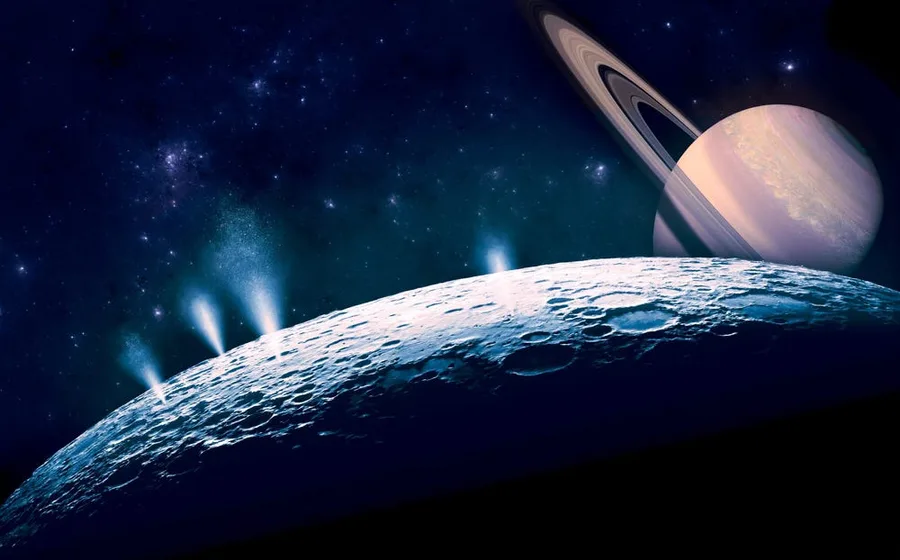
A new study focusing on Enceladus, a moon of Saturn, shows that the physics of alien oceans could prevent evidence of deep-sea life from reaching places where we can detect it. Based on the current pledges of countries for limiting their emissions of greenhouse gases, global temperatures are projected to reach 2.7 degrees Celsius beyond pre-industrial levels by the end of this century. A new review paper highlights how this would dramatically reshape the Arctic, the fastest-warming region of Earth. Researchers have analyzed the soft tissue from a fossilized plesiosaur for the first time. The results show that the long-necked marine reptile had both smooth and scaly skin. This was likely so it could both swim rapidly and move along rough seabeds. 'Temperamental' stars that brighten and dim over a matter of hours or days may be distorting our view of thousands of distant planets, suggests a new study. New research finds some baleen whale species call at such deep frequencies that they're completely undetectable by killer whales, which cannot hear sounds below 100 hertz. These also tend to be the species of baleen whales that flee in the face of attack from killer whales. Scientists have developed a novel tool designed to protect and conserve coral reefs by providing them with an abundance of feeding opportunities. A biomaterial that can mimic certain behaviors within biological tissues could advance regenerative medicine, disease modeling, soft robotics and more, according to researchers. Researchers have unveiled the precise brain mechanisms that enable animals to overcome instinctive fears. The study in mice could have implications for developing therapeutics for fear-related disorders such as phobias, anxiety and post-traumatic stress disorder (PTSD). Electric sparks are used for welding, powering electronics, killing germs or for igniting the fuel in some car engines. Despite their usefulness, they are hard to control in open space, they split into chaotic...
ScienceDaily: Featured - February 09, 2025
ScienceDaily
4 min read