

Abstract While achieving remarkable commercial success, lithium-ion battery (LIBs) carry substantial safety risks associated with potential thermal runaway during widespread applications. When operated under complex working conditions, particularly in high-temperature and high-pressure environments, the internal galvanic reactions within these batteries may escalate uncontrollably. During the early stages of LIBs thermal runaway, substantial amounts of characteristic gases such as H2, CO, and...
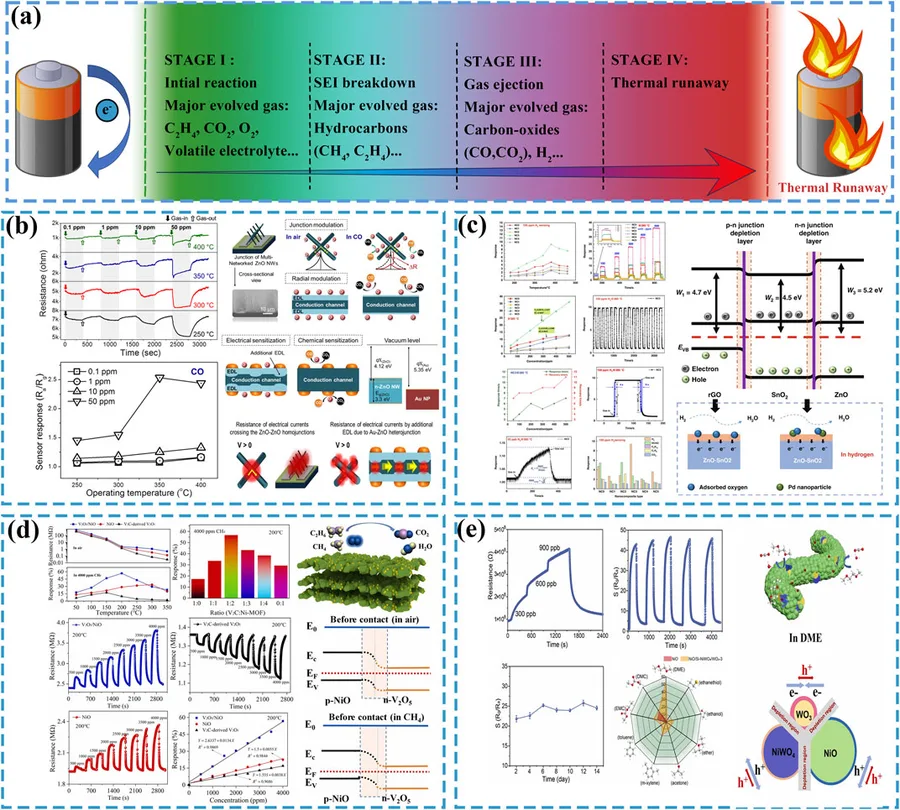
Detection toward early-stage thermal runaway gases of Li-ion battery by semiconductor sensor
Cheng Lv