


A deep-learning approach that reads two contrast-enhanced computed tomography (CT) phases may help clinicians distinguish benign from malignant pancreatic cystic lesions (PCLs) before surgery. By combining arterial- and venous-phase images with maps of the pancreas and the lesion, the model captured complementary structural and blood-flow-related information that can be difficult to assess consistently by eye. In an independent test set, the best-performing system showed strong sensitivity for malignant lesions and produced decisions broadly aligned with a radiologist's assessments. The findings suggest that dual-phase CT could support more consistent risk stratification, helping identify patients who need closer evaluation while reducing uncertainty in the management of incidentally detected pancreatic cysts.
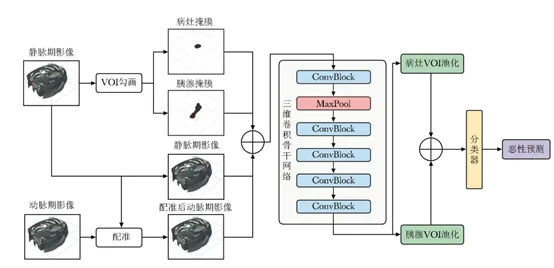
Dual-Phase CT Sharpens Deep-Learning Assessment of Pancreatic Cysts
Chinese Academy of Sciences