


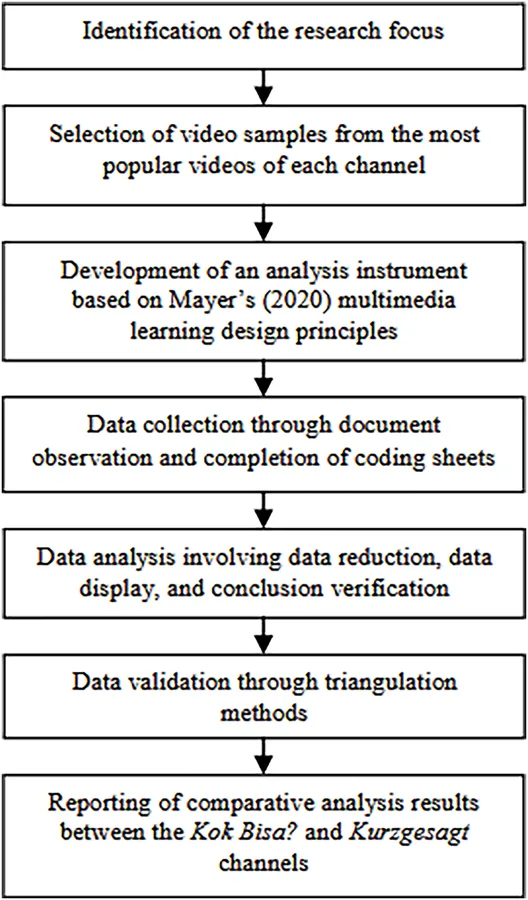
This study examines the comparison of visual learning design in popular science education videos on the YouTube channels Kok Bisa? and Kurzgesagt . The research method uses a qualitative approach with comparative content analysis techniques on the five most popular videos from each channel. The results show significant differences in visual learning design approaches between the two channels. Kok Bisa? prioritizes local cultural contextual approaches with dynamic animation and humorous narration, while Kurzgesagt applies universal design based on scientific data with minimalist visualization and formal narration. The research findings reveal that both approaches are effective in delivering complex science concepts in different ways, where their effectiveness is strongly influenced by compatibility with target audience characteristics. The implications of this research provide a reference framework for digital educational content developers in designing attractive and effective learning materials.
A Comparative Study of Visual Learning Design in Popular Science Educational Videos: A Content Analysis of the YouTube Channels Kok Bisa? and Kurzgesagt
Imelda Paulina Soko