You paste a JWT into some online decoder to check a claim, and a second later it hits you: that token just went to a server you know nothing about. Is it logged? No idea. Same story with pasting JSON, an API response, whatever, into a random tool site covered in trackers and cookie banners. You never really know what happens to what you typed. So I put the tools I actually use into one page where…
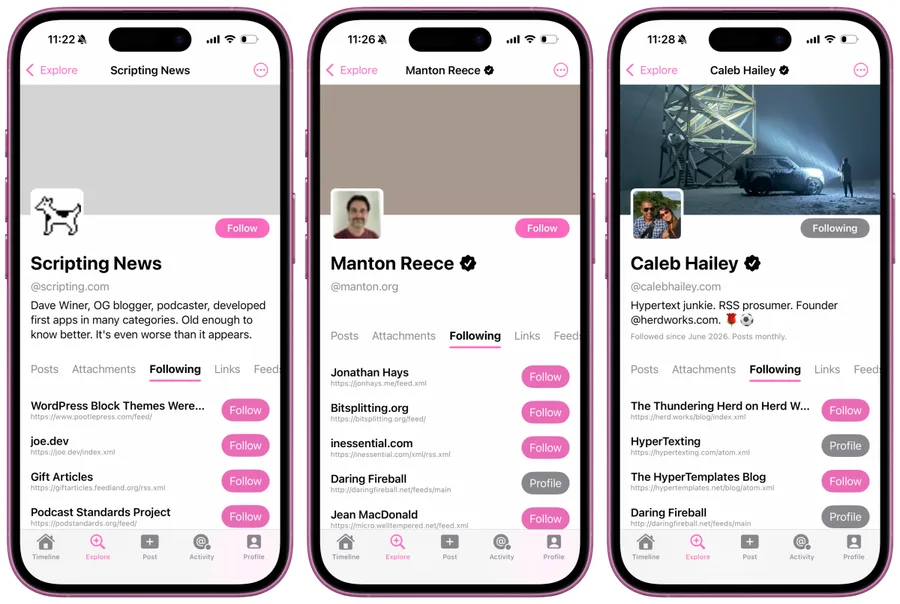
HyperTexting's new app aims to make the open web feel more like social media by turning websites, blogs, newsletters, and podcasts into a scrollable feed, while also making it easier to post to your own website.
The Web Conference (WWW) is one of the top internet conferences in the world. To help the community quickly catch up on the work presented in this conference, Paper Digest Team processed all accepted papers, and generated one highlight sentence (typically the main topic) for each paper. Readers are encouraged to read these machine generated highlights to quickly get the main idea of each paper. N…
How I built a free tool to open Apple iWork files on Windows (no backend) TL;DR : I built iWorkViewer — open and convert Apple .pages , .numbers , and .keynote files right in your browser. No Mac, no iCloud, no upload, no signup. Everything runs client-side. The problem Someone sends you a .pages document, a .numbers spreadsheet, or a .keynote deck. You're on Windows, Android, or a Chromebook. Yo…
Relational consistency engine
Every fingerprint surface — canvas, WebGL, audio, fonts, MediaDevices, WebGPU — derives from a single (profile, seed) pair through a 48-rule DAG. No Frankenstein fingerprints; a Mac UA never lands next to Linux WebGL.
mochi.js is a Bun-native, raw-CDP browser automation framework. Pass a seed and a profile; get a relationally-coherent fingerprint that survives a getP…
If you've ever tried building a SaaS or a tool aggregator, you know the drill: file uploads equal server costs. Processing PDFs or stripping image backgrounds usually requires setting up a backend, managing storage (like AWS S3), and dealing with potential privacy liabilities. I was tired of uploading my sensitive files to random "free" tools that hit me with paywalls or forced me to create accou…
The end of responsive images
I’ve been waiting for fourteen years to write this article. Fourteen years to tell you about one relatively new addition to the way images work on the web. For you, just a handful of characters will mean improvements to the fundamental ergonomics of working with images. For users, it will mean invisible, seamless, and potentially massive improvements to front-end perf…