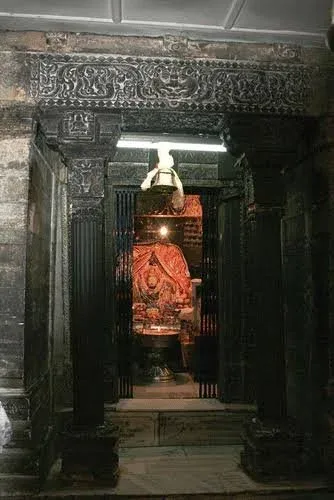
One Temple, Two Religions: The 1,000-Year Mystery of Triloknath in the Himalayas High in the mountainous Lahaul region of Himachal Pradesh stands one of the most remarkable religious monuments in the western Himalayas: Triloknath Temple. The site is extraordinary not simply because of its age or dramatic mountain setting, but because it occupies a cultural space where religious traditions that ar…
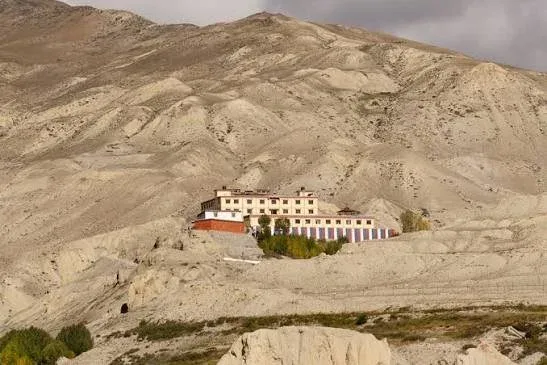
Hidden in the Cliffs of Mustang: The Ancient Himalayan Hermitage That Seems to Defy the Mountains High in the dramatic landscapes of Mustang, Nepal, where deep valleys cut through the rain-shadow of the Himalayas and ancient trade routes once connected Tibet with the Indian subcontinent, Buddhist monasteries, meditation sites, and cliffside religious structures preserve evidence of centuries of H…
Religion & Public Life A weekly digest of the Center’s latest research on religion and public life in the U.S. and around the world · Subscribe ↗ Media mentions A pope from Chicago was elected. The White Sox were resurrectedAug. 7 – The New York Times * ‘A gift from heaven’: Pope Leo prepares for warm Peru […]
Augustine Nwoye·Prof. Dr. (ijssrrjournal@gmail.com)
7/11/2026
In his book, African Religions and Philosophy , Professor John S. Mbiti boldly affirms that in Africa people die only in body and not in spirit. In making such a generalized claim about Africans and their notions of death and the afterlife Mbiti appears to suggest the implication that in Africa people die only to continue living, everything being equal, as ancestors or members of the living-dead.…
In Isaiah, God repeatedly declares that He is the only God:
"I am the LORD, and there is no other; besides me there is no God."
— Isaiah 45:5
and:
"I am God, and there is no other; I ...
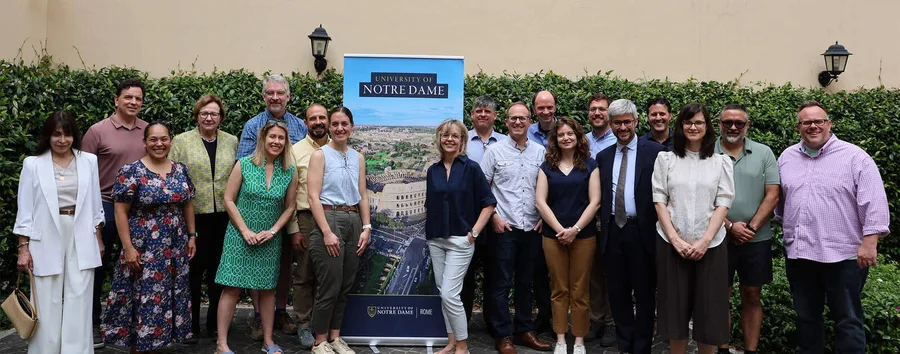
Just days before more than a dozen scholars convened in Rome for a symposium on the Catholic social tradition (CST), the Vatican released Pope Leo XIV’s first encyclical, Magnifica Humanitas, on the human person in the age of artificial intelligence. The timing gave fresh urgency to the conversations about to unfold over three days.
The research symposium, titled “Modern Catholic Social Teaching …
Schism caused by ordaining of four bishops without papal consent presents first crisis for Pope Leo Europe live – latest updates The Vatican has excommunicated a rebel group of ultra-conservative Catholics who defied Pope Leo by ordaining bishops without his consent, creating a schism in the Roman Catholic church. In a statement on Thursday, cardinal Víctor Manuel Fernández, who heads up the Holy…
David Pradhan & Chandan Panigrahi ABSTRACT This review article examines the judicial governance of religion in India and Indonesia. It posits that constitutional courts in both jurisdictions go beyond mere resolution of disputes over religious freedom. Through their decisions, judges constitutively define the legal meaning of religion, circumscribe the limits of constitutional protections, an…
Consecrations by Society of Saint Pius X bring automatic excommunication for bishops – and crisis for Pope Leo A rebel group of ultra-conservative Catholics has defied Pope Leo by ordaining bishops without his consent, which they declared a “sacred duty” despite it causing their automatic excommunication. In a ritual-filled ceremony on Wednesday streamed live from the Swiss village of Ecône, the …
Conflict threatens to worsen mounting tensions between the Vatican and rightwing Catholics in the US and globally A far-right Catholic sect’s plan to ordain its own bishops on the first day of July has placed it on a collision course with the Vatican – posing a possible crisis for Pope Leo a little over a year into his papacy, and straining the Roman Catholic church’s already fraught relationship…

 research.io