Job List: Americas Name of institution: University of Toronto Mississauga Town: Mississauga Country: Canada Job Description: POSITION DESCRIPTION: The Department of Philosophy at the University of Toronto Mississauga (UTM) invites applications for a full-time tenure stream position in Ethics and/or Social and Political Philosophy. The appointment will be at the rank of Assistant Professor, with a…
This paper undertakes a critical examination of Kwasi Wiredu’s argument for a consensual democracy in African societies. In Cultural Universals and Particulars, Wiredu presented consensual democracy as a better means of decision-making process than majoritarian democracy in traditional African life and governance. Wiredu advocates for this as an alternative to majoritarian democracy which, he arg…
Job List: Americas Name of institution: University of Toronto, Scarborough Town: Toronto Country: Canada Job Description: POSITION DESCRIPTION: The Department of Philosophy at the University of Toronto Scarborough (UTSC) invites applications for a full-time tenure stream position in Social and Political Philosophy. The appointment will be at the rank of Assistant Professor, with an anticipated st…
Aleksandr Dugin is one of the most influential figures in the field of political philosophy and political science in general, as well as Russian political science in particular. His views have had an influence not only theoretically but also practically. In a world still plagued by conflicts, especially the tense relationship between the Russian Federation and Ukraine, culminating in the conflict…
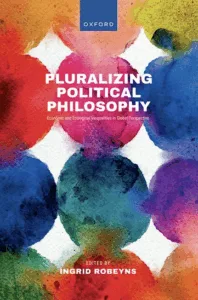
A couple of years ago, I edited a volume on pluralizing political philosophy, in particular in relation to economic and ecological inequalities. It was put together under the Covid-pandemic, so we had to swap the authors-conference for online meetings, with the authors spread out from China to Argentina. Sometimes the people in the most unfavorable […]
Asha Leena Bhandary, recently professor of philosophy at University of Iowa, has moved to Stony Brook University. Professor Bhandary works in social and political philosophy, ethics, feminist theory, and philosophy of race. She is the author of Freedom to Care: Liberalism, Dependency Care, and Culture (2020) and Being at Home: Living Autonomously in an Unjust World (2026), among other works, whic…
The articles that made it into the latest edition of Philosophers Annual have been announced. The list aims to “select the ten best articles published in philosophy each year—an attempt as simple to state as it is admittedly impossible to fulfill.” This volume—the 45th—covers the literature from 2024. The selections are: Evan Behrle (Harvard), “Desert and Economic Interdependence” from the Journa…
In Longevity Asymmetry: Ethics, Politics, and Economics of Biological Stratification. Ho Chi Minh City: Zenodo. 2026Every institution designed to limit political power has relied, without needing to say so, on one fact that made no other guarantee necessary: that whoever held power would eventually die, and power would pass to someone else. This essay examines what happens to that reliance once a…
In Longevity Asymmetry: Ethics, Politics, and Economics of Biological Stratification. Ho Chi Minh City: Zenodo. 2026Capital has begun pricing something that had no reliable market for most of human history: additional years of biological life. Giulia Dal Maso has named the resulting configuration longevity capitalism, in which both the condition of living longer and the pursuit of longevity becom…
Various liberal authors have proposed that we all enjoy the most extensive logically possible system of rights, compatible with all others having the same identical rights. Even though this statement appears to make logical sense at first, it is actually not well-defined. In this article, I explore various questions about this claim: when is a system of rights more extensive than another? Is ther…


 research.io