Picture the ordinary version of this. You ask an AI assistant a question that actually matters — about a refund policy, a dose, a tax rule, a contract clause — and it answers with the fluent confidence these tools always have. You act on it. It was wrong. Now you are out of pocket, or worse. Whose problem is that? The answer-first version is unsatisfying but honest: it depends on where you live a…
The IPKat has received and is
pleased to host this guest contribution from Katfriends Pedro Marcos Nunes
Barbosa (Pontifical Catholic University of Rio de Janeiro; Denis Borges Barbosa
Advogados) and Ryan Benjamin Abbott (University of Surrey; University of
California, Los Angeles; Brown, Neri, Smith & Khan, LLP), who explore some
questionable practices in Standard Essential Patent (SEP)
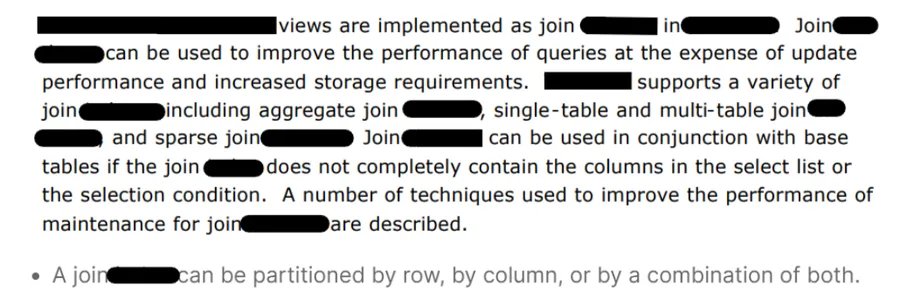
A patent infringement analysis can get close to a complete overlap and still fail because of one claim limitation. That was the situation Sam faced as a senior patent analyst at a global database technology company. His team was assessing whether a potential database-related patent could support a broader defensive strategy. The patent under review, […] The post A Failed Infringement Analysis Rev…
The U.S. Court of Appeals for the Federal Circuit (CAFC) issued a decision today in Guymon v. Squires, affirming a decision from the U.S. District Court for the Eastern District of Virginia dismissing with prejudice an inventor’s lawsuit challenging a patent term adjustment (PTA) determination. Circuit Judge Hughes wrote for the court, joined by Chief Judge Moore and Circuit Judge Lourie, and rej…
Choosing between software licensing models is one of the most consequential strategic decisions founders make when building enterprise applications in 2026. Pick the wrong contract format and you can limit your distribution reach, restrict SaaS scaling opportunities, or accidentally force yourself to share proprietary code. Founders therefore need to weigh how to protect their core intellectual p…
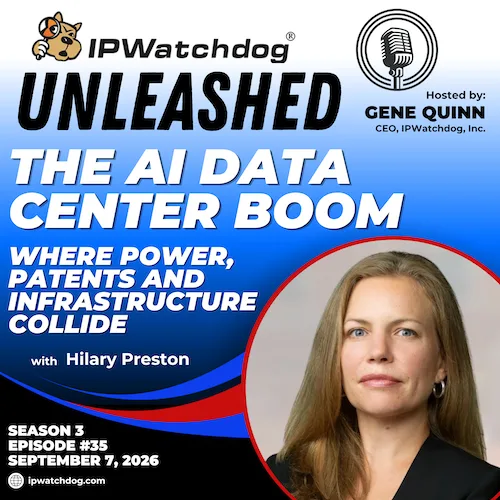
This week on IPWatchdog Unleashed, I spoke with Hilary Preston. Our conversation focused on the rapidly expanding AI data center ecosystem and the technology, infrastructure, and intellectual property risks emerging as billions of dollars flow into the sector. The post Will AI Data Centers Become the Next Patent Battleground? | <i>IPWatchdog Unleashed</i> appeared first on IPWatchdog.com | Patent…
Every year, U.S. companies expanding into Africa make the same planning mistake: they treat the continent as though it has one intellectual property system. It has two, and choosing the wrong one, or failing to choose at all, can leave a brand or invention unprotected across dozens of countries a company assumed it had already covered. Africa is the only continent with two regional IP registratio…
If a company has you sign an NDA, but then subsequently (10+ years later) releases a then current version of a covered document, is the earlier version still under the NDA and what about other items ...
The U.S. Court of Appeals for the Federal Circuit (CAFC) issued a decision today in Viavi Solutions Inc. v. Platinum Optics Technology Inc., affirming a Northern District of California ruling that awarded attorney’s fees to Platinum Optics Technology Inc. (PTOT) after finding Viavi Solutions Inc. litigated its patent infringement claims in a manner that met the standard for an "exceptional" case …
The dispute before the Delhi High Court concerns the alleged imitation of HAVELLS by the Defendants through their use of HAVAI on identical electrical goods. The Plaintiffs, Havells India Limited and Ors., allege that the Defendants, Havai Home Products Pvt. Ltd. and Ors., deliberately adopted a similar stylisation, device marks, colour scheme and overall trade...
In a previous article, the authors showed that Chinese courts ask a different question than U.S. courts — not whether the inventor possessed what is recited in the claim, but whether the scope of the claim matches the Technical Solution that the invention actually contributed to the advance of the art. This difference in underlying premise leads to one conclusion: a U.S.-style specification needs…
Aunshuman Pramanik ABSTRACT Intellectual Property rights are exclusive in nature. So, all the authors have right to exclude others, enjoy monopoly and claim copyright in their work. Similarly, each co-author can claim copyright over the joint work. Based upon the contributions and other factors co-authors can claim copyright over the joint works. This paper deals how to apportion or identify the …






 research.io