history-of-science

DEV Community

Ask most engineers who laid the groundwork for modern wireless and you will hear names like Marconi, Shannon, or the committees behind the IEEE 802.11 standard. Almost no one says Hedy Lamarr. Yet in 1942 the Hollywood movie star co-patented frequency hopping spread spectrum , the technique that quietly keeps your Wi-Fi, Bluetooth, and GPS working today. It is one of the best stories in wireless …

historyhistory-of-science
PhilPapers: Recent additions to PhilArchive

In The Legal Anatomy of the Body: Health, Rights, and Politics in Times of Emergency. Springer. forthcomingThis article examines how Italian physicians between the 16th and 18th centuries developed a logic of ‘intermediate states’ between health and disease. Moving from late Scholastic Galenism to early mechanistic medicine and through a genealogical counter-history of the concept of health as de…

history-of-sciencemedicine
PhilPapers: Recent additions to PhilArchive

This paper constitutes the second part of the author's comprehensive three-volume research project, “The Mystery of the Nameless Length: The Path to Understanding Time” (Volume I: First Principles: Time, Space, and Field). Situated firmly within the domains of the philosophy of science, epistemology, and the methodology of theoretical physics, this study provides a rigorous historical-philosophic…

historyhistory-of-sciencephilosophy
PhilPapers: Recent additions to PhilArchive

Abū Rayḥān al-Bīrūnī’s Patanjal al-Hindī is a unique intellectual endeavor that bridges Islamic-Iranian and Indian philosophical traditions. His treatise is not merely a translation of Patañjali’s Yoga Sūtras but an interpretative work that recontextualizes Yogic concepts within the framework of Islamic metaphysics and epistemology. This study, based on a broader research project that includes a …

history-of-sciencephilosophy
Hacker News

Mathematics > History and Overview Bibliographic and Citation Tools Code, Data and Media Associated with this Article Demos Recommenders and Search Tools arXivLabs: experimental projects with community collaborators arXivLabs is a framework that allows collaborators to develop and share new arXiv features directly on our website. Both individuals and organizations that work with arXivLabs have em…

historyhistory-of-science
Nautilus

She wrote the bestseller that made young people fall in love with science The post Lessons in Chemistry, 19th-Century Style appeared first on Nautilus .

chemistryhistory-of-science
Hacker News

1948 was an interesting time for computing. For decades, businesses had used punch card equipment that added and sorted electromechanically. Now these electromechanical relays and counting wheels were being used to build room-filling general-purpose computers such as Harvard Mark I (1944) and IBM's SSEC (1948). But slow electromechanical mechanisms were already becoming obsolete. World War II had…

history-of-sciencetechnology
Hacker News

TIL: The Man Who Invented the Future, Then Starved to Death in It The story of Oleg Losev, LEDs, and a lost manuscript describing a new three-electrode semiconductor device There is a particular kind of tragedy reserved for people who are right too early. Oleg Losev was 18 years old, working as a technician at a Soviet radio lab in Nizhny Novgorod, when he built something in early 1922 that the r…

historyhistory-of-science
nLab
John Baez
8d ago

this page compiles material related to: letter to Auguste Chevallier 29 May 1832 scan of original: (wikipedia) French original text: (web) English translation: (pdf) commonly known as la lettre testament or Galois’ last letter, since, famously, the morning after writing it the author died in a duel. The letter announces Galois’ solution to the “solvability of equations by radicals”. It is commonl…

algebrahistory-of-sciencemathematics
Science - Popular Mechanics
Nature
Science - Popular Mechanics
PhilPapers: Recent additions to PhilArchive

In The Elgar Companion to Émile Durkheim. Northampton: Edward Elgar Publishing. pp. 331-349. 2026In the 1960s Paul Ricoeur coined the phrase “masters of suspicion” to describe Karl Marx, Friedrich Nietzsche, and Sigmund Freud for their ability to reveal the hidden or repressed meanings or truths located in texts or social and psychological phenomena. Philosophers, theologians, and literary theori…

history-of-sciencephilosophy
PhilPapers: Recent additions to PhilArchive

_Intellectual History Review_. forthcomingIn this article, I analyze Johann Christoph Sturm’s characterization of Cartesianism and his response to Descartes’s philosophy and that of his followers. In his days, Sturm (1635–1703) was an important philosopher and professor of physics and mathematics at the University of Altdorf. Sturm has a balanced reading of Descartes, neither echoing the polemics…

historyhistory-of-science
The Guardian

Scientific dating proves streaks on walls of Bacon Hole, near the Mumbles in south Wales, is Palaeolithic rock art In 1912, the Guardian reported on the discovery of Palaeolithic rock art on the walls of Bacon Hole, a cave near the Mumbles in south Wales – only for the painted panel’s authenticity to be dismissed by 1928. A series of horizontal bands in red pigment were subsequently deemed no mor…

archaeologyhistoryhistory-of-science
PhilPapers: Recent additions to PhilArchive

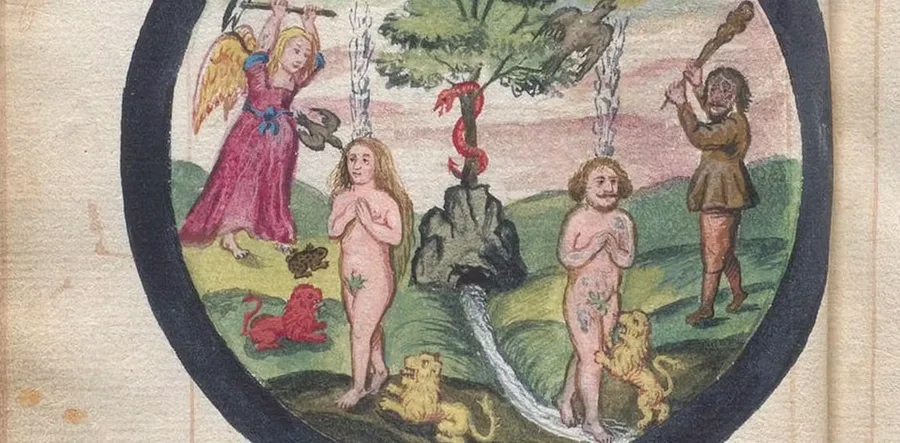
In The Interactive Field in Analysis (Vol. 1). Chiron. pp. 121-141. 1995This article focuses on the relationship between alchemy’s ancient hermetic vessel and a topological structure found in modern mathematics: the Klein bottle. The paradoxical properties of the hermetic vessel are described in detail, primarily as brought out by Jung. I then turn to the Klein bottle and my “alchemical” interpre…

history-of-sciencephilosophyphilosophy-of-science
IJLLR New

Mehak Jain, BA LLB, Thakur Ramnarayan College of Law ABSTRACT “An unjust law is itself a species of violence” – Mahatma Gandhi (Gandhi M. K., 1922) Under British rule, the Britishers mapped out the legal system to maintain order and reinforce control. Codified laws, structured courts, and formal procedures were introduced to regulate society and repression. However, the use of these laws often sh…

historyhistory-of-sciencelaw
Psychology Today: The Latest

The memoirs of German judge Paul Schreber, who litigated his own asylum release, inspired Freud and still have a lot to teach doctors and patients about respect for the mind.

historyhistory-of-science
The Guardian
Georgina Ferry
17d ago

Business computer pioneer and the UK’s first professor of information systems November 2026 will mark the 75th anniversary of the world’s first commercial job run on a stored program computer. On 29 November 1951, the Bakery Valuations job calculated the costs, earnings and margins of the baked goods produced by J Lyons & Co, which was then the UK’s largest catering firm and the first business in…

computer-sciencehistory-of-scienceprogramming-languages
DEV Community

In the early 1830s, London was a city defined by the clatter of industrial machinery and the soot of rapid modernization. Yet, within its drawing rooms and cramped workshops, a quieter, more profound revolution was taking shape. It was during this pivotal period, between 1833 and 1834, that a young Ada Lovelace underwent a conceptual shift—one that would transition her from a student of mathemati…

historyhistory-of-science
research.ioresearch.io

Sign up to keep scrolling

Create your feed subscriptions, save articles, keep scrolling.

Already have an account?