historical-and-contemporary-political-dynamics

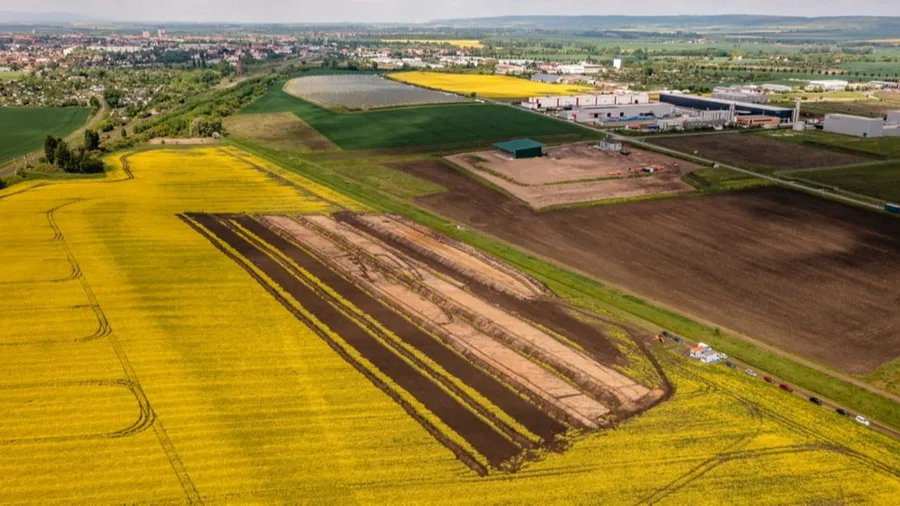
Archaeologists from the Museum of London Archaeology (Mola) have completed an excavation at Stanton Cross in Wellingborough, Northamptonshire, revealing what has been described as a "remarkable window into life in the area during the Roman period". The dig covered nine hectares at a new housing development situated near Chester House Estate, where evidence of an ancient Roman settlement had previ…
A 7,000-year-old village may have practiced a haunting skull ritual that left bodies behind
Rome Fell and Nobody Noticed A barbarian heretic kept the Roman state running for thirty-three years When I first began learning about the Roman Empire in middle school, I was most interested in what everyone else seems to be interested in — the time of Caesar and Augustus. Recently, however, I’ve become far more interested in the decline & fall of the Roman Empire. You always hear the date 476 a…

An analysis of corn, cassava and coca plants discovered with sacrificed Inca children reveals they died during the reign of one of the last Inca emperors.

Identified with Tel Shiloh in the West Bank, the site holds a prominent place in biblical tradition.
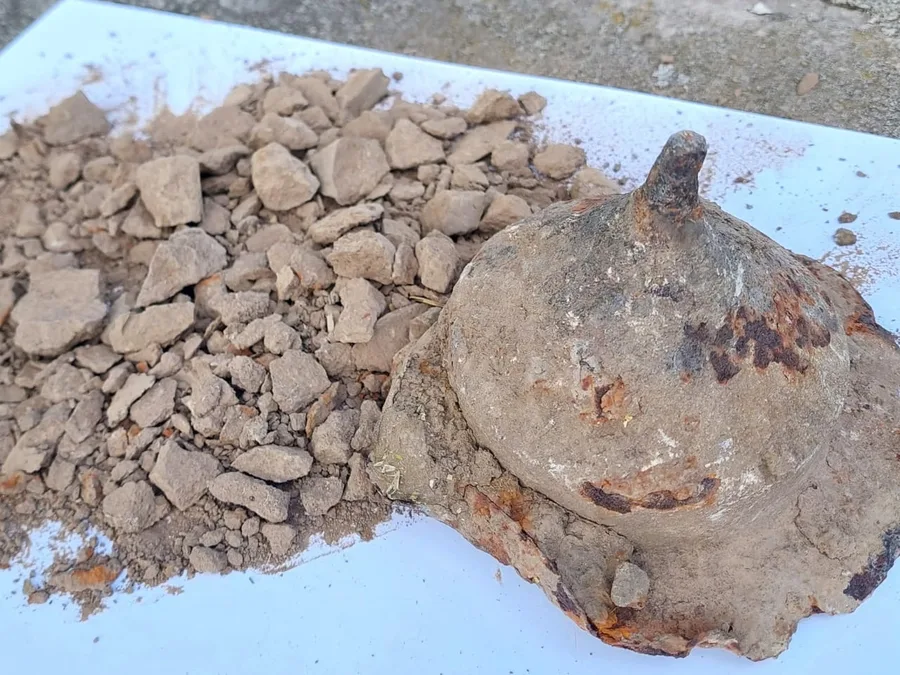
A routine river dredge pulled up a rusted weapon, then revealed a hidden Revolutionary War story buried underwater for centuries.
A 1,600-mile journey to the wild peaks of Scotland, via Llandudno’s Victorian promenade and the bright lights of Blackpool proved an eye-opener in more ways than one One of my favourite recent photographs is of me (unusually), perched on the bonnet of our car, about to set off on a solo, two-week road trip from our Sussex home to the wilds of Scotland, taking in Eryri (Snowdonia), Lancashire, the…

Throughout Egyptian history, pastoralists have played a vital role in food production, and the importance of domesticated animals is reflected in their abundant depictions in texts, tomb reliefs, and 3D art. Richard
Festschriften are, by their very nature, both scholarly tribute and personal testament, and No Good Deed Goes Unpunished succeeds admirably on both counts. Produced in honour of Peter Lacovara, this substantial volume

Recent studies are revealing just how extensive that burial landscape was and how long it remained in use.

An archaeology student has uncovered a ninth-century Viking grave in Cambridge with an unusually tall skeleton inside. A routine training excavation conducted by University of Cambridge archaeology students has yielded an extraordinary ninth-century mass burial site at Wandlebury, located just three miles from the city centre. The 2025 dig initially appeared unremarkable before researchers uncove…
This is the second part (I, IIa) of our honestly-who-knows-how-many part series laying out some general guidelines for how pre-modern armies are recruited, raised, equipped and paid. While I hope this will be of great interest to the history nerds out there, I’ve opted to structure this specifically as a service for the worldbuilders out … Continue reading Collections: Pre-Modern Armies for World…

Scattered across rocky outcrops in northern Europe, these ancient footprints have endured for nearly 3,000 years. What they meant to the people who carved them has remained elusive...until now.
Dated to the ninth century C.E., a time when the Vikings ruled the area, the grave held the remains of at least 10 different young men.
A spectacular fossil fish discovered on a remote cliff in New Zealand nearly 30 years ago has finally revealed its full story thanks to an unexpected discovery: the original collector’s long-lost field notebooks. The 1.2-meter fossil, preserved in stunning three-dimensional detail, belonged to an ancient tarpon-like predator that cruised New Zealand waters about 55 million years ago.
Ordovician SeasOrdovician seas, some 485 to 444 million years ago, were gloriously alive. If the Cambrian was Earth's exuberant dress rehearsal for complex life, the Ordovician was opening night. The oceans swelled with innovation, diversit...
The fall of the Roman Empire led to a tumultuous period of political, demographic and cultural change in Western Europe from the 4th to 6th centuries in the Common Era (CE). A new study that uses ancient human DNA analyses combined with archeological finds is helping scientists to frame a better picture of the Early Medieval people who inhabited Western Europe and the societies they created. Thei…
research.ioSign up to keep scrolling
Create your feed subscriptions, save articles, keep scrolling.