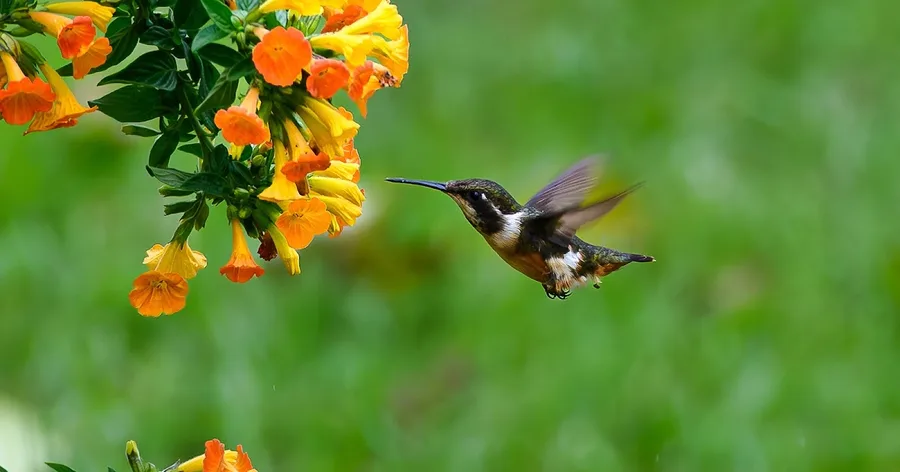
This female Purple-throated Woodstar ( Philodice mitchellii ) was gathering nectar from the flowers in the garden of the Hotel Kumanday on the edge of the village of La Florida, a popular place for those visiting the Otún Quimbaya reserve on the western side of the Cordillera Central of Colombia. The village is at 1,670 metres (5,480 ft). The bird occurs from 700-2,200 metres along the chain of t…
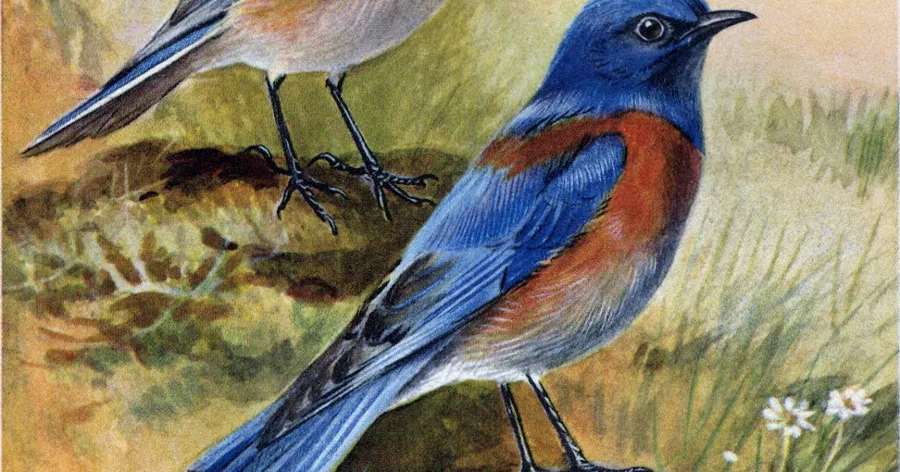
In the days when colour printing was extremely expensive, the Avicultural Society had special appeals for funds to support the appearance in Avicultural Magazine of the occasional colour plate. A well-known bird artist was then commissioned. Although the whole run of the Society’s magazines can be found online, the plates rarely see the light of day. Therefore I decided to show one, now and again…
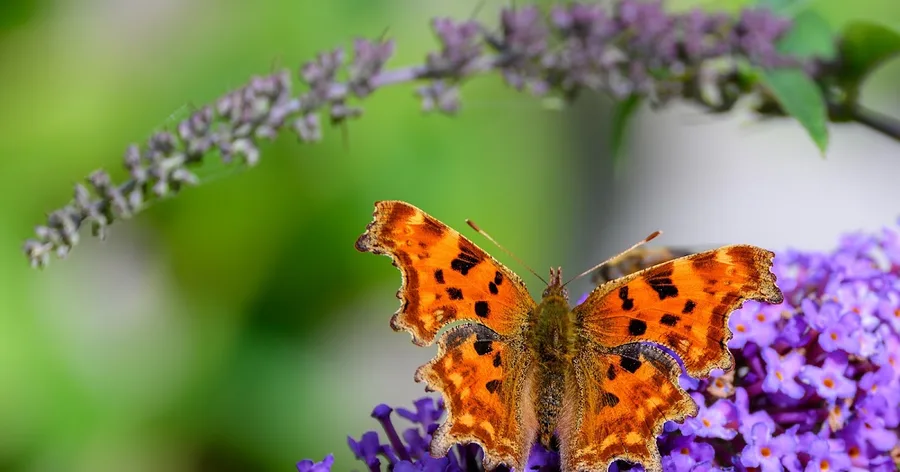
Alloway, Ayrshire, Scotland. 1 August 2026 It is difficult to imagine the look on a 1950s lepidopterist’s face had she or he been told a Comma butterfly had been spotted in Ayrshire. Even in England the butterfly then had a limited distribution in the south, although it was spreading back to earlier haunts as the 1951 edition of that classic The Observer’s Book of British Butterflies explained: U…
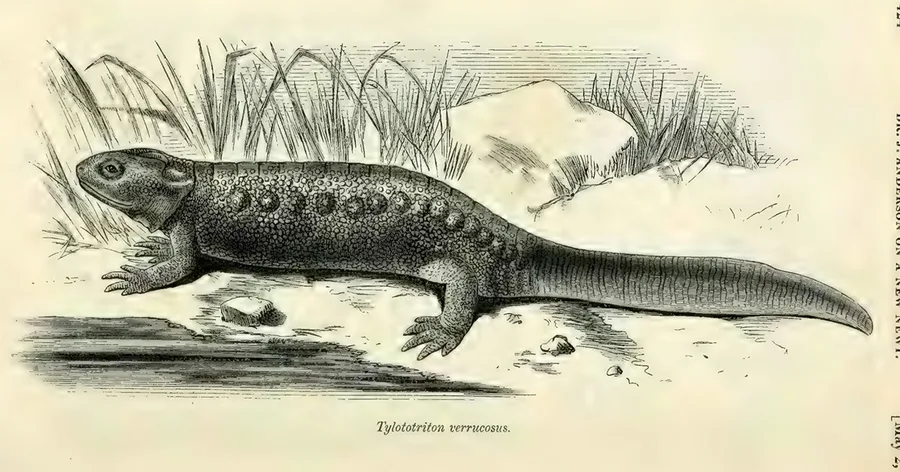
The first of what are now known as crocodile newts to be described in the scientific literature was Tylotriton verrucosus from Yunnan Province in China. A welter of new species of Tylotriton has been described in the past few decades—38 at the latest count—but how many would pass as proper ‘biological species’ is open to question. Newts from south-western China have been studied because tectonic …
I find the marsupials of the Americas fascinating. The opossums with their long rat-like tails cannot compete in the cuteness stakes with the possums of Australia. Although I have been to the USA many times (to sit for hours in a darkened lecture theatre) and the countries in Central and South America, until Colombia in November last year I had never seen an American marsupial. Then along came th…
Sir Edward Bosc Sladen spent much of his career as a soldier/colonial administrator/diplomat in Burma. He was the natural choice to lead the mission to Yunnan in 1868 which was sent to explore the possibility of establishing a trade route between British India, Burma and China and on which John Anderson was the medical officer and naturalist. At the time of the mission to Yunnan Sladen was a Capt…
This White-browed Spinetail ( Hellmayrea gularis ) was searching the bark of trees—and taking proffered mealworms—at Hacienda El Bosque, a popular birding lodge at an altitude 11,000 feet (3,350 metres) in the Cordillera Central of the Colombian Andes. It is one of many species in the Central and South American ovenbird family, Furnariidae. This species is found in damp forests along the Andes fr…
David Leffman has written a cracking book on the murder of a British diplomat, Augustus Raymond Margary, in China near the border with Burma on 21 February 1875. He begins by outlining the problem of finding out whodunnit: Margary may have been beheaded. Or not. Perhaps he shot one of his attackers before being killed, though this same man - or somebody that officials claimed was the same man - l…
Birdwatchers in 1960s Hong Kong, in the words of my mother ‘would have looked at you gone out’ had you suggested that thirty years later a major site to see migratory birds was to be found in Hong Kong waters. It wasn’t until the late 1990s that the island of Po Toi was found to be a major stop-off point during the spring and autumn migrations. Since then ferryloads of birders have visited the is…
‘Who was Brumback?’ was the question as we watched the family group of the eponymous night monkeys in the rewilded grounds of Rancho Camaná near Restropo in Colombia. Mother and baby (top right centre) Brumback's Night Monkey, Aotus.brumbacki Rancho Camaná, near Restrepo, Meta, Colombia. November 2026 In 1968, aged 19, Roger Alan Brumback was a first-year student at Pennsylvania State Medical Col…
Grey-legged Night Monkeys, Aotus griseimembra La Camelia, Victoria, Caldes, Colombia. November 2025 We saw three currently-recognised species of night monkey in Colombia last November. Night monkeys are variable in coloration and it is case of knowing what lives where in order to identify what one is seeing. The three species are separated by high ranges of the Andes and major river systems, i.e…
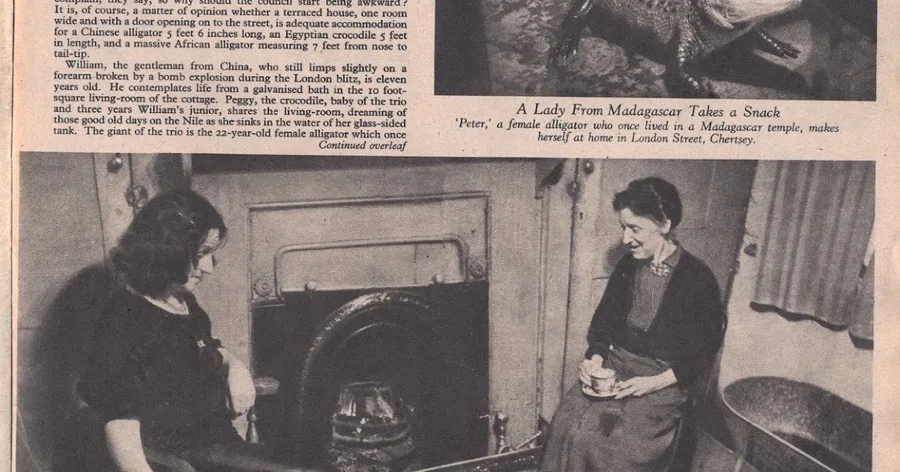
This article is a follow up to two I posted in 2022: STRANGE CARGO, the 1952 film: 'Riding the Alligator' and' Hatching the Tortoise'...and its return to the Densham family The ‘Alligator Ladies’ of Hammersmith and Chertsey. Who were they and what became of them? I would suggest the reading of those two before this one since they provide a complete background to why I was left wondering who Thelm…
Hong Kong has a large number of species of bunting (Emberizidae) during the winter and as passage migrants in spring and autumn. They vary from being common in their range to being classified as ‘critically endangered’ by the IUCN Red List. AJP photographed the following—which cover that range—during the early spring this year. Yellow-breasted Bunting, Emberiza aureola . Classified as ‘critically…
I have enjoyed reading Desert Journal. Reflections of a Naturalist which was written by Raymond Cowles (1896-1975) and published shortly after his death. It has been on my ‘to read’ pile for a couple of years. I have written before about Cowles and his pioneering work on behavioural thermoregulation in desert reptiles which was done from the late 1930s until the mid-1950s in California. I learnt …
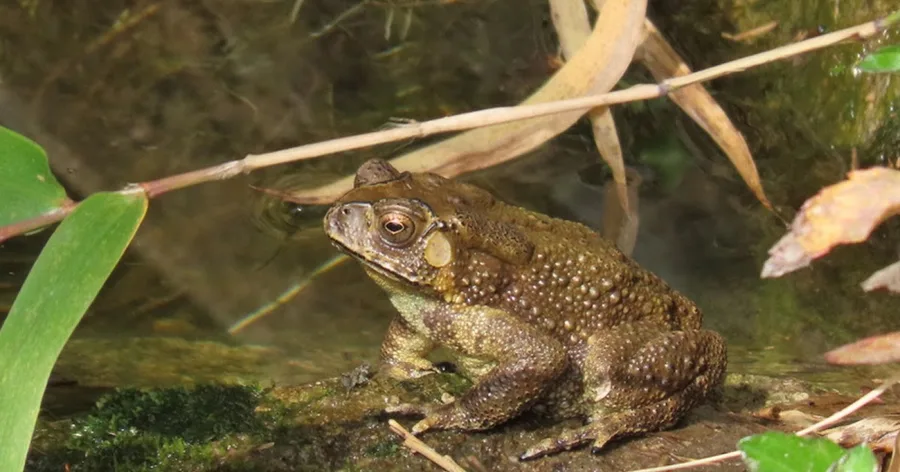
February is the start of the breeding season for the commonest amphibian in Hong Kong, the Common Asian Toad, Duttaphrynus melanostictus . AP found adults and spawn in Tai Po Kau reserve doing what the book says they do: laying strings of eggs wrapped around vegetation or rocks. Other frogs and toads in Hong Kong start breeding later in the year, coinciding with the start of the spring rains. Cle…
Cauca Guan Cauca Guans ( Penelope perspicax ) were common as we drove and walked along the road through the Otún Quimbaya Fauna and Flora Sanctuary in Colombia last November. Their less than elegant scramblings along the branches with occasional trips to the ground can easily be spotted. Above them in the trees were Red-ruffed Fruitcrows ( Pyroderus scutatus ), a dull name for a cotinga, which se…
For common names in chelonians we have a situation in that a common name used in the USA. a bastardised version of an Algonqiuin word, came back to Britain, while that term was then largely dropped in the USA except for a small number of species that live in brackish water. The word of course is ’terrapin’. Every schoolboy of my day knew that tortoises live on land, terrapins in or around freshwa…
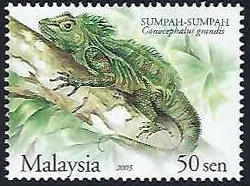
In recent articles I described the activities of Alfred St Alban Smith who sent a large number of animals, particularly reptiles, from south-east Asia to London Zoo between 1927 and 1936. The Annual Reports of ZSL listed them all the species by common name. But some of those common names are not ones we may recognise nearly 100 years later. One was Sumpah-Sumpah. I had no idea what a sumpah-sumpa…
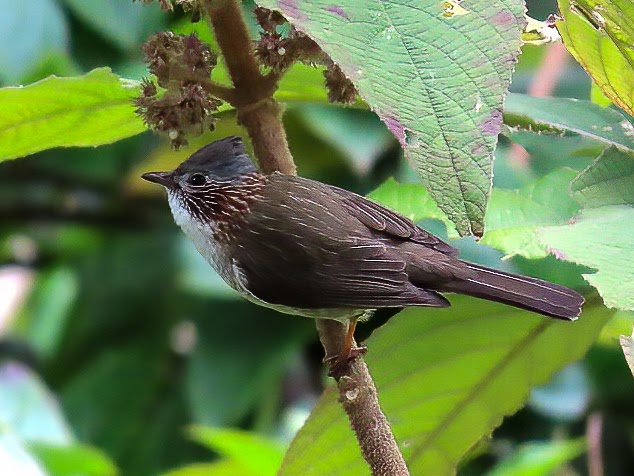
AJP spotted this bird in the New Territories at the end of winter there. In our time in 1960s Hong Kong it would have caused a sensation amongst the birdwatchers for the simple reason it remained unrecorded there for at least another two decades. The latest Field Guide to the Birds of Hong Kong and South China (9th edition, 2022) describes it as “mostly an irruptive and uncommon winter visitor in…
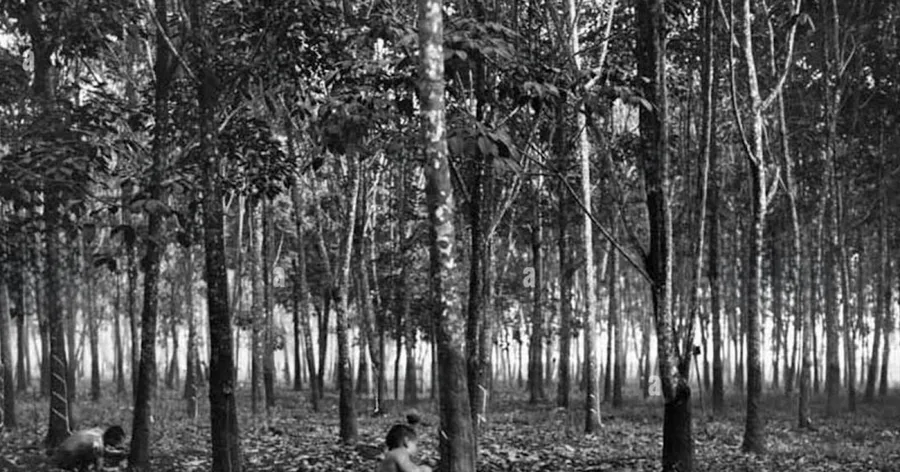
A rubber plantation in Malaya in the 1920s What do we know of the life of Alfred St Alban Smith, a rubber planter in the Malay States who generated such praise for his efforts to send animals, particularly reptiles, to London zoo in the 1920s and 30s? By searching genealogical sites, including a family tree, and newspapers available online I have managed to build up a timeline of Alfred St Alban …


 research.io