UTHealth Psychiatry Blog Archives - Louis A. Faillace, MD, Department of Psychiatry and Behavioral Sciences
Not All Depression Is the Same Depression is often viewed as a chronic, gradually evolving condition. But in some cases, it presents very differently: Rapid onset Severe symptom intensity Immediate risk to life This is acute suicidal depression, a form... The post When Depression Becomes a Medical Emergency: Recognizing and Treating Acute Suicidal Depression appeared first on Louis A. Faillace, M…
When Antidepressants Are Not Enough Despite advances in pharmacotherapy, a substantial proportion of patients with major depressive disorder (MDD) do not achieve full remission with first-line antidepressants. For these individuals, augmentation strategies are essential. While options such as atypical antipsychotics,... The post L-Methylfolate Augmentation in Depression: A Targeted Strategy for D…
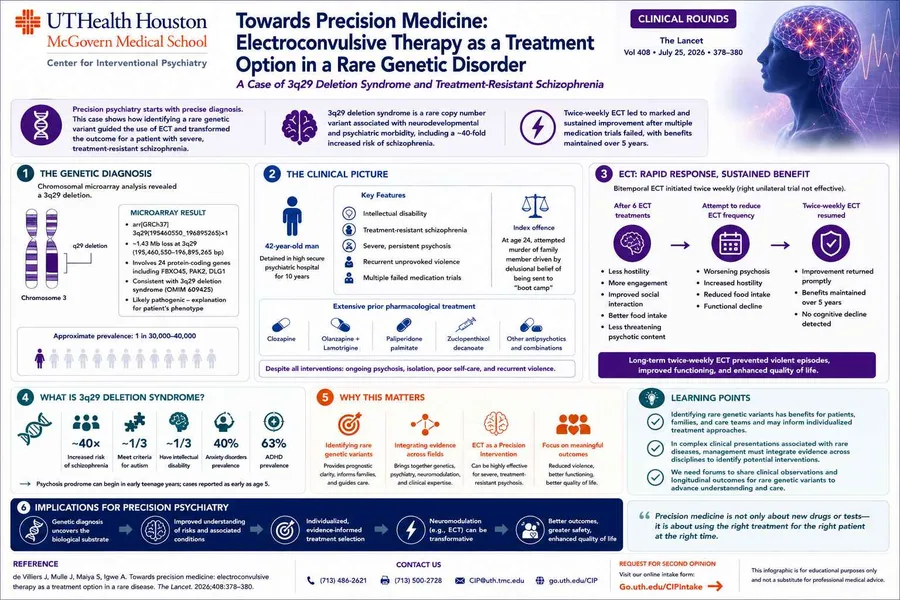
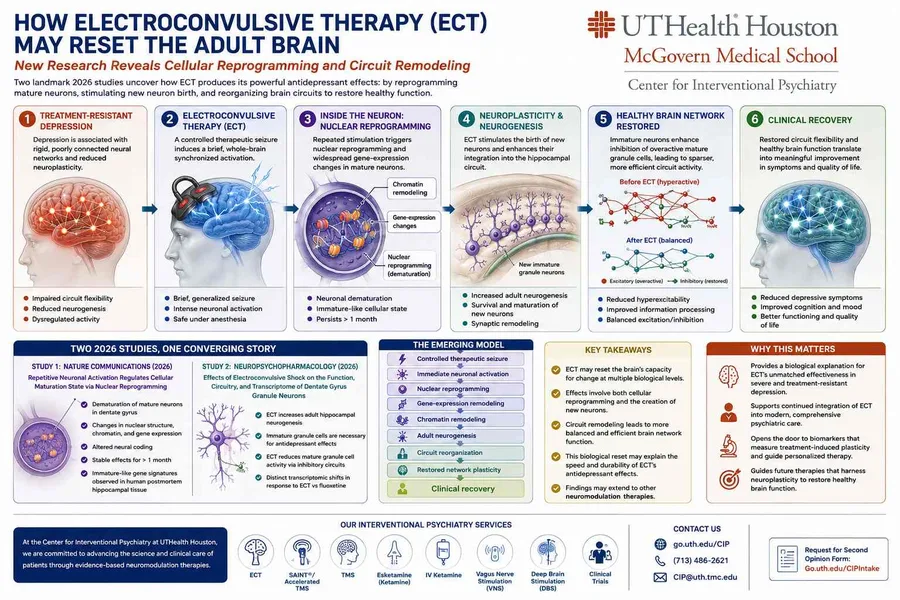
Moving Beyond Short-Term Evidence Electroconvulsive therapy (ECT) has long been recognized as one of the most effective treatments for severe psychiatric illness. Yet for many patients, families, and even clinicians, the most pressing questions are not about short-term symptom improvement—but... The post Electroconvulsive Therapy and Long-Term Outcomes: What Real-World Data Finally Tells Us appea…
When Policy and Science Diverge Global mental health policy plays a critical role in shaping access to care. However, when policy recommendations diverge from scientific evidence, the consequences can be profound—especially for patients with severe psychiatric illness. A recent joint... The post Electroconvulsive Therapy and Global Policy: Why Science Must Guide Mental Health Care appeared first …
Challenging a Long-Standing Barrier in Psychiatry For decades, one of the most persistent barriers to the use of neurosurgical interventions in psychiatry has been the concern over neuropsychological side effects (NPSE). These concerns are deeply rooted in the history of... The post Neurosurgery for Psychiatric Disorders: Reassessing the Risk of Cognitive Side Effects appeared first on Louis A. F…
Rethinking One of Psychiatry’s Most Effective Treatments Electroconvulsive therapy (ECT) remains one of the most effective treatments for severe and treatment-resistant depression. Yet, a fundamental question has persisted for decades: 👉 Why do therapeutic seizures work—and why do they work... The post Personalizing Electroconvulsive Therapy: How Brain Structure Shapes Seizures and Outcomes appea…
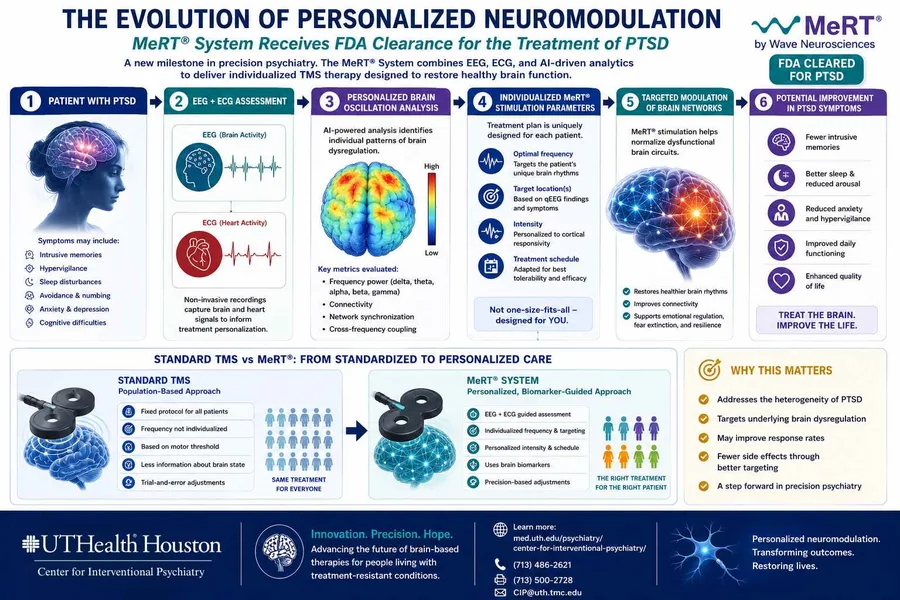
CMS NTAP and APC Designation for SAINT® TMS: A Turning Point for Access in Interventional Psychiatry
A Major Milestone for Interventional Psychiatry The recent Centers for Medicare & Medicaid Services (CMS) decisions to grant both New Technology Add-on Payment (NTAP) and New Technology Ambulatory Payment Classification (APC) designations for SAINT® (Stanford Accelerated Intelligent Neuromodulation Therapy) represent a transformative moment in the field of interventional psychiatry. These designa…
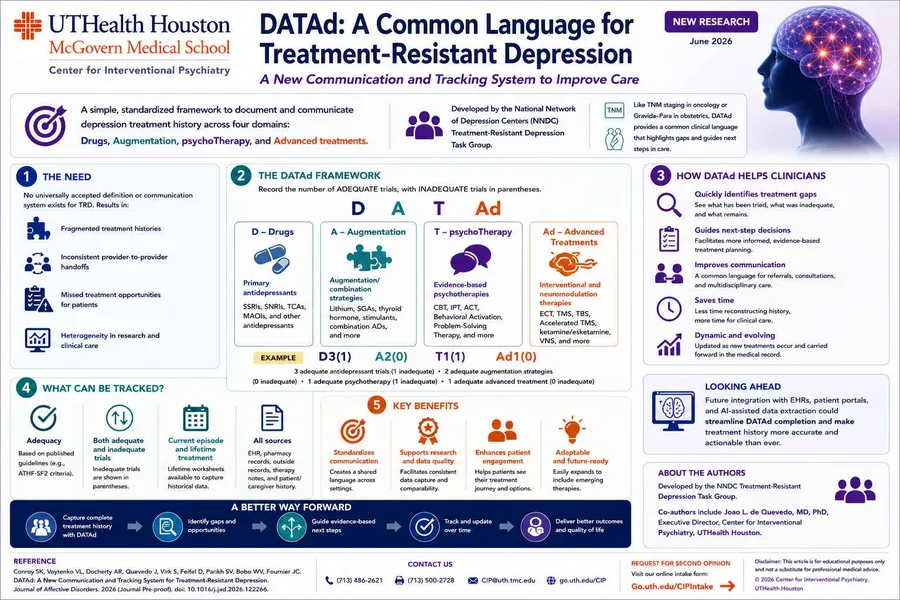
Moving Beyond Treatment Resistance: A New Framework for Care Difficult-to-treat depression (DTD) represents one of the most complex challenges in modern psychiatry. These are patients who continue to experience significant symptoms despite multiple treatment attempts, including medications, psychotherapy, and neuromodulation therapies such as transcranial magnetic stimulation (TMS) and electrocon…
When Depression Does Not Respond: Looking Back to Move Forward Treatment-resistant depression (TRD) remains one of the most challenging conditions in psychiatry. Despite multiple evidence-based treatments, many patients continue to experience persistent symptoms, functional impairment, and increased risk of suicidality. A recent large-scale study published in JAMA Network Open provides compelling…
A New Era of Guidance for One of the Most Challenging Patient Populations Difficult-to-treat depression (DTD) represents one of the most complex and burdensome conditions in psychiatry. These are patients who continue to experience significant symptoms despite multiple evidence-based treatments, including medications, psychotherapy, and neuromodulation approaches such as transcranial magnetic sti…
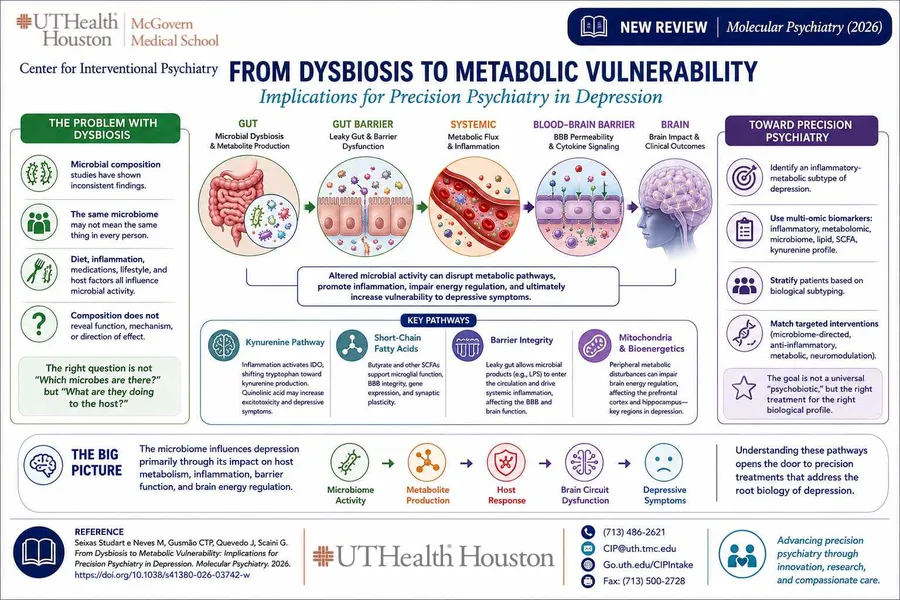
Interest in the relationship between nutrition and mental health has grown substantially in recent years. Increasing evidence suggests that certain dietary compounds may influence brain function and potentially play a role in the prevention or treatment of psychiatric disorders. A recent review article co-authored by investigators from UTHealth Houston and the University of Southern Santa Catarin…
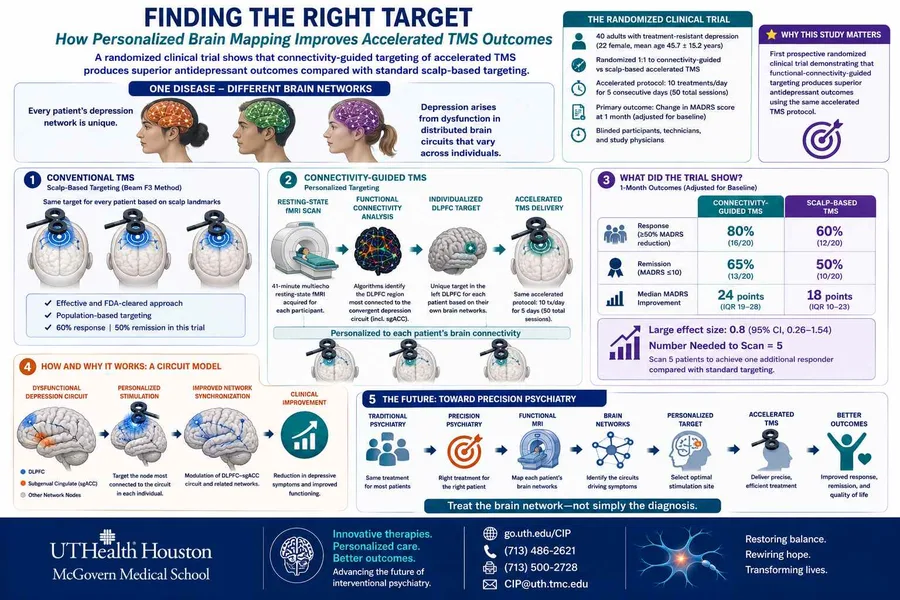
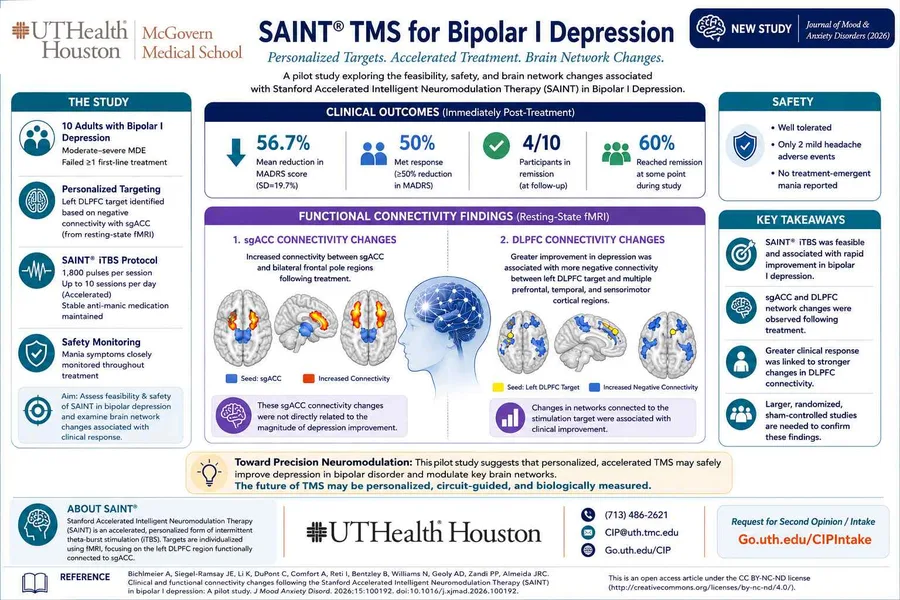
Major depressive disorder remains one of the leading causes of disability worldwide, and for many patients, standard treatments—including antidepressant medications and traditional transcranial magnetic stimulation (TMS)—do not produce sufficient relief. In recent years, a novel approach known as SAINT-TMS (Stanford Accelerated Intelligent Neuromodulation Therapy) has generated significant intere…
A growing body of research suggests that the origins of many psychiatric disorders may begin far earlier than previously recognized—potentially even before birth. A recent study co-authored by researchers from UTHealth Houston and the University of Southern Santa Catarina provides new insights into how prenatal stress can produce long-lasting behavioral and biological changes in offspring, sheddi…
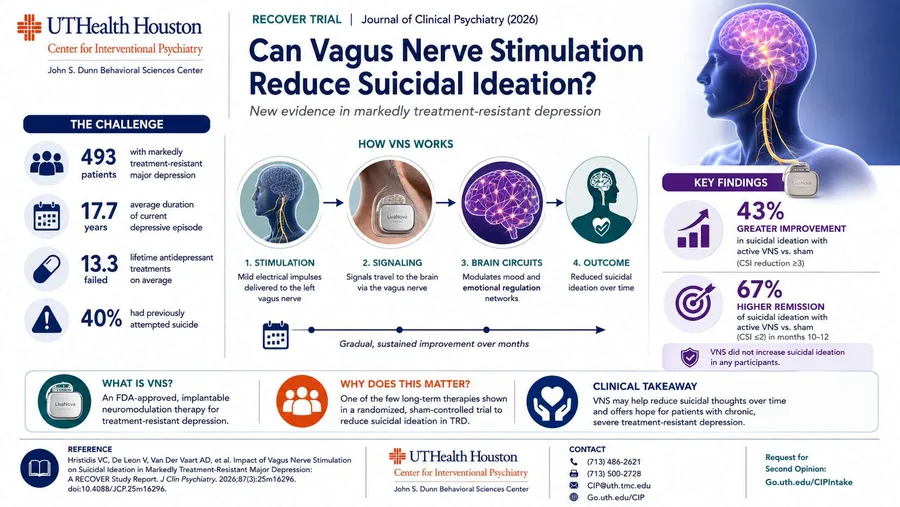
How we measure depression matters—especially in the most severely ill patients. In a recently accepted manuscript in the Journal of Affective Disorders, our team analyzed how three widely used depression rating scales perform in patients with markedly treatment-resistant depression (TRD) enrolled in the RECOVER trial. As a co-author and investigator at UTHealth Houston, I am proud to contribute t…
On February 20, 2026, the U.S. Food and Drug Administration (FDA) approved Bysanti (milsaperidone) tablets for the treatment of acute manic or mixed episodes associated with bipolar I disorder and schizophrenia in adults, marking a significant advancement in psychiatric therapeutics. Bysanti is designated as a new chemical entity (NCE), expanding the atypical antipsychotic class with a profile li…
Major depressive disorder (MDD) is increasingly recognized not only as a disorder of mood, but also as a condition involving systemic biological changes. While much attention has focused on inflammation, neurocircuitry, and neurotransmitters, metabolic markers—particularly lipid abnormalities—may provide important additional insight into the biology of depression. In a recent study published in L…
Over the past two decades, the term treatment-resistant depression (TRD) has become central to clinical practice, research, and policy discussions in psychiatry. More recently, a related concept—difficult-to-treat depression (DTD)—has gained traction, prompting essential conversations about how we define, study, and... The post Treatment-Resistant Depression vs Difficult-to-Treat Depression: Why …
Interest in metabolic interventions for psychiatric disorders has grown rapidly over the past decade. Among these, the ketogenic diet (KD)—a high-fat, very low-carbohydrate dietary approach—has generated particular enthusiasm, driven by preclinical data and case reports suggesting potential antidepressant effects. Until... The post A Ketogenic Diet for Treatment-Resistant Depression: What a New R…
Electroconvulsive therapy (ECT) and ketamine are among the most effective and rapidly acting treatments available for patients with severe and treatment-resistant depression. Over the past several years, multiple randomized trials and meta-analyses have compared these two interventions—yet conclusions have often... The post ECT vs Ketamine for Depression: Why Time Matters in Treatment Response ap…
research.ioSign up to keep scrolling
Create your feed subscriptions, save articles, keep scrolling.