The objective of this study was to develop calibration equations for a rising plate metrer (RPM) to estimate herbage mass in irrigated ryegrass/white clover (RGWC) swards with varying proportions of plantain. A 32-ha area, divided into 0.3-ha paddocks, was randomly allocated to three treatments sown with increasing plantain seeding rates: (i) RGWC with no plantain, (ii) RGWC + 3 kg/ha and (iii) R…
This study evaluated the dynamics of the bacterial community in mixtures of forage cactus and sorghum silage at different proportions, subjected to aerobic exposure periods, without or with faecal contamination. The experimental design was completely randomized in a 2 × 2 × 4 factorial arrangement, with two forage cactus proportions (20 and 80 %), absence or presence of faecal contamination and f…
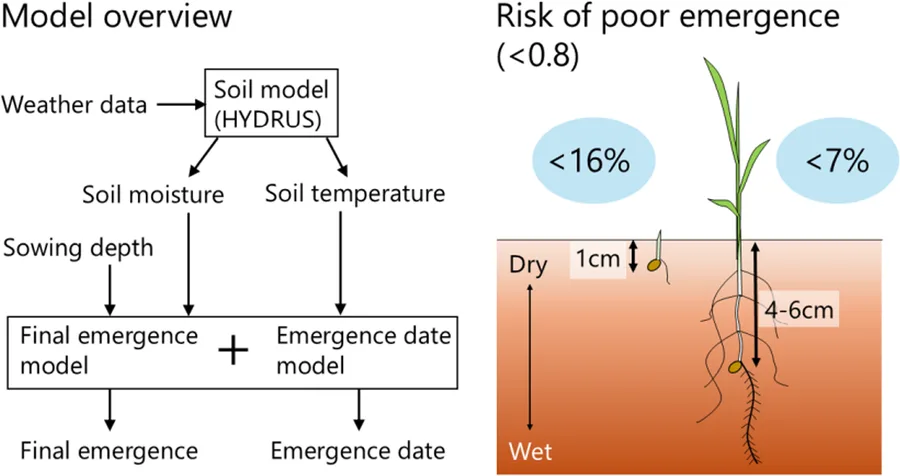
Direct-seeding of rice by sowing dry seeds on dry soils often results in poor seedling emergence due to erratic rainfall. Adjusting the sowing depth to a given rainfall pattern may improve rice emergence. To assess risks of crop failure in direct-seeded rice, we developed a platform for modelling and simulation of rice emergence at different sowing depths. We combined the HYDRUS-1D soil simulatio…
Experimental designs involving factors with a mix of fixed and random levels have been explored by few. These designs are useful when comparing a set of new treatments (fixed levels) to a population of established treatments (random levels). This approach enables partitioning variability and testing of both fixed and random effects, leading to improved estimates and more reliable inference. Howev…
Deficit irrigation can enhance crop water productivity (CWP; yield per water applied) but requires careful management to prevent drought-like responses that limit leaf gas exchange (i.e., water-conservative responses) and compromise yield. Grafted and ungrafted melons ( Cucumis melo L.) were evaluated under three irrigation treatments: full irrigation (100 % field capacity; FC) and 70 % or 50 % d…
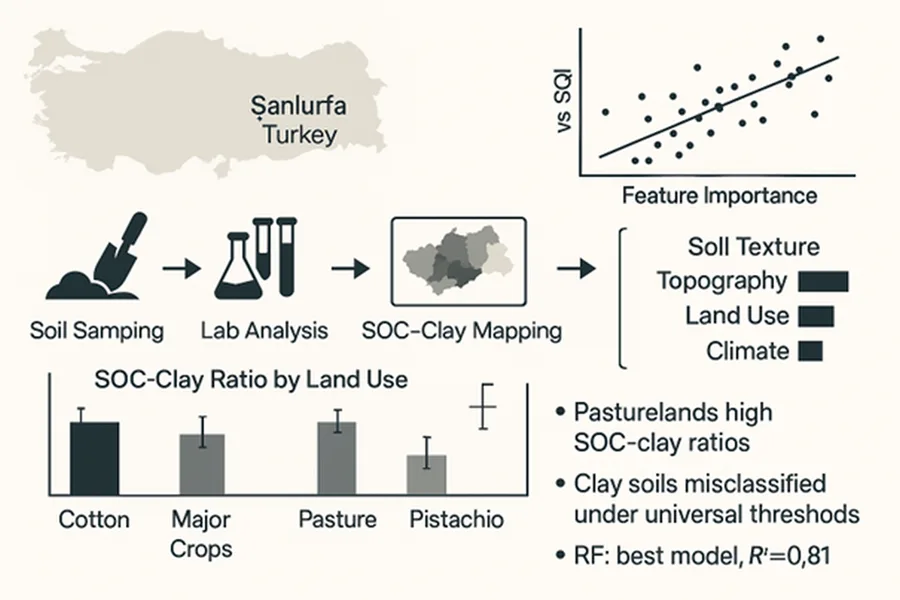
Due to the negative impacts of climate change, soil degradation and losses of soil organic carbon (SOC) in arable agricultural ecosystems are gradually increasing worldwide. Therefore, implementing agricultural management practices that increase organic carbon (OC) sequestration in soils with intensive agricultural production is essential for maintaining soil quality (SQ) and enhancing sustainabl…
Onion seed productivity, quality, and profitability in Ethiopia are constrained by declining soil fertility and inadequate fertilizer management, particularly due to a historical reliance only on blanket nitrogen-phosphorus-based recommendations for bulb production. Therefore, the study examined the impacts of NPSB fertilizer, vermicompost, and their integrated application on soil fertility, onio…
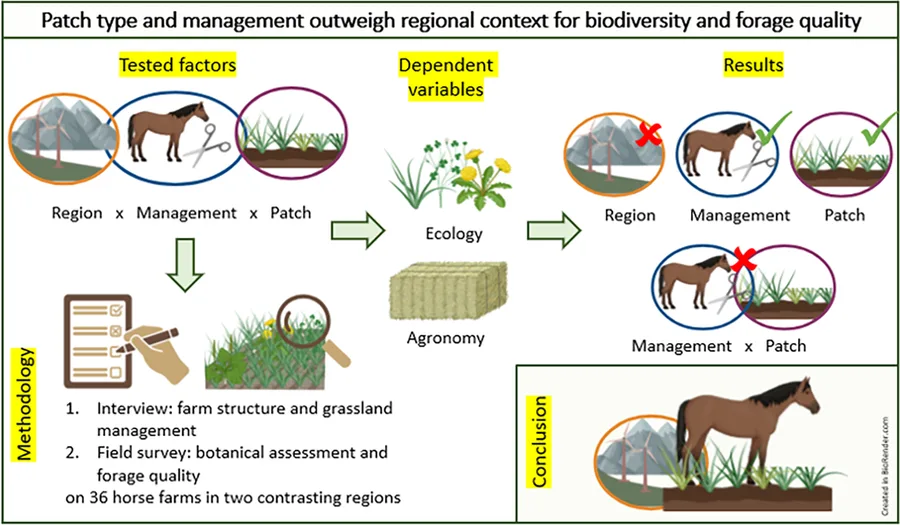
Grassland biodiversity and forage nutritive value are influenced by pedoclimatic conditions (e.g., soil nutrients, precipitation), management practices (e.g., mowing, grazing), and animal grazing behaviour shaping the sward botanical composition and structure. Horses, in particular, affect sward structure through selective foraging, short biting, trampling, and toileting, resulting in a patchy ve…
 research.io