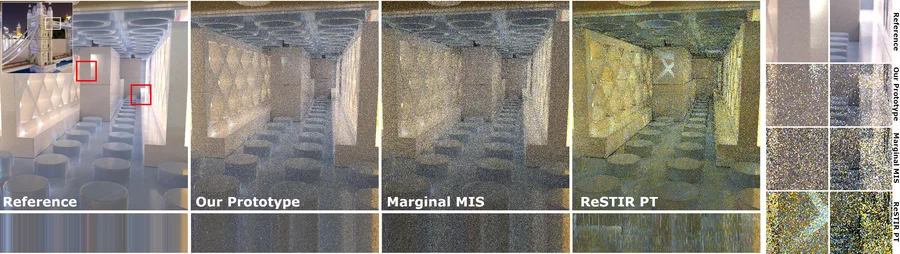
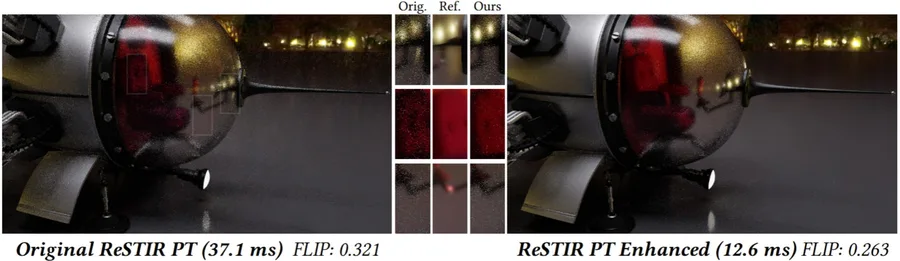
Algorithms leveraging ReSTIR-style spatiotemporal reuse have recently proliferated, hugely increasing effective sample count for light transport in real-time ray and path tracers. Many papers have explored novel theoretical improvements, but algorithmic improvements and engineering insights toward optimal implementation have largely been neglected. We demonstrate enhancements to ReSTIR PT that ma…
Modeling the wave nature of light and the propagation and diffraction of electromagnetic fields is crucial for the accurate simulation of many phenomena, yet wave simulations are significantly more computationally complex than classical ray-based models. In this work, we start by analyzing the classical path integral formulation of light transport and rigorously study which wave-optical phenomena…
We present a method for generating physically-based materials for 3D shapes based on a video diffusion transformer architecture. Our method is conditioned on input geometry and a text description, and jointly models multiple material properties (base color, roughness, metallicity, height map) to form physically plausible materials. We further introduce a custom variational auto-encoder which enco…
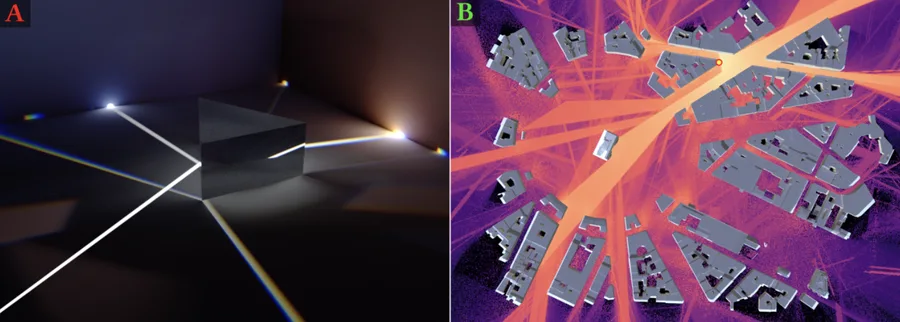
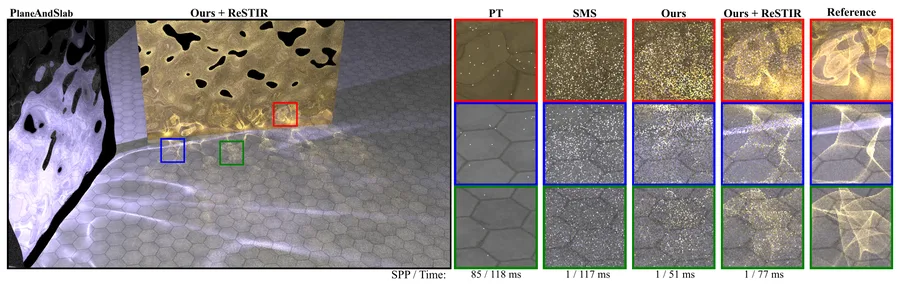
Caustics rendering remains a long-standing challenge in Monte Carlo rendering because high-energy specular paths occupy only a small region of path space, making them difficult to sample effectively. Recent work such as Specular Manifold Sampling (SMS) [Zeltner et al. 2020] can stochastically sample these specular paths and estimate their unbiased weights using Bernoulli trials. However, applying…
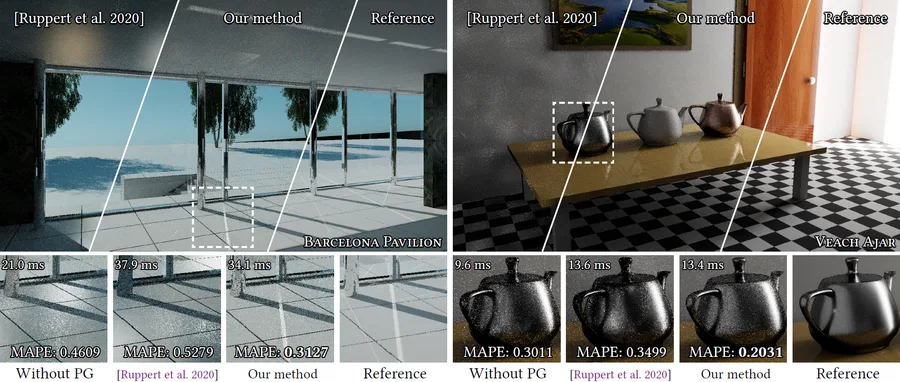
We present ReSTIR Path Guiding (ReSTIR-PG), a real-time method that extracts guiding distributions from resampled paths produced by ReSTIR and uses them to generate improved initial candidates for the next frame. While ReSTIR significantly reduces variance through spatiotemporal resampling, its effectiveness is ultimately limited by the quality of the initial candidates, which are often poorly di…
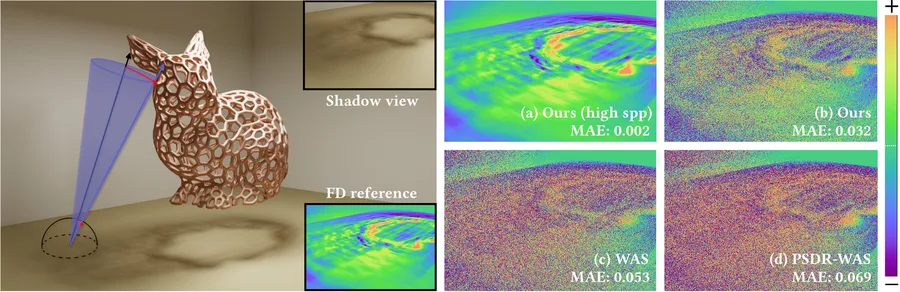
Computing derivatives of path integrals under evolving scene geometry is a fundamental problem in physics-based differentiable rendering, which requires differentiating discontinuities in the visibility function. Warped-area reparameterization is a powerful technique to compute differential visibility, and key is construction of a velocity field that is continuous in the domain interior and agree…
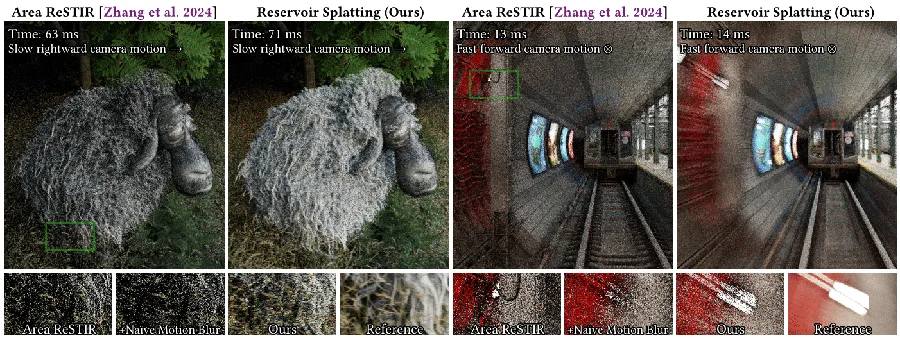
Recent extensions to spatiotemporal path reuse, or ReSTIR, improve rendering efficiency in the presence of high-frequency content by augmenting path reservoirs to represent contributions over full pixel footprints. Still, if historical paths fail to contribute to future frames, these benefits disappear. Prior ReSTIR work backprojects to the prior frame to identify paths for reuse. Backprojection …
Neural shading offers a new paradigm for real-time graphics, replacing hand-crafted algorithms with compact neural networks that can be trained to reproduce complex appearance. In this three-hour course, we introduce the core principles behind neural shading and guide attendees from foundational theory to practical implementation. We begin with an accessible overview of optimization and network t…
Recent spatiotemporal resampling algorithms (ReSTIR) accelerate real-time path tracing by reusing samples between pixels and frames. However, existing methods are limited by the sampling quality of path tracing, making them inefficient for scenes with caustics and hard-to-reach lights. We develop a ReSTIR variant incorporating bidirectional path tracing that significantly improves the sampling qu…
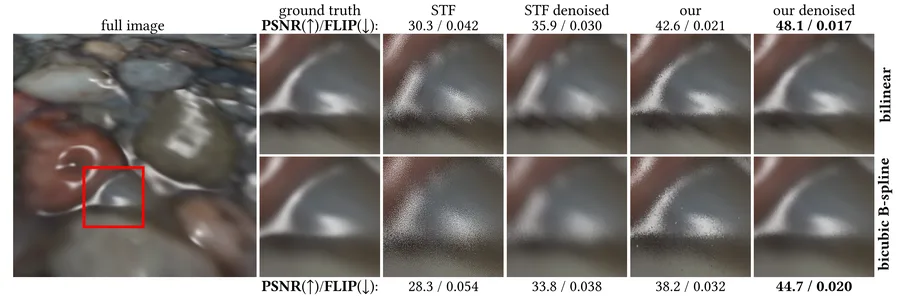
Stochastic texture filtering (STF) has re-emerged as a technique that can bring down the cost of texture filtering of advanced texture compression methods, e.g., neural texture compression. However, during texture magnification, the swapped order of filtering and shading with STF can result in aliasing. The inability to smoothly interpolate material properties stored in textures, such as surface …
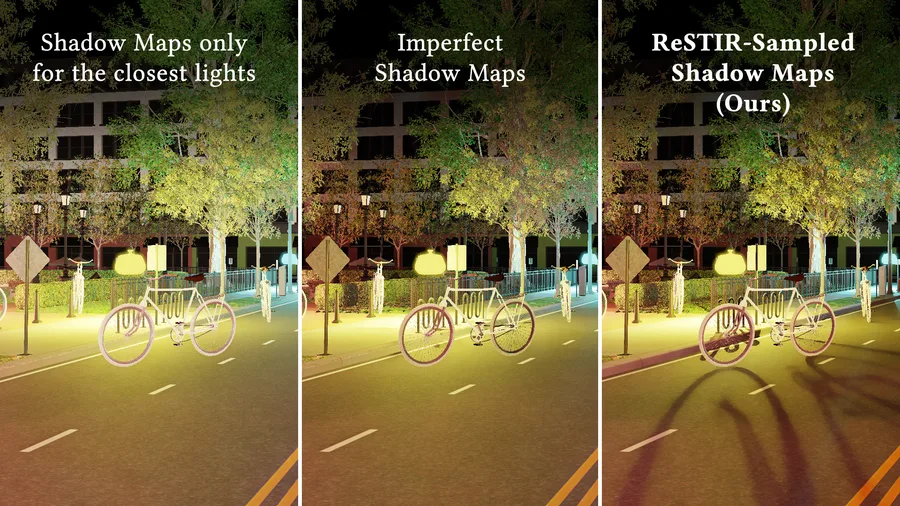
We present a practical method targeting dynamic shadow maps for many light sources in real-time rendering. We compute full-resolution shadow maps for a subset of lights, which we select with spatiotemporal reservoir resampling (ReSTIR). Our selection strategy automatically regenerates shadow maps for lights with the strongest contributions to pixels in the current camera view. The remaining light…
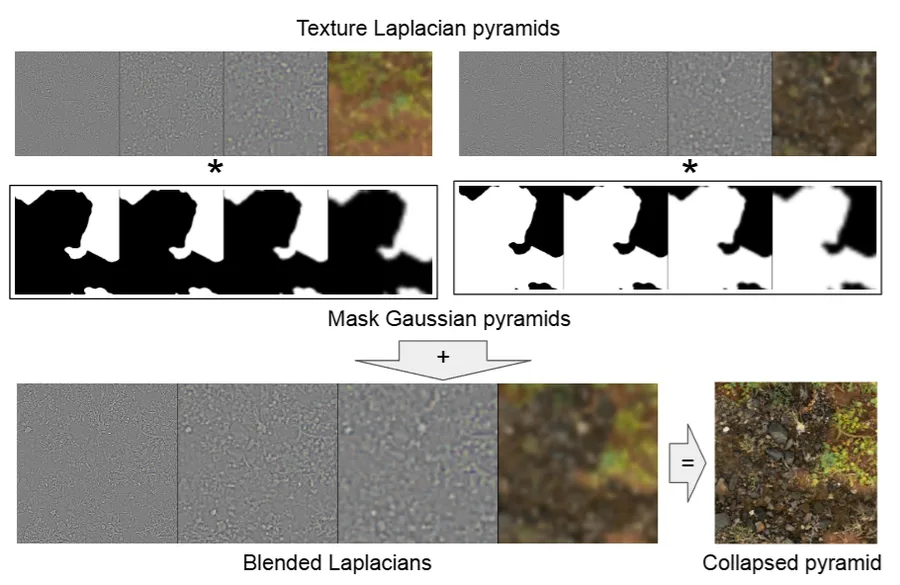
Texture and material blending is one of the leading methods for adding variety to rendered virtual worlds, creating composite materials, and generating procedural content. When done naively, it can introduce either visible seams or contrast loss, leading to an unnatural look not representative of blended textures. Earlier work proposed addressing this problem through careful manual parameter tuni…
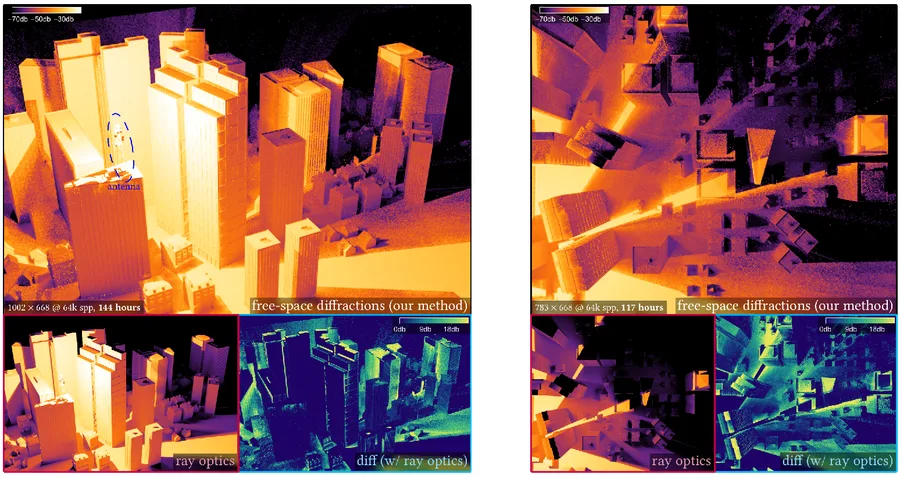
Free-space diffractions are an optical phenomenon where light appears to “bend” around the geometric edges and corners of scene objects. In this paper we present an efficient method to simulate such effects. We derive an edge-based formulation of Fraunhofer diffraction, which is well suited to the common (triangular) geometric meshes used in computer graphics. Our method dynamically constructs a …
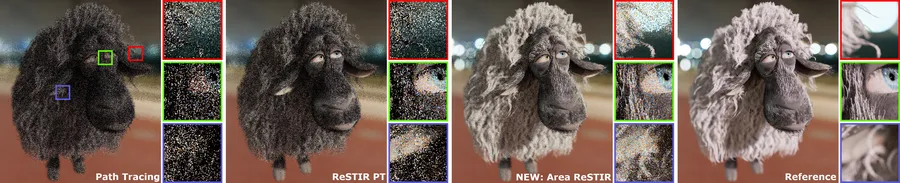
Recent advancements in spatiotemporal reservoir resampling (ReSTIR) leverage sample reuse from neighbors to efficiently evaluate the path integral. Like rasterization, ReSTIR methods implicitly assume a pinhole camera and evaluate the light arriving at a pixel through a single predetermined subpixel location at a time (e.g., the pixel center). This prevents efficient path reuse in and near pixels…
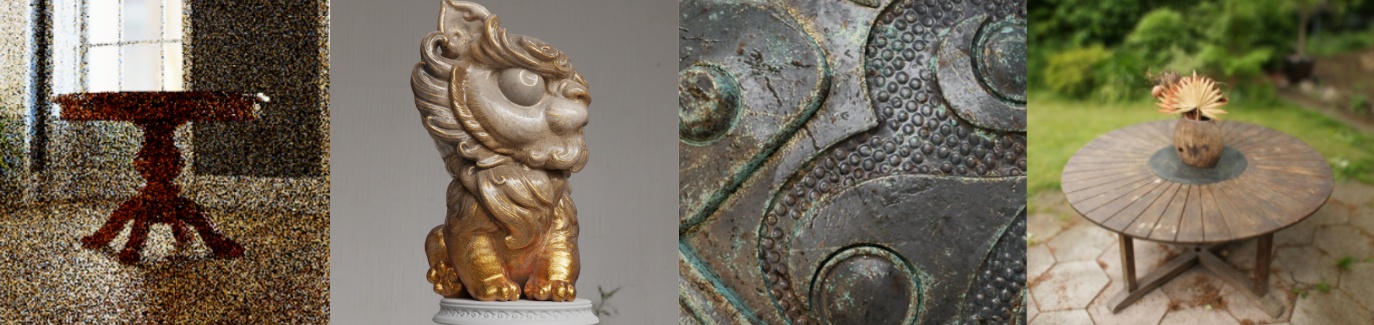
2D texture maps and 3D voxel arrays are widely used to add rich detail to the surfaces and volumes of rendered scenes, and filtered texture lookups are integral to producing high-quality imagery. We show that applying the texture filter after evaluating shading generally gives more accurate imagery than filtering textures before BSDF evaluation, as is current practice. These benefits are not mere…
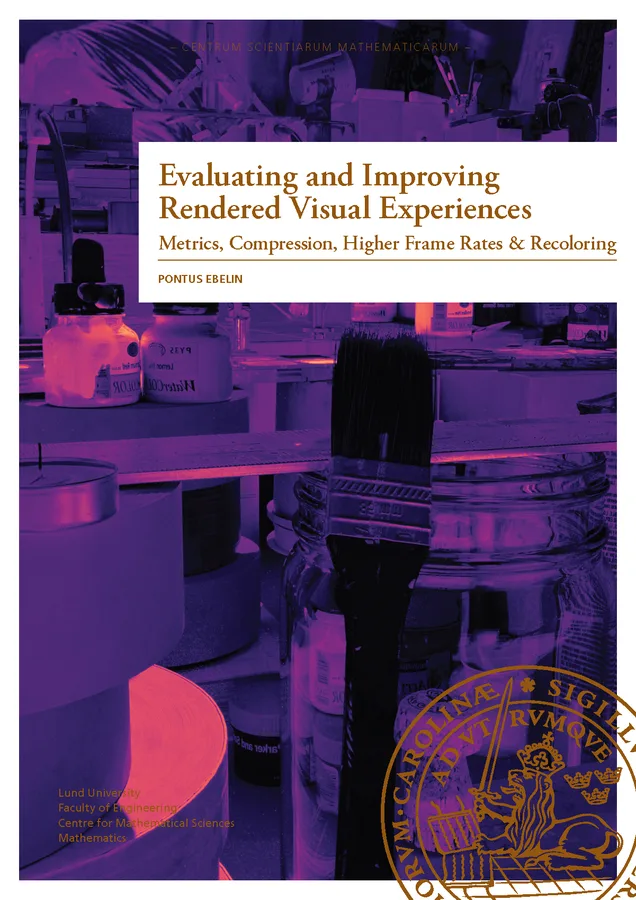
Rendered imagery is presented to us daily. Special effects in movies, video games, scientific visualizations, and marketing catalogs all often rely on images generated through computer graphics. However, with all the possibilities that rendering offers come also a plethora of challenges. This thesis proposes novel ways of evaluating the visual errors caused when some of those challenges are not c…
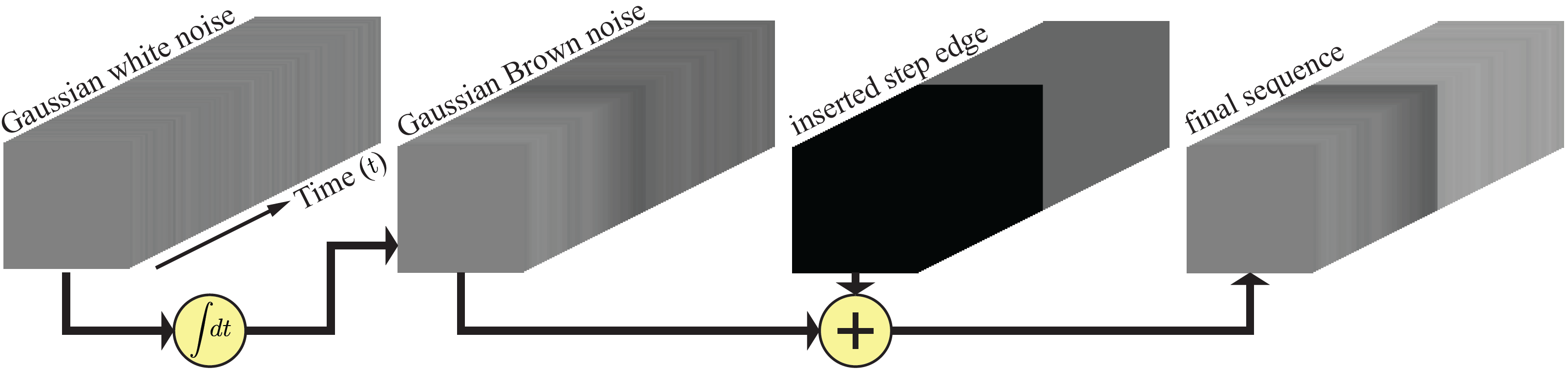
Edge detection is an important process in human visual processing. However, as far as we know, few attempts have been made to map the temporal edge detection filters in human vision. To that end, we devised a user study and collected data from which we derived estimates of human temporal edge detection filters based on three different models, including the derivative of the infinite symmetric exp…
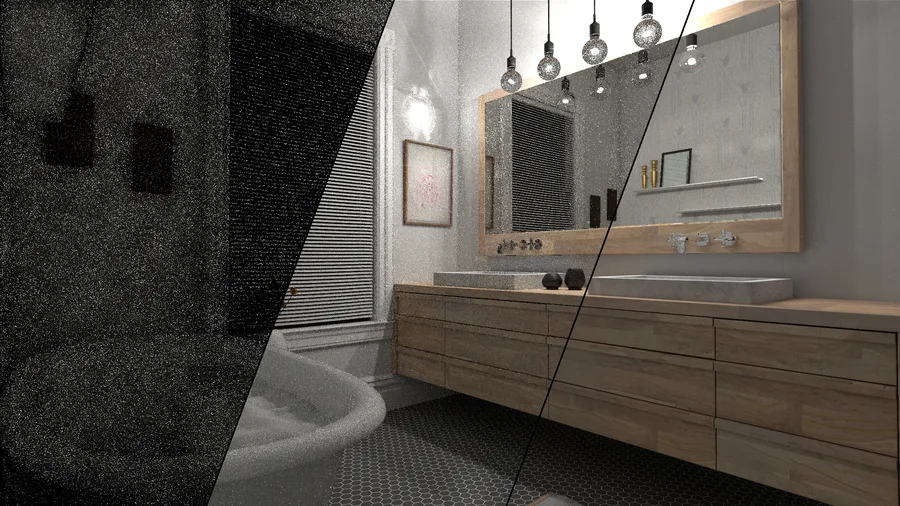
Monte Carlo rendering algorithms often utilize correlations between pixels to improve efficiency and enhance image quality. For real-time applications in particular, repeated reservoir resampling offers a powerful framework to reuse samples both spatially in an image and temporally across multiple frames. While such techniques achieve equal-error up to 100× faster for real-time direct lighting [B…
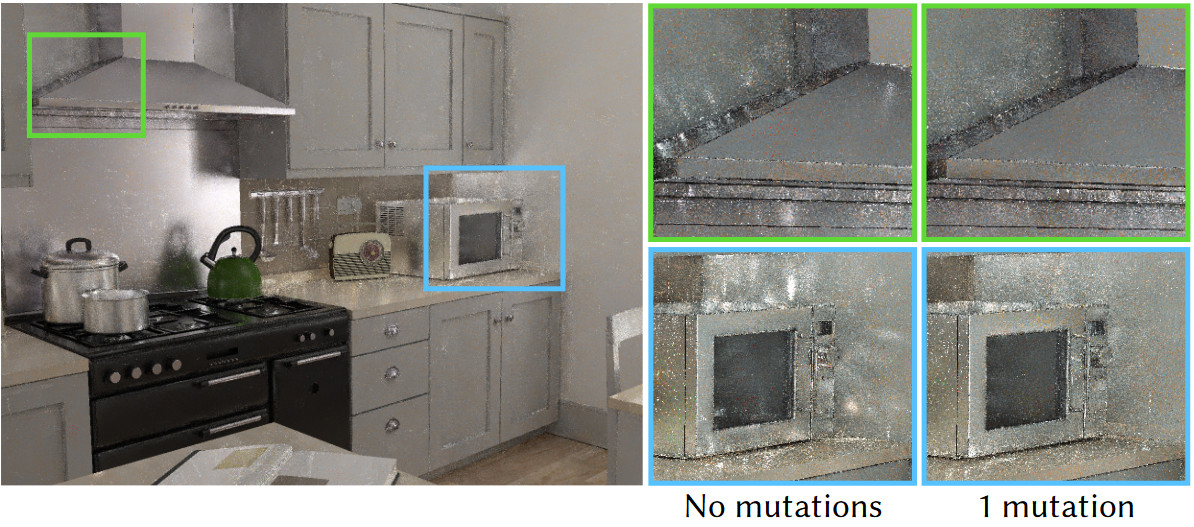
Recent work on generalized resampled importance sampling (GRIS) enables importance-sampled Monte Carlo integration with random variable weights replacing the usual division by probability density. This enables very flexible spatiotemporal sample reuse, even if neighboring samples (e.g., light paths) have intractable probability densities. Unlike typical Monte Carlo integration, which samples acco…
algorithmscomputer-science
research.io
Sign up to keep scrolling
Create your feed subscriptions, save articles, keep scrolling.
 research.io