Phone scams claimed more than $25.4 billion from American adults in a single year , with 21% of the population — over 56 million people — falling victim at least once, according to Truecaller's US Spam & Scam Report. The calls sound real. The numbers look familiar. And the tactics are getting more convincing by the month. Knowing how to spot suspicious calls and verify unknown numbers before enga…
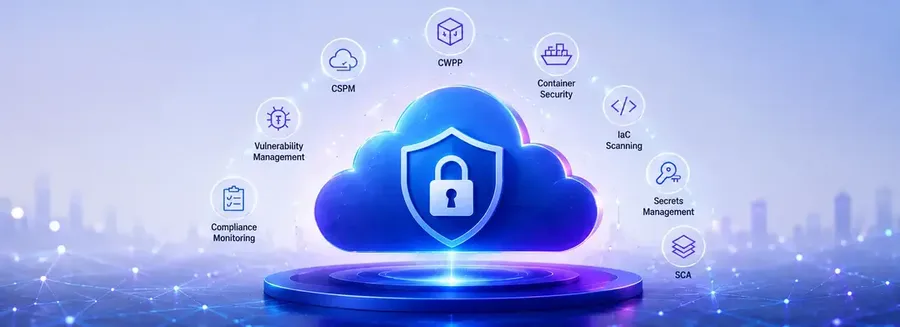
Wiz is a leading cloud security platform, but an enterprise may still look for alternatives when cloud workload pricing grows, AppSec remains distributed across separate products or engineering teams struggle to turn cloud findings into source changes. Reducing tool sprawl requires more than swapping one CNAPP for another: the replacement must cover the controls the organization can realistically…
Passing a UK Cyber Assessment Framework (CAF) assessment isn't about having policies. It's about proving, for each of the 39 contributing outcomes across Objectives A-D, exactly which document satisfies it, who owns it, and when it was last reviewed. A pre-mapped CAF Document Library paired with a live UK CAF Master Document Register turns that proof from a weeks-long scramble into something you …
An NFL stadium used to be judged by its sightlines, seating capacity, turf, concessions, and atmosphere. Today, it is also judged by uptime. Modern stadiums are no longer just sports venues. They are connected technology environments that must operate like small smart cities for a few intense hours every week.
Managed Detection and Response has moved from a nice-to-have add-on to a baseline expectation for any organization without a full internal security operations center. Buyers in 2026 are choosing between platform-native services tied to a single EDR and vendor-agnostic providers that ingest telemetry from whatever stack a company already runs.
Enterprise software development firms are optimized for large, predictable projects with stable requirements and extended timelines. SaaS startups operate in a fundamentally different environment: tight funding windows, rapidly evolving product requirements, and the constant pressure to ship, validate, and iterate before competitors or capital constraints force a pivot.
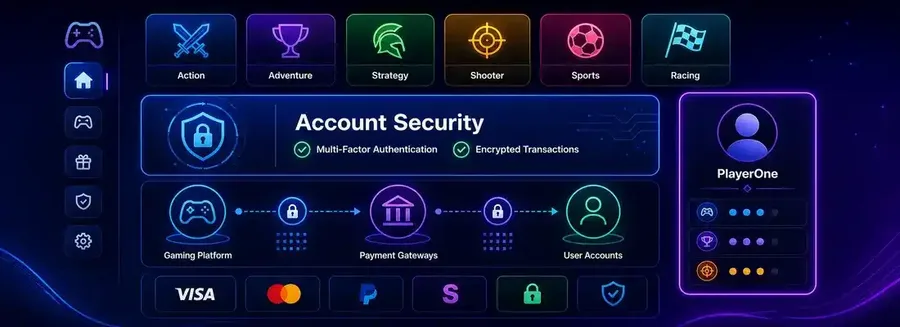
An online gaming account may contain enough information to identify a user, access funds, reconstruct behaviour and target future fraud. Security therefore cannot stop at encrypting the login page.
Making money from home has never been easier, but neither has falling victim to online scams. Whether you're freelancing, reselling products, offering virtual services, or building a digital side income, protecting your personal information, devices, and finances should be just as important as finding new clients.
Outsourced lead generation creates a closer technical relationship than many buyers expect. The partner may work directly inside the client’s CRM and handle prospect information that feeds active sales campaigns. Once external staff enters those workflows, their security practices become part of the client’s exposure.
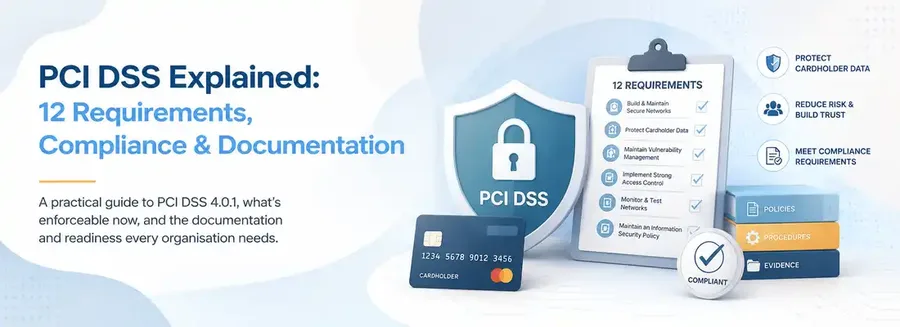
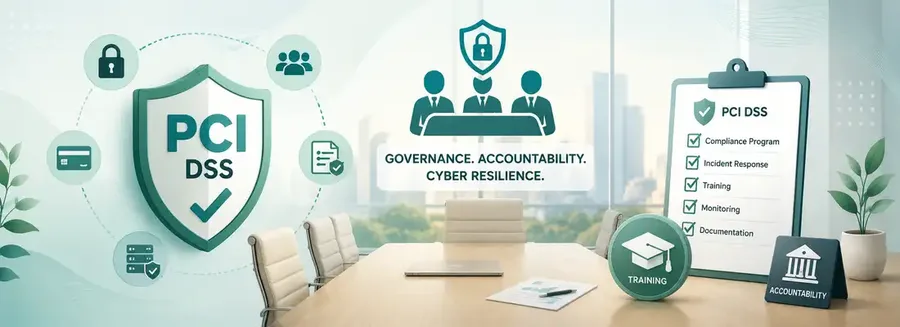
PCI DSS is the global data security standard for any organisation that stores, processes, or transmits payment card data, currently governed by version 4.0.1 and built around 12 core requirements. As of 31 March 2025, dozens of previously "future-dated" 4.0.1 requirements, including targeted risk analyses and expanded multi-factor authentication, became fully enforceable. Non-compliant organisati…
Managed detection and response is one of those things most business owners hear about right after a breach hits the headlines … or just before they realize how exposed they have been. The pitch is simple enough. Someone else watches your systems day and night, and actually steps in when trouble shows up.
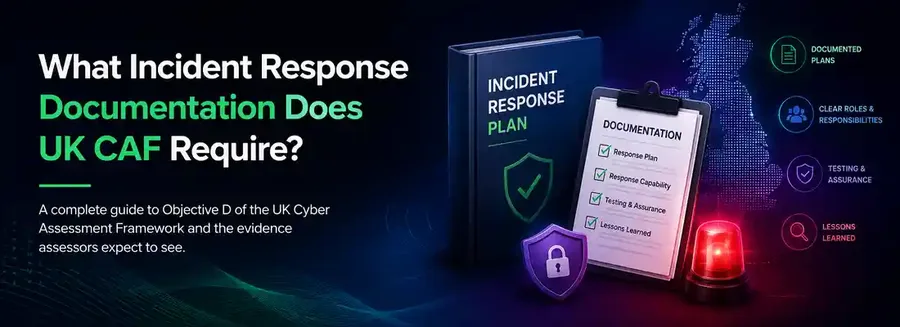
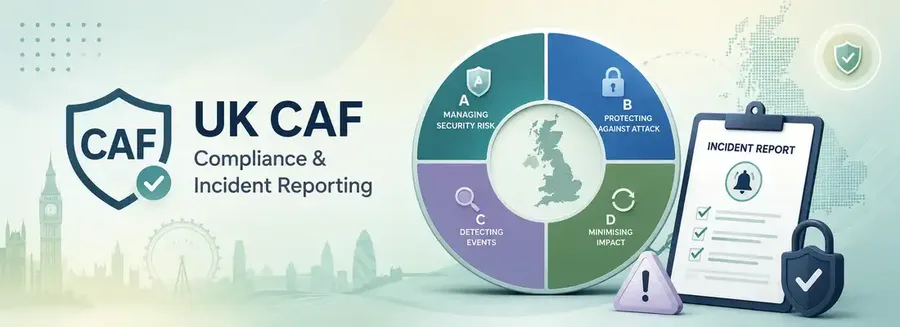
The UK Cyber Assessment Framework (CAF) requires incident response documentation across two principles under Objective D: D1 (Response and Recovery Planning), which needs a documented incident response plan , evidence of the capability to execute it, and records of regular testing; and D2 (Lessons Learned), which needs root cause analysis records and evidence that findings actually change your pl…
PCI DSS takes a genuinely different approach to leadership accountability than NIS2, DORA or the UK CAF. PCI DSS doesn't name the board or executive team in a training clause anywhere in the standard. What it does require is executive-level accountability for compliance (and only for service providers), plus training for the personnel who actually handle incidents and cardholder data.
The UK Cyber Assessment Framework (CAF) is the UK National Cyber Security Centre's official framework for assessing cyber resilience, used to enforce the UK NIS Regulations 2018 across operators of essential services and relevant digital service providers. It's built around 4 objectives, 14 principles, and Indicators of Good Practice (IGPs), assessed against a target CAF Profile (Basic or Enhance…
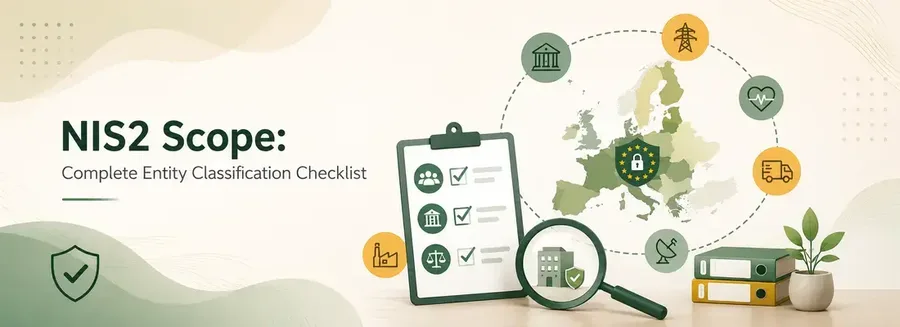
Your organisation falls under NIS2 if it operates in one of the 18 sectors listed in Annex I or Annex II of the directive and meets the medium or large enterprise size threshold (50+ employees or €10 million+ annual turnover). Certain entities, including DNS providers, top-level domain registries, and public administration bodies, are in scope regardless of size, and smaller suppliers can be pull…
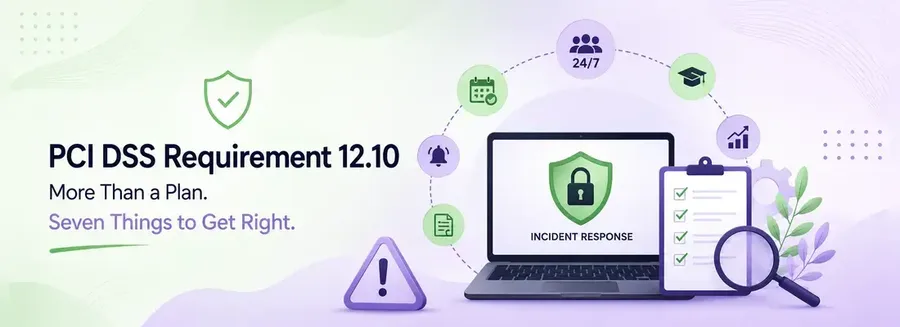
PCI DSS Requirement 12.10 gets summarised everywhere as "have an incident response plan ." That's true, but it undersells what an assessor actually checks — a single plan document doesn't evidence seven sub-requirements spanning 24/7 staffing, annual testing, risk-based training frequency, and a defined response to a very specific and often-missed scenario: stored account data turning up somewher…
Cyber risk builds quietly when security teams see hazards late, treat every alert alike, and accept ticket closure as proof of safety. Enterprise systems shift daily through cloud changes, identity updates, software releases, and new business services. That pace makes it difficult to maintain an accurate picture of where real danger sits. That gap between change speed and visibility is where expo…
NIS2 doesn't require essential and important entities to report every disruption, failed login or blocked phishing email to their CSIRT. It requires them to correctly identify which incidents are "significant" and get that judgement right within a clock that starts ticking the moment they become aware of it. Article 23(3) of the Directive sets out exactly how that call is made, and it's a narrowe…
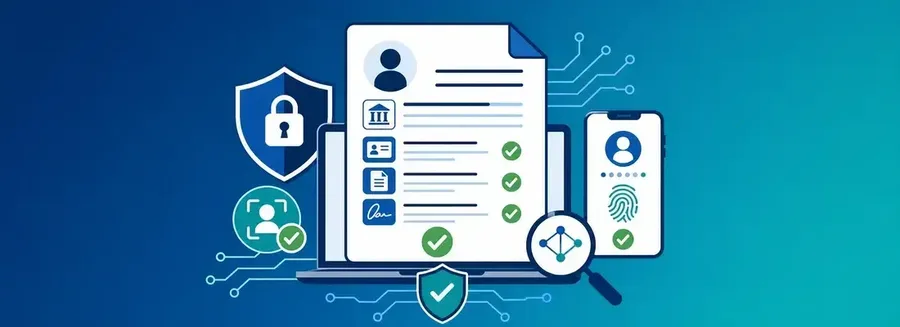
A recent survey of 115 U.S. financial institutions found that 93% of lenders say fraud is now contributing directly to their credit losses, and 82% reported those losses increased in 2026 compared to the year before. Much of that growth comes from complex and hard-to-catch fraud types, such as synthetic identity fraud, bust-out fraud, and application stacking. These risks may require cross-applic…
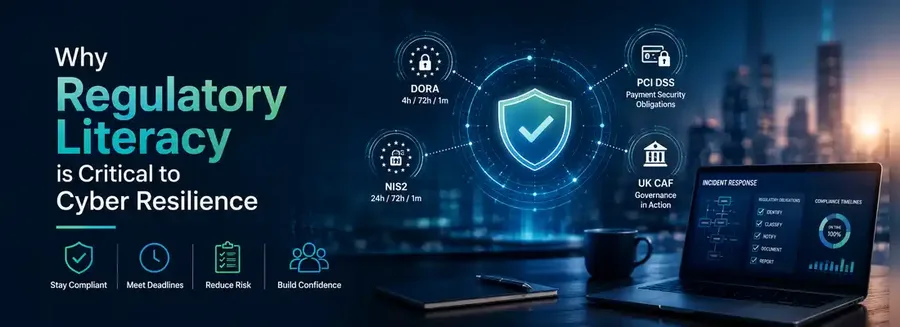
Most cyber resilience training still teaches resilience as a technical and procedural discipline: how to detect faster, contain more cleanly, restore systems, and run a tighter incident review. All of that matters. None of it, on its own, tells a responder whether the incident they're managing has just started a legally binding clock, which authority needs to hear from them and by when, or what s…
research.io
Sign up to keep scrolling
Create your feed subscriptions, save articles, keep scrolling.











 research.io