Blog
This blog post is based on a webinar that explored how funders develop, implement, and manage open science policies. The panel featured two funding organizations, Stiftelsen Dam and the Focused Ultrasound Foundation, sharing insights on how they align open science requirements with organizational mission and research community support while driving cultural change. View the recording here.
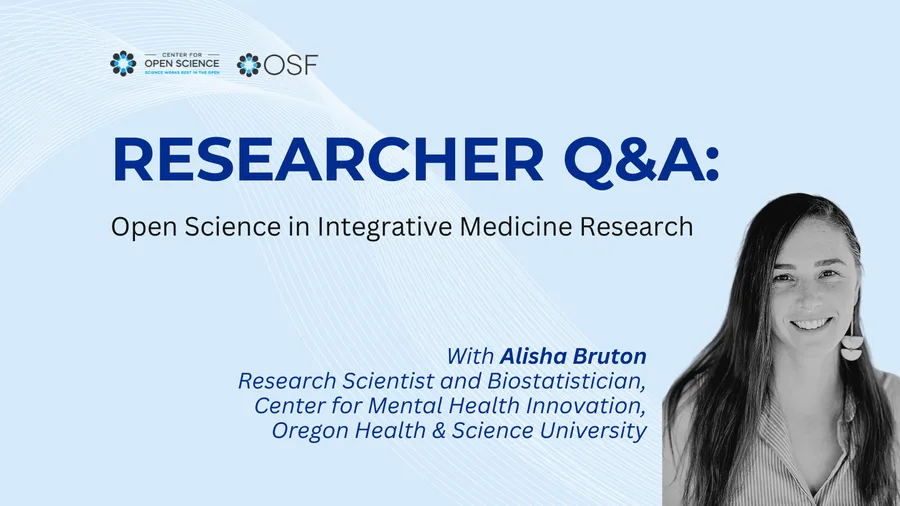
When research directly informs clinical care, transparency carries practical consequences. Rigorous documentation and open practices help findings stand up to scrutiny and support their translation into practice—from clinical acceptance to insurance coverage to patient access. Alisha Bruton is a research scientist and biostatistician in the Center for Mental Health Innovation at Oregon Health & S…
The credibility of scientific findings is essential to public trust and evidence-based decision-making. In health research, published studies shape policy, guide clinical practice, and influence funding priorities, underscoring the importance of credible findings in those literatures. Although replication studies can be resource-intensive, they play a critical role in strengthening the evidence b…
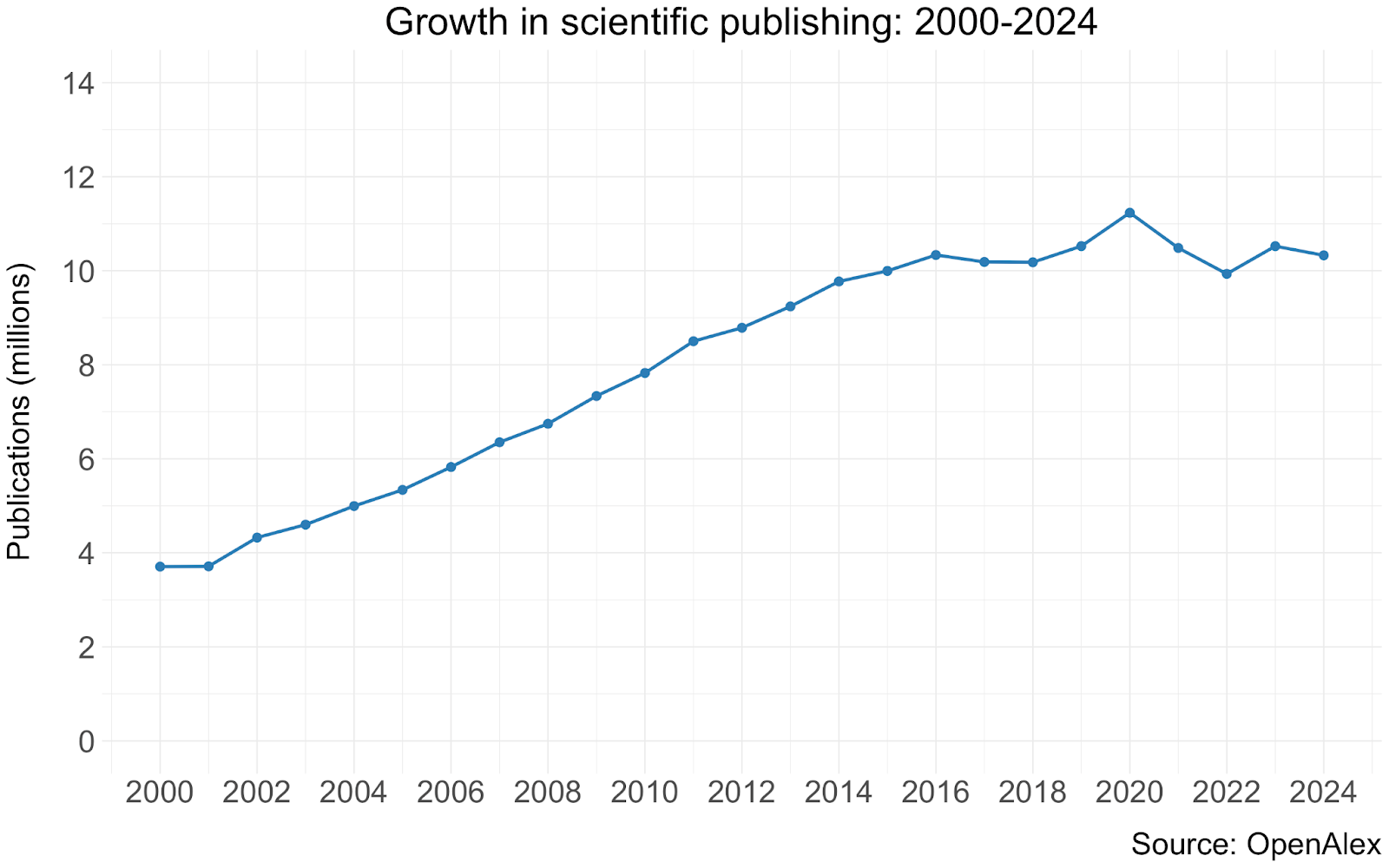
Growth trends are producing a “strain on scientific publishing” ( Hanson et al., 2023 ). The rates of scientific output have risen from just under 4 million publications in 2000 to over 10 million in 2024 and the total size of the reviewer pool has not kept pace, leading to a shortage in evaluation capacity. The recent explosion of AI-assisted and fully AI-generated research threatens to overwhel…
Responsible stewards of your support COS has earned top recognition from Charity Navigator and Candid (formerly GuideStar) for our financial transparency and accountability to our mission. COS and the OSF were also awarded SOC2 accreditation in 2023 after an independent assessment of our security and procedures by the American Institute of CPAs (AICPA). We invite all of our sponsors, partners, an…
Replication is widely recognized as essential to credible science, yet research incentive systems haven't always supported it. In many fields, replication studies remain difficult to publish, undervalued in career advancement, and disconnected from the infrastructure needed for transparent workflows. Meanwhile, conversations about research reform—from open access to new evaluation models—have acc…
An update from the Strategic Planning Committee
The Center for Open Science (COS) has released its 2026–2028 Strategic Plan , outlining a focused, three-year direction for advancing openness, integrity, and trustworthiness in research.
Since its 2020 launch, TOPFactor.org has served as a resource for researchers seeking to understand how journal policies support open and transparent research practices through their policies. Over the last six years, the Center for Open Science (COS) has learned from the database’s use. Today, we are announcing our plans to sunset the tool on March 16, 2026, what prompted this decision, and how …
Even with strong interest and enthusiasm within an institution, open science cannot implement itself. Meaningful adoption of open practices requires common language, accessible training, dependable infrastructure, and collaboration among roles that don’t always intersect. In their recent article, "Introducing Open Science in higher education settings: a case example from a college of allied healt…
Preregistration is a key open science practice that helps researchers plan studies in advance by specifying hypotheses, methods, and analysis plans before collecting or analyzing data. By making these decisions explicit upfront, preregistration encourages transparency, can reduce bias, and helps researchers—and the wider community—understand how and why a study was conducted. Along with Em Paul (…
Social scientists routinely use theory to make predictions about future events—from electoral outcomes to conflict dynamics to policy effects. These predictions help shape public debate and inform real world decision-making. Yet unlike explanatory claims about past events, predictions are rarely made in ways that allow them to be systematically evaluated over time. Without clearly defined outcome…
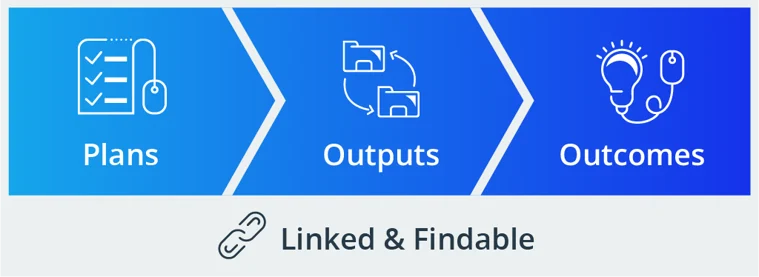
The Center for Open Science (COS) envisions research that is open across the lifecycle — linking the plans to research outputs to final outcomes. By making the basis of research claims transparently available, lifecycle open science enables research consumers to more readily assess the credibility of those claims. This openness enables the community to identify errors, discover new possibilities,…
The Global Flourishing Study is designed to be a model of transparency, sharing, and rigor. It employs best practices for: (1) maximizing rigor of testing hypotheses using preregistration and Registered Reports; (2) maximizing openness and reusability of research materials, surveys, and data; (3) facilitating safe and secure access to sensitive data through appropriate ethical review and approval…
As 2025 comes to a close, it’s an opportune moment to reflect on how far the OSF Open Science Ecosystem (OSE) initiative has come, celebrate what we accomplished this year, and look ahead to the opportunities in 2026 and beyond.
These projects are large-scale collaborative efforts—implementing TigerData alone takes about 35 people across multiple teams and campus units. As Cowles emphasized, "It really does take a village." Panel Discussion: Learning from Experience Sophia Lafferty-Hess, Senior Research Data Management Consultant at Duke University Libraries and the session's facilitator, guided the speakers through a di…
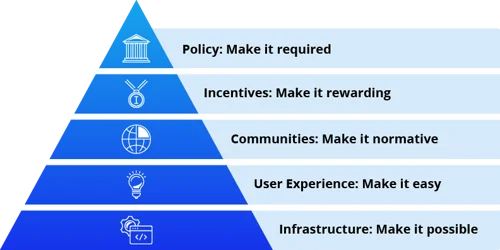
The Center for Open Science’s (COS) mission is to increase the openness, integrity, and reproducibility of research by promoting research that is transparent, linked, and accessible across its entire lifecycle. A key component of this work is the Transparency and Openness Promotion (TOP) Guidelines, a policy framework for advancing open science practices. The TOP Guidelines provide a shared playb…
This blog post is based on a webinar that explored how libraries and research communities collaborate on open science initiatives. View the recording here. Academic libraries increasingly play a key role in supporting open science, but what does that support look like in practice? How do libraries effectively partner with researchers, administrators, and other campus units to advance awareness an…
Improving research works best when efforts are coordinated, not fragmented. The Metascience Alliance is a coalition for coordination and collaboration, connecting stakeholders, identifying and advancing shared priorities, and accelerating collective progress. Since we first introduced the Metascience Alliance at the 2025 Metascience Conference, 39 organizations have signed the Letter of Intent—a …
research.ioSign up to keep scrolling
Create your feed subscriptions, save articles, keep scrolling.